
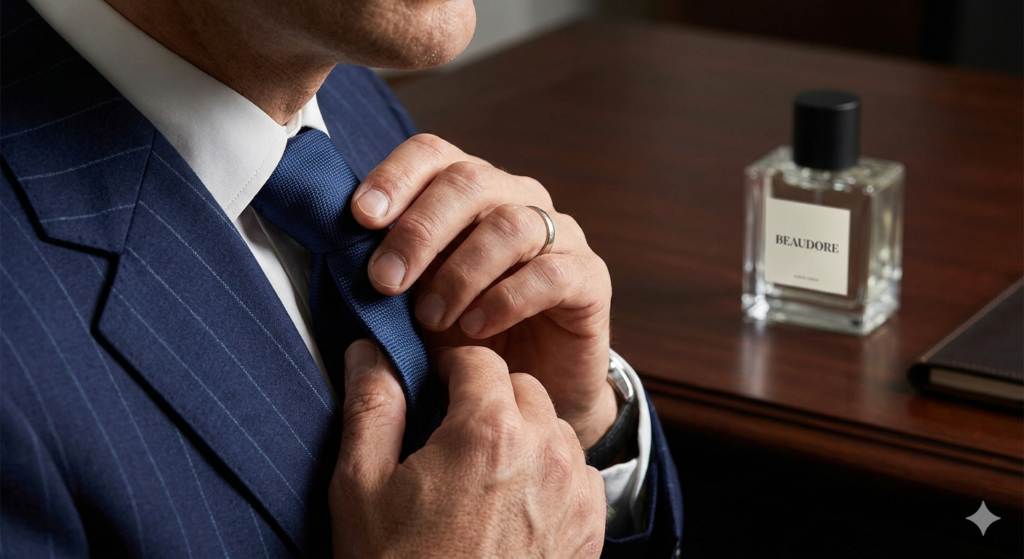
In the upper echelons of business, leadership is a multisensory performance. While your tailored suit and firm handshake set the stage, your niche fragrance provides the subtext. In a high-stakes meeting, your scent shouldn’t just be a pleasant background note; it should be a strategic tool that reinforces your presence and decision-making authority. For the modern executive in 2026, the goal isn’t to be the loudest person in the room, but the most memorable. This requires moving beyond mainstream department store scents toward a curated olfactive signature that communicates sophistication, restraint, and power.
The Olfactive Signature of Leadership: Why Sillage Matters
In the context of luxury fragrance performance, the concept of sillage—the trail left by a perfume—is often misunderstood by the uninitiated. For a CEO, an aggressive sillage can be perceived as a lack of self-control or a desperate bid for attention. High-stakes environments demand “intimate projection.” You want a scent that sits close to the skin, discovered only by those within your immediate professional circle.
A true signature scent for an executive should act as a psychological anchor. When you enter a negotiation, a complex blend of dry woods or cold iris creates an aura of “calculated calm.” It signals that you are the person who remains composed when the stakes are highest.
Strategic Scents: Matching Your Fragrance to the Meeting Type
Not all high-pressure scenarios are created equal. To maintain your edge, you must select your niche perfume based on the desired psychological outcome of the interaction.
| Meeting Context | Recommended Profile | The Executive Edge |
| M&A Negotiations | Vetiver, Black Pepper, Oud | Projects groundedness and immovable resolve. |
| Team Vision Keynotes | Bergamot, Neroli, Cedar | Radiates transparency, energy, and optimism. |
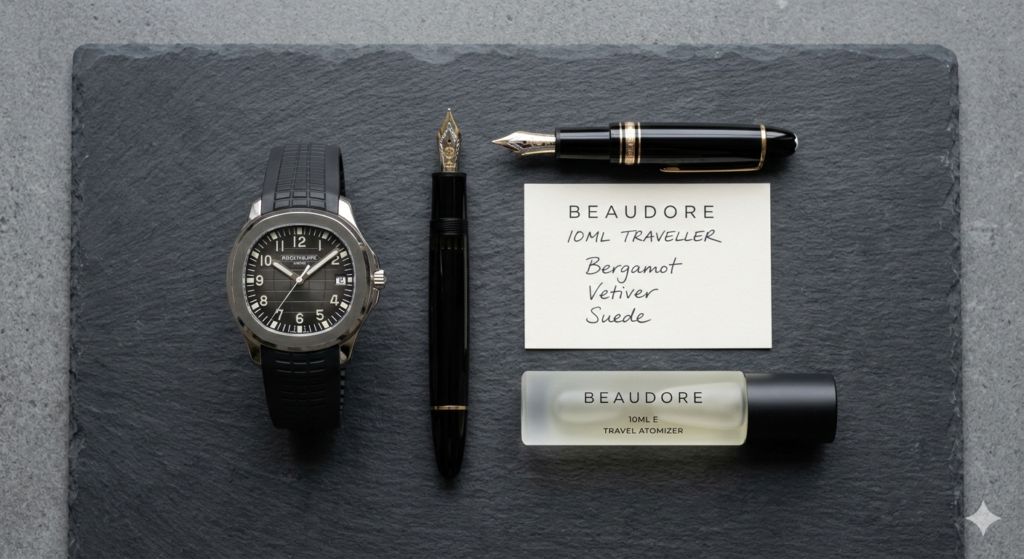
| Private Client Dinners | Ambergris, Rare Florals, Suede | Suggests refined taste, wealth, and approachability. |
The Art of “Intimate” Projection and Longevity
One of the most frequent user needs for high-level professionals is ensuring a scent lasts through a 10-hour day without needing a mid-afternoon refresh. This is why the C-suite should exclusively look for Extrait de Parfum concentrations. These formulations contain a higher percentage of perfume oils, resulting in superior longevity with a more controlled, professional projection.
Unlike lower-tier Eau de Toilette, which relies on alcohol-heavy “blasts” to get noticed, an Extrait works with your skin chemistry to bloom slowly over several hours. It’s the difference between a shout and a profound, well-timed statement.
How to Apply Fragrance Without Overpowering the Room
The hallmark of a seasoned leader is subtlety. To avoid “fragrance fatigue” in closed-door sessions, avoid the traditional “cloud” method. Instead, apply your niche fragrance to targeted pulse points that are covered by clothing—such as the inner chest or the nape of the neck. This allows the scent to be released slowly by your body heat, filtered through the natural fibers of your shirt, ensuring you are “discovered, not announced.”
FAQ: The Executive Fragrance Etiquette
Q: Can a CEO wear a floral scent without losing authority? A: Yes, provided it is a “dark” floral. Notes like Iris (Orris) or a dry, thorny Rose combined with Patchouli or Leather offer a gender-neutral sophistication that actually projects more confidence than standard “sporty” masculine scents.
Q: How do I store my collection to maintain its integrity? A: Heat and light are the enemies of fine perfumery. Keep your bottles in a cool, dark drawer—never in a bathroom. For deep insights into the preservation of rare ingredients, the Fragrance Conservatory offers expert resources on ingredient safety and sustainability.
Q: Is “blind buying” ever acceptable for high-end scents? A: Never for a high-stakes meeting. Always test a sample for at least 48 hours to see how it interacts with your unique skin chemistry before committing to it as your professional signature.