
Here’s something I hear from women in their 40s more often than you’d think: I’m doing everything right. I wear SPF every day. I use my vitamin C serum. I’ve been consistent for months. And my dark spots are still getting darker.
It’s not a failure of effort. It’s a failure of strategy — specifically, the strategy of treating mature skin pigmentation with the same logic that works for younger skin.
At 25, a dark spot from a pimple fades in six weeks. At 45, that same spot might still be visible six months later. A sun spot that appeared over a beach holiday in your 30s was manageable. The ones accumulating now seem to compound on themselves. You address one and three more appear. You lighten one area and another darkens. The pattern stops making sense.
The reason is something dermatologists increasingly refer to as inflamm-aging — the slow, low-grade chronic inflammation that develops as the skin ages. It’s not the dramatic inflammation of a wound or an allergic reaction. It’s quieter. It’s the kind that accompanies thinning collagen, declining oestrogen, a compromised barrier, and decades of cumulative UV exposure. And it has a direct effect on pigmentation: chronically inflamed skin produces melanin more readily, more erratically, and more persistently than healthy younger skin.
This is why the brightening logic that works at 30 stops working at 45. And it’s why tranexamic acid — an ingredient that works upstream in the pigmentation pathway, directly addressing the inflammatory signals that trigger melanin production — has become one of the most discussed brightening actives in serious skincare conversations.
This guide is for women who have tried the obvious things and want to understand what’s actually different about this one.
Key Takeaways
- Tranexamic acid serum helps fade melasma, sun spots, and post-inflammatory hyperpigmentation by targeting the signals that trigger excess melanin—not just the pigment itself.
- For mature skin, consistent use over 8–12 weeks can visibly improve skin tone while supporting a healthier skin barrier, making it a gentler long-term alternative to more aggressive brightening ingredients.
- A well-formulated 3% tranexamic acid serum with ingredients like niacinamide, ceramides, or peptides often delivers better long-term results than simply choosing the highest concentration.
- Tranexamic acid pairs well with vitamin C in the morning and retinoids or peptides at night, making it easy to integrate into an advanced anti-aging routine.
- Daily sunscreen remains essential. Even the best tranexamic acid serum cannot prevent new pigmentation if UV exposure continues to trigger melanin production.
What Makes Tranexamic Acid Different From Traditional Brightening Ingredients?
Why it was originally developed for medicine
Tranexamic acid wasn’t invented for skincare. It was developed in the 1960s by Japanese biochemist Utako Okamoto as a haemostatic drug — a medication to reduce bleeding by inhibiting the breakdown of blood clots. It’s still used in surgery, trauma medicine, and for certain bleeding conditions.
Its skincare application came later, through an observation: women taking oral tranexamic acid for medical reasons were noticing improvements in their melasma and hyperpigmentation as a side effect. Researchers traced the mechanism and found that tranexamic acid, applied topically, could replicate these effects at the skin surface level without the systemic risks of oral administration.
That origin matters because it tells you something about how TXA is characterised in clinical settings. It’s not a cosmetic ingredient that was later tested. It’s a pharmaceutical compound with a documented pharmacological mechanism that was later applied to cosmetic concerns. The evidence base is different in character from most skincare ingredient research.
How it interrupts the pigmentation signalling pathway
Most brightening actives work at the melanin synthesis stage — they inhibit tyrosinase (the enzyme that produces melanin in melanocytes). Vitamin C does this. Alpha arbutin does this. Kojic acid does this. They are effective, but they all intervene after the signal to produce melanin has already been sent and received.
Tranexamic acid works earlier. It inhibits plasminogen activator in keratinocytes — the enzyme that converts plasminogen to plasmin. Plasmin is what activates arachidonic acid release, which triggers prostaglandin E2 production, which stimulates melanocyte-stimulating hormone (α-MSH) release. Alpha-MSH then binds to melanocortin receptors on melanocytes and initiates melanin production.
TXA interrupts this cascade before melanocytes are activated. Less melanocyte-stimulating hormone means less melanin produced, regardless of how active the melanocytes are. For pigmentation driven by inflammatory signalling — which is exactly what inflamm-aging produces — working upstream is more strategically efficient than working at the synthesis step.
Why dermatologists increasingly recommend it for stubborn discoloration
The clinical evidence for TXA, particularly for melasma, has accumulated substantially over the past decade. A 2020 systematic review in the Journal of Cosmetic Dermatology evaluated multiple randomised controlled trials of topical tranexamic acid and found statistically significant improvements in MASI (Melasma Area Severity Index) scores compared to placebo, with a safety profile superior to hydroquinone. For dermatologists managing melasma in patients who cannot use hydroquinone (during pregnancy, or due to ochronosis risk), TXA has become a primary OTC-accessible recommendation.
Tranexamic Acid vs Other Brightening Ingredients
| Ingredient | Best For | How It Works | Irritation Risk | Best for Mature Skin |
|---|---|---|---|---|
| Tranexamic Acid | Melasma, PIH, uneven skin tone | Reduces pigmentation signals before melanin forms | Low | ⭐⭐⭐⭐⭐ |
| Vitamin C | Dullness, sun damage, antioxidant protection | Inhibits melanin production and fights free radicals | Medium | ⭐⭐⭐⭐ |
| Niacinamide | Uneven tone, enlarged pores, barrier support | Reduces melanin transfer and strengthens the skin barrier | Very Low | ⭐⭐⭐⭐⭐ |
| Azelaic Acid | Rosacea, acne marks, pigmentation | Inhibits tyrosinase and calms inflammation | Low | ⭐⭐⭐⭐ |
| Alpha Arbutin | Mild hyperpigmentation | Slows melanin production | Very Low | ⭐⭐⭐⭐ |
| Kojic Acid | Stubborn pigmentation | Blocks tyrosinase activity | Medium–High | ⭐⭐⭐ |
Why Mature Skin Develops More Persistent Hyperpigmentation Than Younger Skin
Let me describe something a lot of women recognise: at 28, a sun spot from a beach holiday would fade to near-invisible by the following spring. At 44, a spot that appeared two summers ago is still very much present — darker in some lights, lighter in others, but never fully gone.
This isn’t just a cosmetic observation. It reflects specific biological changes that make melanin production more active and melanin clearance slower in mature skin simultaneously.
Chronic low-grade inflammation (inflamm-aging). As skin ages, the balance between pro-inflammatory and anti-inflammatory molecular signalling shifts. The skin maintains a state of low-level chronic inflammation that wasn’t present at 25. Every UV exposure, every minor skin event, every hormonal fluctuation adds to this inflammatory background noise — which directly activates the keratinocyte-melanocyte signalling pathway that tranexamic acid targets. The signal to produce melanin is being sent more frequently, from more sources, with less effective suppression.
Collagen loss and dermal thinning. As the dermis thins and collagen density decreases, melanocyte activity becomes less regulated. The structural environment that previously moderated melanocyte behaviour is compromised. Pigmentation becomes less uniform and more concentrated in areas of greatest UV and inflammatory exposure.
Hormonal changes. From perimenopause onward, declining oestrogen removes one of the regulatory influences over melanocyte activity. Oestrogen normally modulates melanocyte-stimulating hormone response; its decline allows more variable, reactive melanin production. Melasma — already the most hormonally sensitive form of hyperpigmentation — frequently worsens during perimenopause and early post-menopause.
Barrier decline. A compromised skin barrier allows more UV damage to reach living cells and generates more inflammatory signals per UV exposure event. The barrier that absorbed minor provocations at 30 is less effective at 45 — meaning more inflammatory triggers reach the keratinocyte-melanocyte signalling system.
Slower cellular turnover. With a 45–60 day cellular cycle (versus 28 days at 25), pigmented surface cells persist longer. Dark spots formed months ago are still visible because the cells carrying that melanin simply haven’t been replaced yet.
These five factors operating simultaneously are what create the 30+ turning point — the moment where the brightening strategies that previously worked start producing diminishing returns. Working at this turning point requires an ingredient that addresses the inflammatory driver of hyperpigmentation, not just its end product.
Which Types of Dark Spots Respond Best to Tranexamic Acid?
Not all pigmentation responds to TXA equally. Understanding which type of dark spot you’re dealing with changes the timeline you should expect.
Melasma
This is where TXA has the most clinical evidence and the most significant advantage over alternatives. Melasma is driven precisely by the inflammatory hormonal signalling pathway that TXA interrupts. For diffuse, symmetrical patches — typically on the cheeks, forehead, and upper lip — that worsen with UV exposure and hormonal fluctuation, TXA is the most strategically targeted OTC active available. Improvement: visible at 8–12 weeks, meaningful reduction by 16 weeks with consistent use and daily SPF.
Post-Inflammatory Hyperpigmentation (PIH)
PIH is driven by the same inflammatory activation cascade that TXA addresses. When an inflammatory skin event (blemish, reaction, minor wound) triggers the keratinocyte-melanocyte signal, TXA interrupts the signal before melanin is produced. For existing PIH marks, TXA combined with cellular renewal support (retinoids, AHAs) accelerates clearance. For preventing new PIH from forming after skin events, consistent TXA is particularly valuable. Improvement: fastest of all types — some visible reduction at 6–8 weeks.
Sun Spots (Solar Lentigines)
Established solar lentigines are driven by concentrated melanocyte hyperplasia — zones of overactive melanocyte populations built up over years of UV activation. TXA addresses the activation signal but is slower against established, concentrated melanocyte populations than direct tyrosinase inhibitors (alpha arbutin, azelaic acid). Best results come from combining TXA (upstream signalling inhibition) with a tyrosinase inhibitor (synthesis inhibition). Improvement: 12–16 weeks for visible change, longer for deep established spots.
Uneven Skin Tone
Generalised tone unevenness — not concentrated spots but diffuse variation — often reflects widespread low-level inflamm-aging rather than discrete melanocyte hyperplasia. TXA’s anti-inflammatory signalling pathway effect addresses this systemic tone unevenness more comprehensively than spot-targeted ingredients. Improvement: often the first visible effect, as early as 4–6 weeks.
Does Concentration Really Matter? Why 3% Isn’t Always Inferior to 5%
The instinct to seek the highest available concentration of any active ingredient is understandable — but for tranexamic acid, it significantly misses the point.
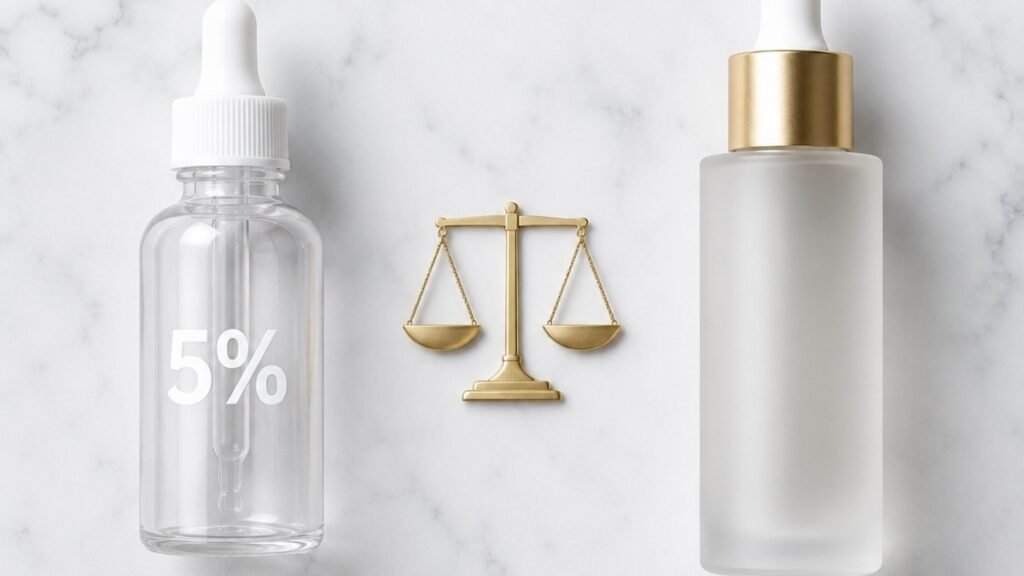
The clinical evidence for TXA in melasma and hyperpigmentation has been established at concentrations between 2% and 5%. Within this range, published studies have not demonstrated a consistent dose-response relationship — meaning 5% does not reliably produce better outcomes than 3% in controlled settings. What produces better outcomes is whether the active reaches its target in sufficient concentration — which is determined by formulation, not label percentage.
Bioavailability matters more than stated concentration. TXA must penetrate the stratum corneum and reach the keratinocytes in the viable epidermis where it interrupts the plasminogen activator pathway. The delivery system — the vehicle, the encapsulation technology, the presence of penetration-enhancing ingredients — determines how much of the stated concentration is functionally bioavailable versus sitting on the skin surface.
Barrier compatibility is a formulation criterion. For mature skin with a less robust barrier, a 5% TXA in a formulation that disrupts the barrier to enhance penetration may produce less net benefit than a 3% TXA in a formulation that supports the barrier while delivering the active. Inflamed, barrier-compromised skin produces more melanin, not less.
Supporting ingredients amplify or diminish TXA’s effect. A formulation that combines TXA with niacinamide (complementary downstream brightening), ceramides (barrier support), and peptides (structural anti-aging alongside brightening) produces outcomes that a higher-concentration TXA in an inferior base cannot match. The complete formulation system is the product — the concentration is one variable within it.
This is the core of what luxury formulation philosophy actually means in practice: not a higher percentage on the label, but a more complete, more intelligently constructed delivery architecture that gets the active where it needs to go in a form the skin can sustain long-term.
The Luxury Formula Difference: Why Elegant Formulations Deliver Better Long-Term Results
I’ve used both. A mid-range TXA serum that looked good on paper — 5%, clean ingredients list — that pilled under moisturiser, absorbed slowly, and left a tacky residue that made the rest of the routine feel compromised. And a luxury formulation at 3% that absorbed in sixty seconds, layered cleanly under everything, and produced visible tone improvement at eight weeks.
The difference wasn’t concentration.
Texture and absorption
A TXA formulation designed for mature skin needs to absorb quickly enough to allow subsequent steps (moisturiser, SPF, or a second serum) without disrupting the sequence. Slow-absorbing, high-viscosity formulations create two problems: pilling when the next layer is applied, and reduced adhesion time against the skin surface. Luxury formulations invest in the delivery vehicle as seriously as the active — because a serum that doesn’t stay on cleanly is a serum that doesn’t work as intended.
Microencapsulation and delivery systems
Premium TXA serums increasingly use encapsulation technology — microspheres or liposomal delivery — that protects the active during its journey through the epidermis and releases it at the target depth. This technology allows a lower stated concentration to achieve equivalent or superior bioavailability compared to a higher-concentration conventional formulation. It also reduces surface irritation, which is particularly relevant for mature skin where any irritation-triggered inflammation counteracts the very brightening effect being sought.
Layering without pilling
Pilling — the small rolls of product that form when serums and moisturisers don’t play well together — is a formulation problem, not a user error. It indicates incompatibility between the serum’s film-forming components and the moisturiser’s lipid matrix. Well-formulated luxury TXA serums are designed with layering in mind: their rheology (the way they flow and set) is calibrated to integrate with subsequent steps rather than resist them.
Supporting ingredients
The most strategically designed TXA formulations include:
- Ceramides — barrier support that reduces the inflamm-aging background noise TXA is trying to quiet
- Niacinamide — complementary melanosome transfer inhibition downstream of TXA’s signalling inhibition
- Peptides — collagen stimulation alongside brightening, addressing the structural dimension of mature skin decline
- Licorice root extract (glabridin) — additional tyrosinase inhibition through a separate pathway
- Ectoin — stress protein support that reduces the environmental inflammatory triggers that activate TXA’s target pathway
A luxury TXA serum is not selling you a higher concentration. It’s selling you a more complete system.
The Best Ingredient Pairings for Tranexamic Acid Serum
Tranexamic Acid + Vitamin C
TXA interrupts the upstream signalling pathway; Vitamin C inhibits tyrosinase at the synthesis step. Together, they address the pigmentation cascade at two different points — more comprehensive coverage than either alone. VC also provides antioxidant UV neutralisation that directly reduces the inflammatory UV signals TXA is managing. Apply VC first (morning, allow 60–90 seconds), then TXA. Best for: solar lentigines and sun damage where both the signalling and synthesis pathways are overactive.
Tranexamic Acid + Niacinamide
The most complementary pairing in brightening skincare. TXA upstream (signalling inhibition), niacinamide downstream (melanosome transfer inhibition). These two address three separate steps of the pigmentation pathway between them — signalling activation, melanin synthesis trigger, and melanin distribution to surface cells. Both are anti-inflammatory, both are appropriate for sensitive skin, and both can be applied morning and evening. Best for: melasma, PIH, and general tone unevenness in sensitive or reactive mature skin.
Tranexamic Acid + Peptides
Signal peptides (Matrixyl, GHK-Cu) stimulate collagen synthesis alongside TXA’s brightening activity. For mature skin where pigmentation and structural decline coexist — which is most mature skin — addressing both simultaneously in one formulation is more efficient than treating them separately. Best for: mature skin managing both tone unevenness and firmness concerns.
Tranexamic Acid + Ceramides
Not a brightening combination but a tolerance combination. Ceramides repair and support the skin barrier — reducing the chronic inflammation that TXA is trying to interrupt at the signalling level. A ceramide moisturiser applied over TXA makes the barrier more robust, reducing the inflamm-aging background noise that generates persistent pigmentation. Best for: all mature skin, essential for sensitive or barrier-compromised skin.
Tranexamic Acid + Retinal
Retinal (retinaldehyde, one step closer to retinoic acid than retinol) accelerates cellular turnover — clearing existing pigmented cells while TXA prevents new melanin production. This combination addresses both dimensions of dark spot persistence: the slow clearance and the ongoing production. Use retinal in the evening; TXA can be used morning and evening independently. Best for: established sun damage with concurrent skin quality concerns in skin that tolerates retinoids well.
How to Build a Luxury Morning and Evening Routine Around Tranexamic Acid
Morning
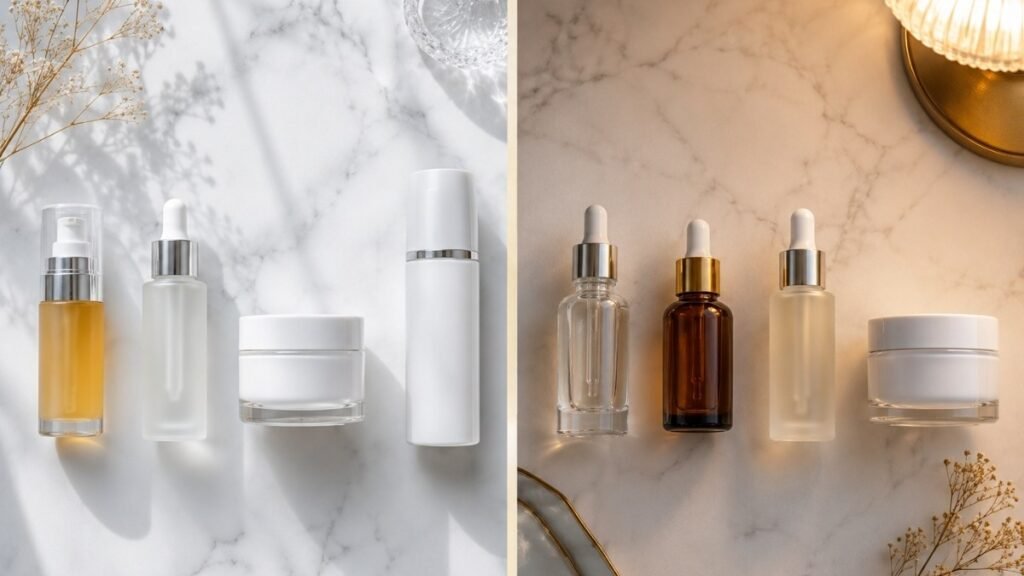
Gentle cleanse → Vitamin C serum (allow 60–90 seconds) → Tranexamic acid serum → Ceramide moisturiser → SPF 30+ mineral
The morning routine’s purpose is protection and upstream inhibition: VC neutralises UV-generated free radicals in real time (antioxidant), TXA interrupts the keratinocyte-melanocyte signalling that UV exposure triggers (upstream signalling), ceramides maintain the barrier integrity that reduces inflammatory background noise, and SPF blocks the UV signal at source.
Evening
Double cleanse → Hydrating serum (HA) → Retinal or peptide serum → Tranexamic acid serum → Barrier cream (ceramide-rich)
The evening routine’s purpose is renewal and continued inhibition: HA provides surface hydration, retinal accelerates cellular turnover to clear existing pigmented cells, TXA maintains signalling inhibition through the overnight repair cycle, barrier cream supports structural overnight recovery.
Luxury Routine Table
| Routine Step | Morning | Evening | Why It Matters |
|---|---|---|---|
| Cleanser | ✔ | ✔ | Removes impurities without disrupting the barrier |
| Vitamin C | ✔ | — | Provides antioxidant protection against UV damage |
| Tranexamic Acid Serum | ✔ | ✔ | Helps prevent and reduce discoloration |
| Peptides | Optional | ✔ | Supports collagen and skin firmness |
| Retinal / Retinol | — | ✔ | Accelerates cell renewal and improves wrinkles |
| Ceramide Moisturizer | ✔ | ✔ | Reinforces the skin barrier and reduces inflammation |
| Sunscreen (SPF 30+) | ✔ | — | Prevents UV-triggered pigmentation |
For dry mature skin
Increase ceramide content at every step. Add squalane as a final evening seal over the barrier cream. Consider a richer, cream-format TXA product rather than a water-based serum — or a combination ceramide + TXA moisturiser that delivers both in a single lipid-rich step.
For sensitive mature skin
Use TXA once daily (morning) initially, building to twice daily after two weeks of confirmed tolerance. Apply over a light ceramide base if TXA causes any surface sensitivity — the base layer slows penetration slightly but significantly improves tolerability. Avoid combining TXA with AHAs or retinoids in the same session until full tolerance is established.
For combination skin
The standard morning and evening protocol as described. Focus ceramide application on drier areas (cheeks, jaw) rather than applying uniformly. TXA can be used at full twice-daily frequency from the outset on combination skin with an intact barrier.
How Long Does It Really Take to See Visible Results?
The honest answer is longer than most product descriptions suggest — and understanding why makes the timeline easier to commit to.
What Results Can You Expect?
| Time | What You May Notice |
|---|---|
| Week 2 | Skin feels calmer and more hydrated, but pigmentation is largely unchanged. |
| Week 4 | Overall skin tone begins to look more even. |
| Week 8 | Early fading of post-inflammatory marks and improved radiance. |
| Week 12 | Noticeable improvement in melasma and stubborn discoloration. |
| Month 6 | More even complexion with reduced recurrence when paired with daily SPF. |
Week 2: Surface texture may feel smoother from supporting exfoliating ingredients in the formulation. No visible pigmentation change yet — this is normal. The TXA is interrupting signalling, but the melanin already deposited in existing cells is still present and still visible.
Week 4: Some women notice generalised skin tone looks more even — less variability across the face. This reflects reduced new melanin formation more than clearance of existing spots. For PIH specifically, some marks may begin visibly fading as cellular turnover processes the less-pigmented cells being generated.
Week 8: Visible improvement in overall luminosity and tone for most consistent users. Melasma patches may appear lighter in lower-UV conditions. Sun spots that are recent (within the past year) may show noticeable lightening. Older, deeper spots are still processing.
Week 12: The three-month mark is where meaningful dark spot reduction becomes visible for most types of hyperpigmentation. For melasma, consistent users typically see measurable improvement in the MASI-equivalent visible area and darkness. This is the minimum appropriate evaluation point before concluding TXA “isn’t working.”
Month 6: Sustained use at six months produces the results that two-week trials suggest are impossible. Established solar lentigines begin showing meaningful lightening. Tone evenness reaches a new baseline. The skin is producing less melanin, clearing existing pigment more efficiently through improved cellular renewal support, and maintaining a lower inflamm-aging inflammatory level.
The pattern I hear from women who commit: “Nothing for six weeks, then I started to notice my foundation matching better. Then around three months I realised I’d stopped putting concealer over that spot.” That is a TXA timeline. It is not dramatic. It is cumulative.

Common Mistakes That Prevent Tranexamic Acid From Working
Switching products before the evaluation period. Six weeks without visible dark spot change is not evidence of failure. It is the normal experience of TXA’s mechanism — signalling inhibition reduces new melanin formation, but existing deposits clear at the pace of cellular turnover. Switching at six weeks restarts the mechanism without ever reaching the assessment window.
No SPF. TXA blocks the keratinocyte signal to produce melanin. UV exposure sends that signal. Without daily SPF, TXA and UV are in a constant tug of war that TXA cannot win. This is the most common structural failure in brightening routines and the reason the most consistent TXA users still see limited results.
Concentration fixation over formulation quality. As discussed above — the delivery system matters more than the label percentage. A 5% TXA in a formulation that pills, disrupts the barrier, or has an incompatible pH is less effective than a 3% TXA in a well-designed luxury vehicle.
Stacking too many actives simultaneously. TXA + retinol + glycolic acid + vitamin C every day is not an aggressive brightening protocol. It is a barrier disruption protocol. A compromised barrier produces more inflammatory signals — more of exactly what TXA is trying to reduce. The result is not faster brightening but impaired brightening and reactive skin.
Only using TXA in the evening. Unlike retinoids (photosensitising) or high-concentration AHAs, TXA is not photosensitising. The UV exposure hours are precisely when TXA’s upstream inhibition of the UV-triggered keratinocyte-melanocyte signal is most relevant. Morning use is not optional for maximising efficacy — it’s the session with the highest strategic value.
Ignoring barrier repair. Inflamed, barrier-compromised skin generates chronic inflammatory signals that activate TXA’s target pathway continuously. If the barrier is compromised, no amount of TXA can keep pace with the signalling volume. Barrier repair — ceramides, niacinamide, adequate hydration — is not a separate step from brightening. It is a prerequisite for brightening to work.
Tranexamic Acid vs Azelaic Acid — The Closest Comparison
These are the two most strategically similar brightening actives — both appropriate for sensitive and mature skin, both anti-inflammatory in character, and both more sophisticated in mechanism than simple tyrosinase inhibitors.
Tranexamic acid: Upstream signalling inhibition (plasminogen activator pathway). Most effective for melasma, PIH, and inflammation-driven hyperpigmentation. No direct tyrosinase inhibition — it doesn’t stop melanin synthesis directly, it prevents the signal that triggers synthesis. Not photosensitising. Appropriate for morning and evening.
Azelaic acid: Selective tyrosinase inhibition (targeting hyperactive melanocytes) + direct anti-inflammatory activity + antibacterial/antifungal activity. Most effective for solar lentigines, PIH, and concurrent rosacea or acne-type concerns. Photostable. Appropriate for morning and evening.
When TXA has the advantage: Melasma driven by hormonal and UV signalling — where the upstream pathway inhibition is more directly targeted than azelaic acid’s synthesis inhibition. Skin that has rosacea or significant inflammatory background without the acne-type concerns that azelaic acid’s antibacterial activity addresses.
When azelaic acid has the advantage: Skin managing simultaneous dark spots and rosacea. Skin where established solar lentigines (discrete, well-defined spots) are the primary concern — azelaic acid’s selective tyrosinase inhibition more precisely targets established melanocyte hyperplasia.
Used together: TXA (morning) + azelaic acid (evening) covers both the upstream signalling pathway and the downstream synthesis pathway simultaneously — a comprehensive brightening approach appropriate for mature skin with mixed pigmentation concerns.
For the complete azelaic acid science and mechanism, see our guide to azelaic acid benefits [→ /azelaic-acid-benefits/].
Who Should Consider a Tranexamic Acid Serum — and Who Might Need a Different Approach
Most appropriate for:
Melasma — the most evidence-supported OTC application. Hormonal, UV-triggered, and inflammation-driven melasma responds to TXA’s upstream mechanism more directly than any other OTC brightening active.
Sensitive and barrier-compromised mature skin — TXA’s tolerability profile makes it one of the few brightening actives appropriate for skin that cannot support AHAs, retinoids, or high-concentration L-ascorbic acid. It provides meaningful brightening without the barrier demands.
Post-procedure skin — after professional treatments (peels, laser, microneedling), when the skin is in a healing phase and most actives are temporarily contraindicated, TXA is often one of the first actives reintroduced due to its tolerability and anti-inflammatory properties.
Mature skin managing inflamm-aging broadly — the upstream anti-inflammatory mechanism makes TXA valuable not just for visible dark spots but for addressing the chronic inflammatory background that produces ongoing pigmentation variability.
May need a different approach:
Women expecting results in two to four weeks — TXA’s mechanism requires cellular turnover cycles to produce visible change. If the timeline expectation is weeks rather than months, the experience of using TXA will feel like it isn’t working when it is.
Very deep, established solar lentigines — these may require professional treatment (laser, IPL) to directly address the concentrated melanocyte hyperplasia that topical actives cannot fully reach. TXA is maintenance support, not primary treatment, for these.
Rapidly worsening or suspicious pigmentation — any pigmented lesion that is changing in size, shape, border regularity, or colour warrants dermatological evaluation before any topical management.
FAQ
How long does a tranexamic acid serum take to fade stubborn dark spots? The honest minimum is 12 weeks for visible dark spot fading — and 16–24 weeks for meaningful improvement in deep or established spots. Surface tone evenness typically improves earlier (6–8 weeks). Melasma responds within 8–12 weeks of consistent use alongside daily SPF. The most common mistake is evaluating at 4–6 weeks before the mechanism has had adequate time to produce visible change.
Can I use tranexamic acid serum with retinol every night? Not the same evening. TXA can be used morning and evening; retinol should be used 2–3 evenings per week. On retinol evenings: retinol followed by ceramide moisturiser. On non-retinol evenings: TXA followed by ceramide moisturiser. TXA can be used in the morning daily regardless of the evening retinol schedule.
Can tranexamic acid serum replace vitamin C? Not fully — they address different pathways. TXA interrupts upstream signalling; VC inhibits tyrosinase at the synthesis step and provides antioxidant UV protection that TXA does not. For women who cannot tolerate VC (barrier sensitivity, stability concerns), TXA provides meaningful brightening without VC’s demands — but the antioxidant photoprotection component is lost. Ideally, both are used: VC in the morning, TXA morning and evening.
Is a 5% tranexamic acid serum better than 3%? Not reliably. Published clinical evidence for TXA in melasma has been established across 2–5% concentrations without consistent dose-response superiority at the higher end. Formulation quality — delivery system, barrier compatibility, supporting ingredients — determines bioavailability and real-world efficacy more than stated concentration. A well-formulated 3% typically outperforms a poorly delivered 5%.
Does tranexamic acid work for melasma caused by hormones? Yes — this is TXA’s primary clinical application. Melasma driven by hormonal fluctuation (perimenopause, oral contraceptives, pregnancy-related) activates exactly the keratinocyte-melanocyte signalling pathway that TXA interrupts. For post-menopausal melasma or perimenopausal pigmentation changes, TXA is the most directly targeted OTC-accessible active available.
Will pigmentation come back after stopping tranexamic acid? Yes, over time — particularly for melasma, where the underlying hormonal and UV triggers remain active. TXA suppresses melanin production while it’s being used; stopping removes that suppression. For long-term pigmentation management, TXA is most effectively used as an ongoing maintenance active rather than a course of treatment. Most women who see meaningful melasma improvement continue at a maintenance frequency (once daily rather than twice daily) rather than stopping entirely.
Can sensitive or rosacea-prone skin use tranexamic acid serum? Yes — TXA is one of the most appropriate brightening actives for rosacea-prone mature skin precisely because its anti-inflammatory mechanism reduces the keratinocyte inflammatory signalling that rosacea amplifies. Start once daily to confirm tolerability, and choose a formulation that includes ceramides and niacinamide for additional barrier and anti-inflammatory support.
Should tranexamic acid be applied before or after peptides and moisturisers? Before. Apply TXA after cleansing and any water-based serums (HA), before oil-heavier serums, moisturisers, and SPF. On peptide serum evenings: TXA first, then peptide serum, then ceramide moisturiser. The thinnest, most water-soluble products go earliest in the sequence.
Final Thoughts
The most common thing I want to tell women who are frustrated with brightening routines is this: you’re probably not failing at skincare. You’re probably using a strategy designed for younger skin on skin that has moved past the point where that strategy was designed to work.
Inflamm-aging changes the pigmentation equation. A skin that maintains low-grade chronic inflammation produces melanin more readily, more erratically, and more persistently than it did at 30. Addressing that with more tyrosinase inhibitors — more vitamin C, more AHAs, more aggressive interventions — misses the upstream driver.
Tranexamic acid addresses the upstream driver. It doesn’t work dramatically or immediately. What it does is work consistently, without asking for the barrier tolerance that more aggressive approaches require, and without producing the reactive inflammation that can worsen the very pigmentation it’s trying to address.
For mature skin, the real investment isn’t in the ingredient with the highest concentration or the fastest visible change. It’s in the approach that can be sustained long enough — twelve months, two years, consistently — to produce stable, even, healthy skin tone that doesn’t require constant intervention to maintain.
That’s what tranexamic acid, used as part of a thoughtful routine, can build toward. Not a quick result. A durable one.
✨ Beaudore Expert Notes
Beautiful skin isn’t built with the strongest ingredients—it’s built with the right strategy.
Tranexamic acid stands out because it targets the signals behind discoloration while supporting a healthier skin barrier, making it especially suitable for mature skin.
This guide is based on research covering:
🧬 Hyperpigmentation Science
How melasma and dark spots develop.
🧪 Tranexamic Acid Research
Clinical evidence on effectiveness, concentration, and safety.
🛡 Skin Barrier & Healthy Aging
Why barrier support and daily SPF matter for long-term results.
Continue Your Brightening Journey
Explore more science-backed guides:
For the complete brightening serum framework — placing tranexamic acid alongside every other brightening active in evidence-ranked context — see our guide to brightening serum for mature skin [→ /brightening-serum/].
For the alpha arbutin comparison and how these two upstream brighteners complement each other in practice, see our guide to alpha arbutin benefits [→ /alpha-arbutin-benefits/].
For everything niacinamide does downstream — the melanosome transfer inhibition that completes what TXA starts — see our dedicated guide to niacinamide skincare [→ /niacinamide-skincare/].
❤️ A Final Note
Beautiful skin isn’t built overnight—it’s built through informed choices and consistent care.
At Beaudore, we believe luxury skincare should be guided by science, not trends. Every guide we create is designed to help you understand your skin, choose high-quality ingredients with confidence, and build routines that support healthy, radiant skin for the long term.
Because true beauty begins with healthy skin.
By Beaudore Editorial Team
Reviewed for scientific accuracy
Last updated: July 12, 2026
8 min read