
If you’ve been paying attention to skincare labels for the past five years, you will have noticed that niacinamide appears almost everywhere. It is in serums that target pores. In moisturisers that promise barrier repair. In brightening treatments. In the retinol formula you’ve been using for months. In the SPF you apply each morning. It is, without question, one of the most ubiquitous ingredients in contemporary skincare — and also, arguably, one of the least understood.
Most people who use it regularly could tell you that it “does something for the skin,” but pressed on the specifics — the mechanism, the optimal concentration, why it appears in both anti-aging and brightening products, whether it competes with or complements the retinol they’re also using — the picture becomes considerably less clear.
This guide exists to change that. Niacinamide skincare is not a trend. It is a water-soluble vitamin with one of the broadest and most clinically documented functional profiles of any skincare ingredient. Understanding it properly — concentration, timing, pairing logic, realistic expectations — changes how you use it and what you can reasonably expect from it.
Key Takeaways
- Niacinamide (Vitamin B3, nicotinamide) works through multiple simultaneous mechanisms: NAD⁺ cellular energy replenishment, skin barrier enhancement, melanosome transfer inhibition, antioxidant activity, and sebum regulation. These are not marketing claims — each has a specific published mechanistic basis.
- According to a 2024 review published in Antioxidants (PMC11047333), 2–5% concentration is the optimal efficacy range for cosmetic niacinamide. Above 5% produces diminishing returns with increased irritation risk; below 2% shows insufficient clinical effect for most skin concerns.
- A 12-week split-face randomised controlled trial showed that 5% niacinamide improved fine lines, hyperpigmentation, and skin texture versus placebo — making it one of the most versatile single-ingredient actives in evidence-based skincare.
- Long-term studies extending to 24 weeks show continued improvement with increased dermal thickness and enhanced collagen organisation — meaning results compound with consistent use, and the 4-week mark is too early to assess.
- Niacinamide is one of the most routing-flexible actives in skincare: it is photostable, pH-flexible, compatible with almost all other ingredients, and can be used morning and evening without concern.
What Niacinamide Does for Skin — The Four Mechanisms That Matter
Understanding niacinamide’s breadth requires understanding that it operates through four distinct biological pathways simultaneously — not one general “moisturising” or “brightening” effect, but four specific mechanisms that address different aspects of skin function and aging.
Mechanism 1: NAD⁺ replenishment and cellular energy restoration. This is the mechanism that most skincare content ignores entirely, and it is arguably the most important for aging skin. Niacinamide converts in the skin to NAD⁺ (nicotinamide adenine dinucleotide), a coenzyme essential for cellular energy metabolism. As the skin ages, NAD⁺ availability in skin cells declines — contributing to reduced cellular repair capacity, slower turnover, and impaired mitochondrial function. By replenishing the NAD⁺ pool, topical niacinamide supports fundamental cellular functions that underpin every other aspect of skin health, including the ability to synthesise and maintain structural proteins.
Mechanism 2: Skin barrier enhancement. Niacinamide stimulates the synthesis of ceramides, fatty acids, and other lipid components of the stratum corneum’s barrier matrix. It also increases production of filaggrin — a protein critical to the formation of the skin’s natural moisturising factor. The practical result: measurably reduced transepidermal water loss (TEWL), improved skin hydration, and greater resilience to environmental stressors. For mature skin, where barrier function naturally declines with age and sebum production decreases, this mechanism is directly relevant to the chronic low-grade dryness and sensitivity that many women experience in their 40s and beyond.
Mechanism 3: Melanosome transfer inhibition. Niacinamide reduces the transfer of melanosomes — the melanin-containing organelles — from melanocytes to keratinocytes in the epidermis. This is the specific step that produces the visible darkening of the skin, not melanin production itself. By inhibiting this transfer, niacinamide reduces the appearance of existing hyperpigmentation and prevents the intensification of new spots over time. This mechanism is the basis of niacinamide’s brightening reputation, and it is a genuinely distinct pathway from Vitamin C (which inhibits tyrosinase, an earlier step in melanin synthesis) — which is why the two can work synergistically rather than redundantly.
Mechanism 4: Antioxidant and anti-inflammatory activity. Niacinamide scavenges reactive oxygen species (ROS) and reduces the inflammatory cascade that contributes to both hyperpigmentation and accelerated skin aging. It inhibits protein glycation — the process by which sugar molecules attach to proteins and compromise their structure and function, including collagen. For mature skin managing both UV-induced oxidative damage and the inflammatory signals associated with hormonal changes, this fourth mechanism provides a foundational anti-aging support layer.
Niacinamide for Dark Spots — The Melanosome Transfer Mechanism
Niacinamide’s brightening action deserves a dedicated explanation because it is so frequently mischaracterised — described either as “whitening” (which implies melanin production inhibition) or as vaguely “brightening” (which implies only a surface luminosity effect). Neither is accurate.
Niacinamide reduces hyperpigmentation by inhibiting melanosome transfer, causing lighter, uniform skin tone. The process: melanocytes produce melanin, package it into melanosomes, and transfer those melanosomes to neighbouring keratinocytes in the epidermis. Niacinamide interrupts the transfer step. Melanin production continues, but less of it reaches the surface cells — and over time, as those cells turn over, the skin tone evens.
This mechanism has two important implications for expectation management. First, the effect is gradual — it operates on the skin’s natural cellular turnover cycle, which in mature skin runs 45–60 days. Visible improvement in hyperpigmentation typically requires 8–12 weeks of consistent twice-daily use. Second, it is a maintenance mechanism as much as a corrective one — once niacinamide use stops, melanosome transfer returns to its previous rate, and pigmentation may gradually return. Consistent, ongoing use produces the most durable results.
For mature skin managing age spots, post-inflammatory hyperpigmentation, or melasma (the latter always requiring additional photoprotection), niacinamide at 4–5% used consistently morning and evening addresses the most accessible target in the pigmentation pathway. It works more slowly than higher-intensity interventions (hydroquinone, azelaic acid at prescription concentration, or laser), but it is significantly more tolerable for long-term use and appropriate for daily application without cycling.
Niacinamide vs Retinol — The Most Important Distinction to Understand
This comparison attracts enormous search volume — and almost no content answers it clearly. The reason is that most skincare writing frames niacinamide and retinol as alternatives competing for the same role. They are not. They address fundamentally different aspects of skin aging through entirely different mechanisms, and understanding this distinction is the foundation of using both effectively.
Retinol operates primarily through intracellular receptor activation — it binds to nuclear retinoid receptors that directly upregulate genes involved in cellular turnover, collagen synthesis, and epidermal organisation. Its effects are structural and cumulative: increased collagen density, improved skin thickness, reduced wrinkle depth over 12–24 weeks. It requires a graduated introduction (every third night, building to nightly) and produces an adjustment period of dryness and sensitivity in most users.
Niacinamide operates through extracellular and metabolic pathways — barrier lipid synthesis, NAD⁺ replenishment, melanosome transfer inhibition, antioxidant activity. Its effects are more immediate on barrier function and pigmentation, and it has essentially no irritation risk at 4–5% concentration. It can be introduced immediately at full frequency without any adjustment protocol.
The practical relationship: niacinamide is one of retinol’s best companions, not its competitor. During the retinol adjustment phase, niacinamide applied as part of the buffering moisturiser significantly reduces barrier disruption and dryness — making retinol tolerable for women who have previously abandoned it due to irritation. After the adjustment phase, the two continue working through complementary pathways: retinol addressing structural collagen and turnover, niacinamide addressing barrier integrity, pigmentation, and the NAD⁺ cellular support that makes the skin more receptive to all actives.
Editor’s note: The question “niacinamide or retinol” is the wrong question. The correct question is “what order and combination allows both to work optimally?” The answer is: retinol in the evening on dry skin, niacinamide in the moisturiser over it or in a separate morning routine. Both, consistently.
Niacinamide vs Vitamin C — The Most Misunderstood Pairing in Skincare
The concern that niacinamide and Vitamin C react together to form niacin (a flushing compound) is persistent and largely unfounded at cosmetic formulation concentrations and temperatures. At the conditions present on human skin — ambient temperature, standard cosmetic concentrations — this reaction does not meaningfully occur. The two ingredients are compatible and can be used in the same routine.
That said, they are not redundant. They address hyperpigmentation and oxidative stress through different mechanisms, making them genuinely additive rather than competing:
Vitamin C (L-ascorbic acid) inhibits tyrosinase — the enzyme that catalyses the first committed step in melanin biosynthesis. It also provides potent antioxidant protection against UV-induced free radical damage and is an essential cofactor in collagen synthesis. Its effect on pigmentation occurs upstream in the pathway (reduced melanin production), and it requires a low-pH environment (below pH 3.5) for optimal absorption.
Niacinamide inhibits melanosome transfer — a downstream step in the same pathway (preventing formed melanin from reaching surface cells). Its brightening effect is additive to Vitamin C’s because they target different steps in the same biological process.
The sequencing guidance: apply Vitamin C first (on freshly cleansed skin, allowing 60–90 seconds for the low-pH formula to absorb before subsequent products raise the skin surface pH), then niacinamide. This sequencing respects the pH requirements of L-ascorbic acid without creating any meaningful incompatibility.
For mature skin managing both photoaging and hyperpigmentation, combining morning Vitamin C with consistent niacinamide (morning and evening) addresses the pigmentation pathway at two different points simultaneously — which is why this combination appears in many of the most sophisticated anti-aging routines.
Niacinamide vs Hyaluronic Acid — Different Functions, Both Needed
Like the retinol comparison, the niacinamide vs hyaluronic acid question represents a false choice. The two perform entirely different functions and are most effective when used together.
Hyaluronic acid is a humectant — it attracts and binds water molecules, drawing moisture to the skin surface. It addresses dehydration directly and produces visible plumping and fine line reduction within hours of application. It does not strengthen the barrier’s lipid matrix, and without an occlusive over it, the water it attracts can evaporate.
Niacinamide is not a humectant. It works by reinforcing the skin’s barrier lipid synthesis (ceramides, fatty acids) and supporting the natural moisturising factor — addressing the structural integrity of the barrier rather than the surface water level. Its moisture-related benefits are slower to appear but more durable: a skin with improved barrier function retains moisture more effectively over time, reducing the need for constant humectant application.
For mature skin, which typically experiences both surface dehydration and compromised barrier function, using both addresses the complete moisture picture: HA for immediate hydration, niacinamide for the structural support that prevents that hydration from escaping.
In a routine: a hyaluronic acid serum applied to slightly damp skin, followed by a niacinamide-containing moisturiser, provides the complementary layers of immediate hydration and barrier reinforcement. Adding squalane as a final seal over both completes the three-tier moisture approach discussed in our guide to squalane moisturizer [→ /squalane-moisturizer/].
Niacinamide and Retinol Together — Why This Pairing Makes Both Work Better
The specific value of using niacinamide alongside retinol goes beyond simple tolerance improvement. Understanding the synergy helps you build a routine where both actives are working at higher effectiveness.
Retinol’s mechanism — accelerated cellular turnover, increased collagen synthesis — temporarily compromises the barrier during the adjustment period. Cells are renewed faster, but the newer cells initially lack the fully formed barrier lipids of their predecessors. This is the biological basis of the dryness and sensitivity most retinol users experience in weeks 2–6.
Niacinamide directly addresses this deficit: it stimulates ceramide synthesis, which provides the barrier lipids that newly regenerated cells need. By using niacinamide consistently alongside retinol — either in the same routine (niacinamide moisturiser over retinol) or in the complementary morning session — you are actively supporting the barrier regeneration that makes retinol’s adjustment phase shorter and more comfortable.
The long-term synergy: retinol drives structural collagen renewal from the dermal level; niacinamide supports NAD⁺ availability that enables cellular energy for that renewal process. Long-term studies on niacinamide show increased dermal thickness and enhanced collagen organisation at 24 weeks — effects that complement rather than duplicate retinol’s collagen-stimulating action.
For the complete retinol protocol — including how niacinamide fits into the evening sequence — see our detailed guide on how long retinol takes to work [→ /how-long-does-retinol-take-to-work/].
How to Use Niacinamide in a Luxury Skincare Routine
Niacinamide’s routing flexibility is one of its defining advantages — it can be used morning and evening, in serums or moisturisers, layered before or after most other actives, without meaningful concern about timing or compatibility conflicts.
Morning protocol: After cleansing and Vitamin C serum (allowing VC to absorb for 60–90 seconds), apply your niacinamide product — either as a separate serum or as part of your moisturiser. Allow it to absorb, then apply SPF as the final step. Niacinamide pairs synergistically with SPF: it reduces UV-induced immunosuppression and inflammation, providing a complementary layer of photoprotective benefit alongside the physical UV filtration of your sunscreen.
Evening protocol: After retinol application (on dry skin, allowing 60–90 seconds to absorb), apply a niacinamide-containing moisturiser as the buffering and barrier-support layer. This is the most strategically important use of niacinamide for women in a retinoid routine — it actively supports barrier regeneration during the window when retinol is most demanding of barrier resources.
For a simplified routine: A niacinamide moisturiser used morning and evening is a complete and effective niacinamide delivery method, even without a separate niacinamide serum. The key is consistent twice-daily application — the research that documents niacinamide’s dark spot and barrier benefits uses twice-daily protocols.
For the complete layering sequence — where niacinamide sits relative to each other active in the routine — see our full guide to skincare layering order [→ /serum-before-or-after-moisturizer/].
What Concentration of Niacinamide Actually Works?
This is the question most directly informed by the PMC research — and the one most underserved by consumer skincare content. Knowing the effective concentration range changes how you evaluate every niacinamide product you encounter.
The research-supported picture, drawn from the 2024 Antioxidants review (PMC11047333) and multiple clinical trials:
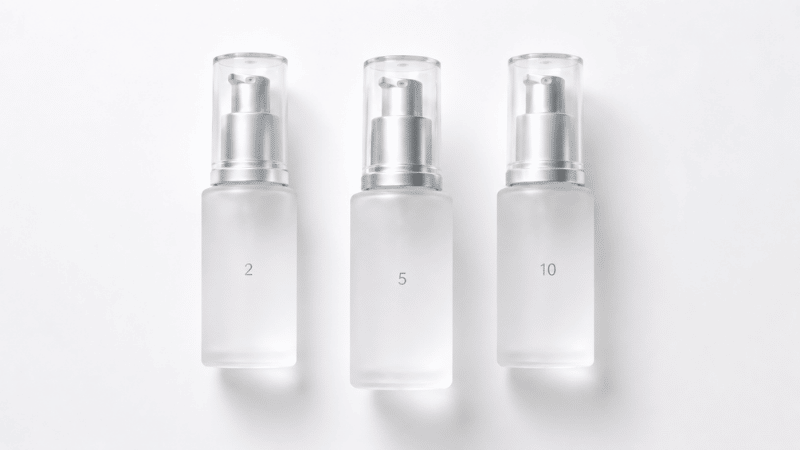
Below 2%: Generally insufficient for clinically meaningful effects on hyperpigmentation, barrier function, or anti-aging. Niacinamide present at this concentration may provide some antioxidant benefit and is not harmful, but the functional effects that make niacinamide worth seeking out are not reliably produced at sub-2% concentrations.
2–5%: The optimal efficacy range for most skin concerns. Clinical trials demonstrating improvements in fine lines, hyperpigmentation, texture, and barrier function have primarily used 4–5% niacinamide. At these concentrations, the barrier lipid synthesis, melanosome transfer inhibition, and anti-inflammatory mechanisms are fully engaged with minimal irritation risk.
5–10%: Some studies show additional benefit for specific concerns (sebum regulation, acne) at 10%, but the dose-response curve flattens for most anti-aging and brightening applications above 5%. Irritation risk increases at higher concentrations, particularly for mature skin with a compromised barrier.
Above 10%: Diminishing returns with meaningfully higher irritation potential. Not recommended for general anti-aging use.
The practical implication for product selection: When evaluating a niacinamide product, look for the concentration listed on the label (many brands disclose this) or look for niacinamide positioned within the first five to eight ingredients on the INCI list — ingredient position correlates with concentration, and positioning indicates you’re likely in the 4–5% range or above in a product that lists it early.
Editor’s note: The proliferation of 10% niacinamide products — driven partly by The Ordinary’s popularisation of high-percentage single-ingredient formulas — has led many consumers to believe more is better. The evidence doesn’t support this for anti-aging applications. A well-formulated 5% niacinamide in a stabilised serum base outperforms a poorly formulated 10% in most real-world skin outcomes. Concentration is not the only variable.
Is Luxury Niacinamide Worth the Premium?
Like squalane, niacinamide is a relatively inexpensive raw ingredient to produce — which means it is available at a wide range of price points, from The Ordinary’s 10% Niacinamide + Zinc serum at under $10 to luxury formulations from brands like Shiseido, La Mer, and SkinCeuticals where niacinamide is combined with other premium actives.
Where the premium is justified:
Formulation stability and pH calibration. Niacinamide is water-soluble and relatively stable, but its efficacy is affected by the pH of the overall formula. A luxury formulation with carefully calibrated pH, stabilised active concentrations, and appropriate delivery system will perform more consistently than a basic formula where these variables are less controlled.
Combination with complementary actives. Many luxury niacinamide formulations combine it with ceramides, peptides, or encapsulated Vitamin C — creating a multi-active product where the premium reflects the combined efficacy rather than the niacinamide alone. Evaluating these on the niacinamide concentration alone misses the point.
Texture and compliance. A luxury niacinamide serum with a sophisticated, comfortable texture is more likely to be used twice daily, consistently, for 24 weeks — which is the timeline at which the most significant documented benefits appear. Compliance is the variable that most determines outcomes, and a product you enjoy using is a product you’ll use consistently.
Where the premium is less justified:
Pure niacinamide at 4–5% in a stable, well-formulated base performs the same function regardless of brand. If your budget is limited, a mid-range niacinamide serum from a clinically credible formulation brand (Paula’s Choice, The INKEY List at 10% — noting that this is higher than the optimal range but well-tolerated for most) is functionally appropriate. Luxury spend is better directed at the categories where formulation technology creates meaningful performance differences: retinoids, Vitamin C, and delivery-sensitive peptide formulations.
When Niacinamide Isn’t Producing Results — An Honest Self-Audit
If you’ve been using a niacinamide product for two to three months without visible improvement in the concern you were targeting, consider these variables before concluding the ingredient doesn’t work for you:
Concentration audit: Is the product likely in the 4–5% range? If niacinamide appears late in a long ingredient list, the concentration may be sub-therapeutic.
Consistency audit: Are you using it twice daily? Once-daily use is not the protocol that clinical studies use. Niacinamide benefits are documented in twice-daily application trials.
Timeline audit: For hyperpigmentation, 8–12 weeks of consistent use is the minimum assessment period. For barrier function and fine line improvement, the significant changes documented in research occur at 12–24 weeks.
Expectation audit: Niacinamide does not stimulate collagen synthesis at the level retinoids do. It does not eliminate deep static wrinkles. It does not replace SPF as a photoprotective measure. If these are your expectations, the tool does not match the outcome — not because niacinamide doesn’t work, but because those outcomes require different interventions.
FAQ
What does niacinamide do for aging skin specifically? For mature skin, niacinamide’s most relevant functions are barrier repair (stimulating ceramide synthesis that supports hydration and resilience), hyperpigmentation reduction (inhibiting melanosome transfer for more even tone), fine line improvement (documented in 12-week RCTs at 5%), and NAD⁺ replenishment that supports cellular energy for skin repair processes. It is also one of the most effective tolerance-enhancing companions for retinoids — reducing the barrier disruption of the adjustment phase.
Niacinamide vs retinol — which should I use first if I’m starting from scratch? Start with niacinamide. It has no adjustment period, no irritation risk at standard concentrations, and provides the barrier foundation that makes subsequent retinoid introduction more comfortable and effective. Use niacinamide consistently for four to six weeks — both morning and evening — before introducing retinol. When you add retinol, use the niacinamide moisturiser as the buffering layer over it.
Can niacinamide cause purging? No. Purging — the temporary increase in breakouts caused by accelerated cellular turnover — is associated with actives that increase cell turnover rate (retinoids, AHAs, BHAs). Niacinamide does not accelerate cellular turnover. Any breakouts that occur shortly after starting niacinamide are either coincidental or a reaction to another ingredient in the formula, not a niacinamide purge.
How long does niacinamide take to work for dark spots? For hyperpigmentation, visible improvement typically begins at 8–10 weeks of twice-daily consistent use, with more significant changes at 12–16 weeks. Deeper, more established spots (solar lentigines, melasma) respond more slowly than post-inflammatory hyperpigmentation. Results are maintained with continued use and may gradually fade if niacinamide is discontinued, as melanosome transfer returns to baseline.
Is 10% niacinamide better than 5% for anti-aging? The published evidence does not support a meaningful clinical advantage of 10% over 5% for anti-aging applications. The dose-response curve for the barrier, anti-aging, and brightening benefits of niacinamide plateaus at approximately 5% for most users. Above 5%, irritation risk increases without proportional efficacy gains for most skin concerns. For sebum regulation in oily skin, 10% has some evidence of additional benefit — but for mature, potentially drier skin with anti-aging priorities, 4–5% is the optimal target.
Can I use niacinamide with all my other actives? For most practical purposes, yes. Niacinamide is compatible with retinoids, Vitamin C (with appropriate sequencing), AHAs, BHAs, hyaluronic acid, peptides, ceramides, and SPF. The one interaction to be aware of is sequencing with L-ascorbic acid Vitamin C — apply the low-pH Vitamin C serum first and allow it to fully absorb before applying niacinamide, to prevent the surface pH from rising and reducing the Vitamin C’s penetration. Beyond this, niacinamide is the most compatible major active in a complex routine.
The Ingredient Worth Understanding Properly
Niacinamide’s ubiquity in contemporary skincare is earned. A water-soluble vitamin with four distinct, clinically documented mechanisms — barrier repair, NAD⁺ replenishment, melanosome transfer inhibition, and antioxidant activity — that is photostable, pH-flexible, universally well-tolerated, and effective at concentrations available in mid-range to luxury formulations.
The mistake is treating it as a generic moisturising additive rather than as a precision active with specific mechanisms, a documented optimal concentration range, and a 24-week timeline for its most significant structural effects. Used with that understanding — at 4–5%, twice daily, consistently, alongside the retinoid routine it helps to sustain — niacinamide skincare is among the most evidence-supported investments in a mature skin routine.
For the complete routine framework that places niacinamide in its proper context alongside retinoids, Vitamin C, peptides, and SPF, see our guide to the full skincare routine for aging skin [→ /skincare-routine-for-aging-skin/].
References
- Marques, C., et al. (2024). Mechanistic insights into the multiple functions of niacinamide: Therapeutic implications and cosmeceutical applications in functional skincare products. Antioxidants (Basel), 13(4), 425. PMC11047333.
- Bissett, D.L., et al. (2005). Niacinamide: A B vitamin that improves aging facial skin appearance. Dermatologic Surgery, 31(7 Pt 2), 860–866.
- Hakozaki, T., et al. (2002). The effect of niacinamide on reducing cutaneous pigmentation and suppression of melanosome transfer. British Journal of Dermatology, 147(1), 20–31.
- Levin, J., & Momin, S.B. (2010). How much do we really know about our favourite cosmeceutical ingredients? Journal of Clinical and Aesthetic Dermatology, 3(2), 22–41.
- Draelos, Z.D., et al. (2007). The effect of 2% niacinamide on facial sebum production. Journal of Cosmetic and Laser Therapy, 8(2), 96–101.
- Ganceviciene, R., et al. (2012). Skin anti-aging strategies. Dermato-Endocrinology, 4(3), 308–319.