
You’re standing at your bathroom counter with four products and a schedule. The serum you spent considerable thought selecting. The moisturiser that finally feels right for your skin. The retinol you’ve committed to using consistently. And the Vitamin C that you know, in theory, belongs somewhere in the sequence. You apply them in what feels like a logical order — and then spend the next few days wondering whether you got it right, whether the expensive active you applied second was sitting on top of a barrier that prevented it from working, or whether the combination you used last night was actually counterproductive.
This is a more common experience than most skincare content acknowledges. The question of serum before or after moisturizer — and all the derivative questions it leads to — isn’t about being a beginner. It’s about trying to do something thoughtfully, with products that cost real money, and wanting to know that the investment is landing correctly.
The answers are clearer than the conflicting advice online suggests. And more importantly, understanding the logic behind the answers means you’ll never need to Google this again.
Key Takeaways
- Serum always goes before moisturiser. The molecular logic: serums contain smaller, more concentrated active molecules that need direct access to the skin; moisturisers create an occlusive or semi-occlusive layer that, if applied first, partially blocks penetration.
- Vitamin C belongs in the morning, where its antioxidant properties neutralise UV-induced free radical damage in real time. It is photostable enough for daytime use and loses efficacy if left in a drawer until evening.
- Retinol belongs in the evening, on dry skin, because UV exposure degrades it and its mechanism (cellular turnover stimulation) aligns with the skin’s natural nighttime repair cycle.
- The retinol + Vitamin C conflict is largely a myth based on outdated chemistry. At standard skincare concentrations and normal temperatures, the two do not meaningfully deactivate each other — the practical reason to separate them is tolerability, not chemistry.
- Niacinamide is the most routing-flexible active in a mature skin routine — it can go morning or evening, before or after most other ingredients, making it one of the most valuable additions for women managing a multi-active regimen.
Why Skincare Layering Order Actually Matters — The Molecular Logic
Before getting into specific questions, it helps to understand the two principles that make layering order meaningful rather than arbitrary.
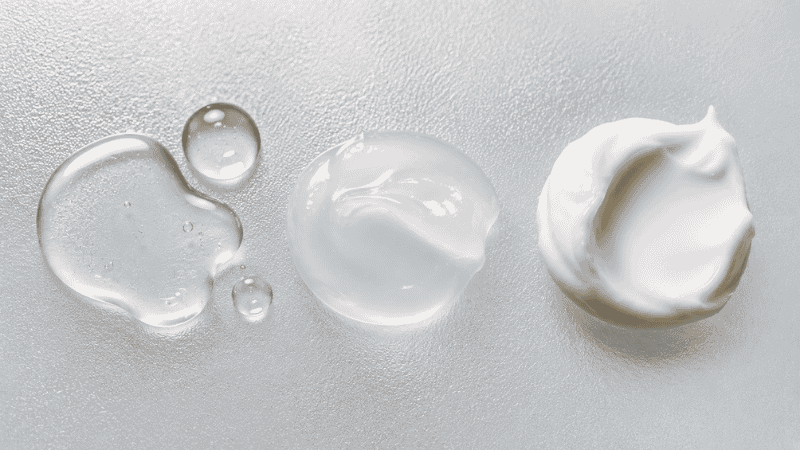
Principle one: Molecular weight and penetration. Skin absorbs ingredients in roughly inverse proportion to their molecular size. Toners and essences — lightweight, water-based, low molecular weight — penetrate quickly and deeply. Serums — more concentrated, slightly higher molecular weight, often with penetration enhancers — absorb more slowly but deliver actives to the deeper epidermal layers. Moisturisers — containing larger lipid and occlusive molecules — sit primarily in and on the stratum corneum, reinforcing the barrier and slowing water loss. Face oils, with the largest lipid molecules, sit on top of all of the above.
This is the molecular basis of “thin to thick.” It’s not a stylistic preference — it’s a delivery sequence that ensures each product reaches the tissue depth where it functions.
Principle two: pH and ingredient compatibility. Some actives require specific pH environments to function. L-ascorbic acid (Vitamin C) is effective at pH 2.5–3.5; applying a higher-pH product before it has fully absorbed can raise the skin’s surface pH and reduce its penetration. Retinoids function at a broader pH range but require dry skin for controlled delivery — damp skin increases absorption rate and therefore irritation potential. Understanding these requirements shapes not just the order but the timing between steps.
Serum Before or After Moisturizer — The Definitive Answer
Serum goes before moisturiser. Always, with one narrow exception.
The reason is molecular: serums contain active ingredients at concentrated levels, in formulations designed to penetrate through the epidermis to reach target cells in the deeper layers. Moisturisers contain occlusives, emollients, and humectants — ingredients that work primarily at the surface, reinforcing the barrier and reducing transepidermal water loss. If moisturiser is applied first, its occlusive components create a partial barrier that reduces the penetration of the serum applied over it.
The narrow exception: the “buffering” technique used with retinol. Applying a small amount of moisturiser before retinol — on dry skin, fully absorbed — creates a dilution effect that reduces irritation during the adjustment phase without completely blocking penetration. This is a deliberate technique for sensitive skin, not a general reversal of the rule.
The standard sequence after cleansing: Toner (if used) → Essence (if used) → Serum(s) → Eye cream → Moisturiser → Face oil (if used) → SPF (morning only, always last)
For how to layer serums when using multiple active serums, apply the thinnest, most water-like formulation first, allowing 60–90 seconds between each application. In practice, most mature skin routines work best with one primary active serum per session — Vitamin C in the morning, retinol in the evening — rather than stacking multiple actives simultaneously.
Toner Before or After Serum — And Do You Actually Need One?
Toner goes before serum. The sequencing is clear: toners are the thinnest, most water-like products in the routine, and they serve as a preparatory layer — removing any residual cleanser, briefly rebalancing skin pH after cleansing (which can be mildly alkaline-disrupting), and providing an initial layer of hydration that improves the absorption of subsequent steps.
The more interesting question is whether a toner is necessary at all, particularly for mature skin. The honest answer: it depends on what your toner is doing.
Alcohol-based toners — still prevalent in many ranges — are actively counterproductive for mature skin. They disrupt the barrier, remove sebum the skin needs, and contribute to the chronic low-grade dryness that accelerates the visible signs of aging. These should simply not be part of a mature skin routine.
Hydrating toners and essences — particularly those containing hyaluronic acid, niacinamide, ceramides, or fermented ingredients — function as a legitimate hydration layer that improves serum absorption. For mature skin that tends toward dryness, this step adds meaningful hydration and can improve the overall feel of the routine.
The practical guidance: If your toner is hydrating, alcohol-free, and contains beneficial actives, it earns its place. If it’s primarily astringent or contains alcohol, it’s working against you, not for you.
Vitamin C Morning or Night — The Photostability Reason Most Articles Skip
Vitamin C belongs in the morning. The answer is straightforward but the reasoning is more nuanced than “it brightens you for the day.”
L-ascorbic acid is an antioxidant — its primary mechanism is neutralising free radicals, the unstable molecules generated by UV exposure and environmental pollution that trigger MMP activation and collagen breakdown. This neutralisation is most valuable when it happens in real time, during the period of UV exposure. Applying Vitamin C in the morning creates an antioxidant reservoir in the skin that is actively consumed as UV exposure occurs throughout the day.
Applied in the evening, Vitamin C still contributes to collagen synthesis support (it is an essential cofactor in the enzymatic process that creates collagen), but its antioxidant function is less optimally timed — there is no UV exposure to neutralise. It’s not wasted, but it’s not working at full strategic value.
There is also a stability consideration. L-ascorbic acid begins to oxidise upon exposure to air and light. Leaving Vitamin C on the skin overnight, without the UV context that maximises its function, simply ages the product in situ. Morning application, followed by the protective layer of SPF over it, is the sequence that makes the most biological sense.
The complete morning Vitamin C protocol: Apply to clean, dry skin after any toner. Allow 60–90 seconds to absorb before the next step. Follow with peptide serum or moisturiser, then SPF as the final step. Never skip the SPF — without UV protection over it, Vitamin C’s antioxidant function is rapidly depleted.
Niacinamide Morning or Night — The Most Forgiving Active You Own
Niacinamide — Vitamin B3, effective at 4–5% in well-formulated products — is photostable, pH-flexible, and compatible with almost every other active in a mature skin routine. This makes it genuinely unusual among skincare ingredients, most of which have timing or compatibility constraints.
The honest answer to “niacinamide morning or night” is: either, or both.
In the morning, niacinamide provides anti-inflammatory protection, barrier reinforcement, and sebum regulation — all of which support the skin through the daily environmental exposure ahead. It pairs well with Vitamin C (the concern that they react to form niacin at skincare concentrations is not supported by the chemistry at standard formulation temperatures and percentages).
In the evening, niacinamide supports the retinol adjustment phase by reinforcing barrier function and reducing the inflammatory response that causes dryness and peeling. Applied as part of the moisturiser over retinol, it is one of the most effective strategies for improving retinol tolerability without reducing its efficacy.
For mature skin managing a multi-active routine, niacinamide in the evening moisturiser is the most practical application — it arrives exactly where it’s most needed, at the moment when barrier support matters most.
Can You Mix Retinol and Vitamin C — The Updated Science
The belief that retinol and Vitamin C cannot be used together — that they “cancel each other out” or cause skin damage in combination — is one of the most persistent myths in skincare, and it is worth addressing directly because it causes a significant number of women to over-complicate their routines unnecessarily.
The chemistry concern was based on early research showing that ascorbic acid can oxidise retinol under specific conditions — high concentrations, elevated temperatures, prolonged exposure. These conditions do not reflect what happens on skin at skincare formulation concentrations and ambient temperatures. The two molecules do not meaningfully deactivate each other in standard cosmetic use.
The practical reason to separate them — Vitamin C in the morning, retinol in the evening — is about tolerability and strategic timing, not chemical incompatibility. Both can cause transient sensitivity, and using them simultaneously increases the likelihood of irritation without proportionally increasing benefit. More importantly, each ingredient’s optimal timing (morning for antioxidant protection, evening for cellular renewal) happens to separate them naturally. The morning/evening split is sensible for biological reasons regardless of any compatibility concern.
Editor’s note: If you’ve been avoiding using Vitamin C because you use retinol, you’ve been leaving your most effective morning antioxidant unused. The pairing is not just safe — it’s one of the most evidence-supported combinations in anti-aging skincare. Start using both.
Can You Use Retinol and Niacinamide Together?
Yes — and for mature skin, this combination is actively recommended rather than merely permitted.
Retinol and niacinamide work through completely different mechanisms and do not interfere with each other at the molecular level. In practice, niacinamide significantly reduces the irritation, dryness, and barrier disruption of the retinol adjustment phase — making the combination more tolerable than retinol alone for most mature skin types.
The optimal application sequence: retinol applied first to dry skin, allowed to absorb for 60–90 seconds, followed by a niacinamide-containing moisturiser over it. The moisturiser provides the barrier support that makes retinol sustainable for nightly use; the niacinamide within it provides additional anti-inflammatory and barrier-strengthening benefit simultaneously.
For women who have struggled with retinol tolerance in the past, introducing a niacinamide serum or moisturiser as the step immediately following retinol is one of the most effective adjustments available. It does not reduce retinol’s efficacy — it simply allows the skin to adapt to the active without the chronic irritation that causes many women to abandon retinol before reaching the results phase.
What Not to Mix with Retinol — The Short, Honest List
Retinol is a potent active, and there are genuine incompatibilities worth knowing — not because they cause dramatic reactions, but because they increase irritation risk without adding benefit. For mature skin, which has a less robust barrier than younger skin, managing that irritation risk is practically important.
AHAs and BHAs with retinol (same session): Alpha hydroxy acids (glycolic, lactic) and beta hydroxy acids (salicylic) are both exfoliants, as is retinol in its mechanism. Using them in the same session creates a compounded exfoliant load that frequently exceeds what even adapted skin can manage without inflammation. Separate them: exfoliant acids two to three times per week, retinol on the remaining evenings, or use acids in the morning and retinol in the evening if your skin is well-adapted to both.
Benzoyl peroxide with retinol: Benzoyl peroxide can oxidise retinol and reduce its efficacy. For the rare mature skin user also managing acne, separate the two into morning (benzoyl peroxide) and evening (retinol) applications.
Physical scrubs and retinol: Manual exfoliation — cleansing brushes, scrubs, textured cloths — on the same evening as retinol application is simply excessive exfoliation. On retinol evenings, cleanse with the gentlest possible method.
What does not conflict with retinol: Hyaluronic acid, ceramides, peptides, niacinamide, squalane, and most other moisturising and barrier-support ingredients. The list of actual conflicts is considerably shorter than internet forums suggest.
Can You Use Vitamin C and Niacinamide Together?
Yes. The concern that Vitamin C and niacinamide react on skin to produce niacin — a compound that causes flushing — was based on studies using temperatures of 100°C and concentrations far exceeding any cosmetic formulation. On skin, at room temperature and cosmetic concentrations, this reaction does not meaningfully occur.
They are not only compatible — they are synergistic in certain respects. Vitamin C addresses pigmentation through melanin inhibition; niacinamide addresses pigmentation through a different pathway (melanosome transfer inhibition). Used together, they address hyperpigmentation more comprehensively than either does alone, which is why you’ll find both in many sophisticated brightening formulations.
Apply Vitamin C first (to lower-pH, freshly cleansed skin) and allow it to fully absorb — approximately 60–90 seconds — before applying niacinamide. This sequencing respects the pH requirements of L-ascorbic acid without complicating the routine unnecessarily.
The Complete Morning Sequence for Mature Skin (With Timing)
A morning routine for mature skin should take approximately 8–12 minutes from cleanse to SPF. This is not a rigid prescription — it is a framework calibrated to the biology of mature skin and the specific requirements of the actives involved.
Gentle cleanse — 60 seconds. Water only if skin is not visibly oily from the previous evening’s products; mild cleanser if needed. No sulphates, no fragrance.
Hydrating toner or essence — 30 seconds application, 30 seconds absorption. Optional, but valuable for mature or dry skin types.
Vitamin C serum — Apply to dry skin, 60–90 seconds to absorb. This step is non-negotiable for morning routines. It protects the investment of every other step that follows.
Peptide serum — If using a separate peptide product, apply after Vitamin C. Allow 60 seconds.
Eye cream — If using, apply after serums and before moisturiser. Use ring finger, gentle tapping motion to the orbital bone area.
Moisturiser — The sealing step. For mature skin, look for ceramides, glycerin, and niacinamide. Apply to neck as well as face.
SPF 30+ broad-spectrum — The final step, every morning, regardless of weather. Apply generously to face, neck, and any exposed décolletage. Reapply after two hours of significant outdoor exposure.
The Complete Evening Sequence for Mature Skin (With Timing)
Evening routines can be slightly slower — this is the repair phase, and rushing it defeats the purpose of the actives involved.
Double cleanse (if wearing SPF or makeup) — Oil-based cleanser first to dissolve sunscreen and makeup, water-based cleanser second to complete. If no SPF or makeup was worn, a single gentle cleanse suffices.
Wait 20–30 minutes, or ensure skin is fully dry — This is the step most people skip and the reason many people experience more retinol irritation than necessary. Dry skin is the requirement for controlled retinol delivery.
Retinol — Pea-sized amount for the full face. Every third night during the adjustment phase (first 4–6 weeks); every other night thereafter; nightly once fully adapted. Allow 60–90 seconds to absorb.
Niacinamide moisturiser — The buffering and barrier-repair step. Applied over retinol, it reduces irritation and supports the skin’s adaptive response. Look for ceramides, fatty acids, and niacinamide in this product.
Face oil (optional, for dry or mature skin) — Squalane, marula, or rosehip as a final seal. Applied after moisturiser, pressed gently into the skin. This step is particularly valuable in winter or for mature skin that loses moisture rapidly overnight.
When You Have 5 Minutes — The Non-Negotiable Steps
A compressed routine is not a failed routine. Applied consistently, four steps outperform ten steps done sporadically — every time.
Morning, 5 minutes: Rinse or gentle cleanse → Vitamin C serum → SPF. These three steps, done consistently, are the most evidence-backed morning investment available in topical skincare. Everything else adds to this foundation; nothing replaces it.
Evening, 5 minutes: Gentle cleanse → Retinol (every third night initially) → Ceramide moisturiser. The retinol-plus-barrier-support protocol is the single most impactful evening investment for mature skin. The rest of the routine is meaningful amplification of this core.
Editor’s note: The skincare industry has a vested interest in making routines feel incomplete without ten steps and a shelf full of products. Your skin does not share that interest. A well-chosen four-step routine executed with consistency will outperform a sophisticated ten-step routine done when you remember to.
Signs You’re Over-Layering — And How to Simplify
More products do not mean more results. In mature skin, which has a reduced barrier tolerance compared to younger skin, over-layering is a genuinely common problem — and it often masquerades as “my skin is just sensitive” or “retinol doesn’t work for me.”
Signs that your routine may be doing more harm than good:
- Persistent low-grade redness or tightness that doesn’t resolve between sessions
- Increased sensitivity to products that previously felt comfortable
- Pilling — where products roll off the skin rather than absorbing — indicating that the skin’s absorption capacity has been exceeded
- Products feeling uncomfortable rather than settled within 30 minutes of application
- A general sense that your skin is reactive without a clear cause
The simplification protocol: Strip back to four steps — cleanser, one active serum, moisturiser, SPF — for four to six weeks. Allow the barrier to recover. Reintroduce actives one at a time, at intervals of four weeks, observing how the skin responds at each addition. This is not starting over — it is diagnostic clarity.
When to Seek Professional Input
Skincare layering questions are, in most cases, entirely self-navigable with accurate information. Professional guidance becomes relevant if:
You have persistent skin reactivity that doesn’t resolve after six weeks of simplified, barrier-first care — this may indicate rosacea, perioral dermatitis, or a compromised barrier requiring clinical intervention rather than routine adjustment. If you’re considering prescription actives (tretinoin, hydroquinone, or azelaic acid at prescription strength) that interact differently with OTC products than retinol does. Or if you’re post-procedure — following laser resurfacing, chemical peels, or microneedling — where the standard layering rules require modification during the healing window.
FAQ
Does serum go before or after moisturizer if I’m using both a Vitamin C serum and a peptide serum? Both serums go before moisturiser. Apply Vitamin C first (lowest pH, needs direct skin contact), allow it to absorb, then apply the peptide serum, allow that to absorb, then apply moisturiser. The sequence within serums follows the same thin-to-thick, lowest-pH-first logic as the overall routine.
Can I use toner before or after serum if my toner contains active ingredients? Toner always goes before serum, even if it contains actives. Active-containing toners (niacinamide toners, AHA toners, hydrating essences with HA) function as the first treatment layer — they don’t replace serums but complement them. Apply toner to slightly damp skin after cleansing, allow it to absorb, then follow with serum.
What not to mix with retinol if I also use AHAs? Avoid AHAs and retinol in the same evening application. The simplest solution: use chemical exfoliants (glycolic, lactic, salicylic) two to three evenings per week, and use retinol on the other evenings. They do not need to be in entirely separate weeks — just not the same night. Once your skin is fully adapted to retinol (typically after three to four months), some users find they can tolerate a low-concentration AHA on retinol evenings without significant irritation, but this is individual and should be approached cautiously.
Is vitamin C morning or night better if I have sensitive skin? Morning, with the same logic as non-sensitive skin — but consider starting with a lower concentration (10% rather than 15–20%) or a more stable, less acidic Vitamin C derivative (ascorbyl glucoside, sodium ascorbyl phosphate) that is less likely to cause the initial tingling that L-ascorbic acid produces. These derivatives are less potent than L-ascorbic acid but significantly more tolerable, making them a reasonable entry point for sensitive mature skin.
How many serums can I layer in one routine? The practical limit for mature skin is two serums per session — one targeted active (Vitamin C in the morning, retinol in the evening) and one supporting serum (peptide, hydrating HA, or barrier-repair). Beyond two serums, the incremental benefit decreases while the irritation and pilling risk increases. A single well-chosen, well-formulated serum will outperform three mediocre ones layered together.
Can you use retinol and niacinamide together if your skin is already quite dry? Yes — and for dry mature skin specifically, the niacinamide moisturiser over retinol protocol is the recommended approach rather than the exception. Dry mature skin often struggles with retinol tolerance; niacinamide’s barrier-strengthening and anti-inflammatory properties directly address the dryness and reactivity that make retinol difficult. Use a particularly rich ceramide moisturiser for this step if your skin is significantly dry.
The Sequence, Simplified
Layering skincare correctly is not complex once the logic is clear. Serum before moisturiser — always. Vitamin C in the morning, retinol in the evening. The “conflicts” between ingredients are almost universally either timing preferences masquerading as chemistry concerns, or genuine but manageable incompatibilities that a simple morning/evening split resolves.
For the complete routine that this layering guide sits within — with full product category guidance, ingredient selection, and mature skin-specific adjustments — see our comprehensive skincare routine for aging skin [→ /skincare-routine-for-aging-skin/].
If you’re working through the retinol adjustment phase and wondering how layering affects that process specifically, the timing and sequencing details are in our guide to how long retinol takes to work [→ /how-long-does-retinol-take-to-work/].
And if you’re trying to understand where peptides fit in the layering sequence alongside your other actives, the complete explanation is in our guide to what peptides do for skin [→ /what-do-peptides-do-for-skin/].
References
- Telang, P.S. (2013). Vitamin C in dermatology. Indian Dermatology Online Journal, 4(2), 143–146.
- Mukherjee, S., et al. (2006). Retinoids in the treatment of skin aging. Clinical Interventions in Aging, 1(4), 327–348.
- Levin, J., & Momin, S.B. (2010). How much do we really know about our favourite cosmeceutical ingredients? Journal of Clinical and Aesthetic Dermatology, 3(2), 22–41.
- Draelos, Z.D. (2010). The science behind skin care: Moisturizers. Journal of Cosmetic Dermatology, 17(2), 138–144.
- Baumann, L. (2007). Skin ageing and its treatment. Journal of Pathology, 211(2), 241–251.
- Gorouhi, F., & Maibach, H.I. (2009). Role of topical peptides in preventing or treating aged skin. International Journal of Cosmetic Science, 31(5), 327–345.