
You’ve seen the word on almost every premium serum label you’ve considered in the past two years. “Peptide complex.” “Multi-peptide formula.” “Biomimetic peptides.” Sometimes listed with a number — Matrixyl 3000, Argireline, GHK-Cu — that sounds precise enough to suggest something meaningful is happening inside the bottle. And yet, if someone asked you right now to explain what peptides actually do for skin, you’d probably pause.
This ambiguity is not your failure. It’s the predictable result of an ingredient that has been marketed far more aggressively than it has been explained. Brands use peptides as a shorthand for “advanced” and “scientific” without ever really telling you what they’re doing, for whom, and at what point in a routine they earn their place.
The honest answer is that what peptides do for skin is both more specific and more interesting than the marketing suggests — and also more nuanced than the enthusiasts claim. This guide cuts through both the hype and the scepticism, gives you the clinical picture, and helps you understand exactly where peptides belong in a serious anti-aging routine.
Key Takeaways
- Peptides are short chains of amino acids that act as biological signals in the skin — they do not add structure directly, but instruct your skin’s own cells to produce it.
- Signal peptides, specifically Matrixyl (palmitoyl pentapeptide-4), have the strongest consumer-facing clinical evidence: a double-blind study published in the International Journal of Cosmetic Science demonstrated measurable reductions in wrinkle depth and improvements in skin firmness over 12 weeks of twice-daily application.
- GHK-Cu (copper peptide) has one of the most robust research records of any topical peptide, with evidence supporting both collagen stimulation and inhibition of the enzymes that break down existing collagen.
- Peptides are significantly more tolerable than retinoids, making them a viable primary active for those who cannot use retinol — and a valuable complement for those who can.
- In luxury skincare, the peptide category is where formulation technology matters most: penetration enhancement, delivery vehicle, and peptide concentration determine whether the product delivers clinical results or simply contains a cosmetically insignificant amount of an impressive-sounding ingredient.
What Do Peptides Do for Skin — The Biological Mechanism
To understand what peptides do for skin, it helps to understand what they are at the most basic level — and why that matters for how they function.
Peptides are short chains of amino acids, the same building blocks that make up proteins like collagen and elastin. In the skin, certain peptides act as biological messengers: they bind to receptors on fibroblasts and other skin cells, triggering specific responses — increased collagen production, reduced inflammatory activity, inhibited enzyme breakdown of structural proteins. They don’t add collagen to the skin from the outside. They signal your skin’s own cellular machinery to produce more of it from within.
This distinction is important, because it explains both why peptides work and why they are slower to show results than some consumers expect. They are communicating with your biology, not overriding it. The response — new collagen synthesis, improved matrix organisation — takes weeks to months to become visible at the surface.
One significant challenge in peptide skincare is penetration. Peptides are relatively large, hydrophilic molecules, which means they face real barriers in crossing the stratum corneum — the skin’s outermost protective layer — to reach the fibroblasts where their effect occurs. This is precisely why delivery technology in luxury formulations is not a marketing add-on: liposomal encapsulation, peptide-lipid conjugation (the mechanism behind palmitoyl peptides), and nano-emulsion carriers all meaningfully improve the proportion of active peptide that actually reaches its target. A peptide serum without investment in delivery technology may contain the right ingredients at insufficient depth of penetration.
The Four Types of Peptides in Skincare — And What Each One Actually Does
The peptide category encompasses dozens of individual molecules with very different mechanisms. For anti-aging and mature skin purposes, four functional types are most relevant — and knowing which you’re looking for changes how you read a product label.
Signal Peptides — What Is Matrixyl 3000 and Does It Work?
Signal peptides are the most directly relevant type for anti-aging purposes. They work by mimicking the small protein fragments that occur naturally when collagen breaks down — fragments that the skin interprets as a signal to initiate new collagen synthesis. In effect, they trick the skin into a repair response.
Matrixyl (palmitoyl pentapeptide-4) is the most studied signal peptide in cosmetic science. The “palmitoyl” prefix indicates that a fatty acid chain has been attached to the peptide, improving its ability to penetrate the lipid-rich stratum corneum — this is one of the formulation innovations that separates functional peptides from ineffective ones. A double-blind, placebo-controlled study published in the International Journal of Cosmetic Science found that participants using a Matrixyl-containing formula experienced statistically significant improvements in skin firmness and wrinkle depth reduction over 12 weeks of consistent use.
Matrixyl 3000 is a combination of palmitoyl tetrapeptide-7 and palmitoyl tripeptide-1, designed to target multiple pathways in the collagen synthesis and inflammatory cascade simultaneously. Matrixyl Synthe’6 targets six components of the skin’s extracellular matrix. Both represent formulation advances on the original Matrixyl with a growing clinical record.
Editor’s note: When a brand lists “peptide complex” without naming specific peptides, this is a signal worth noting. Named peptides — Matrixyl, Argireline, GHK-Cu — have specific, verifiable research behind them. Unnamed complexes may contain them at meaningful concentrations, or may contain them at cosmetically irrelevant levels. The distinction matters for results.
GHK-Cu Copper Peptide Benefits — The Most Researched Carrier Peptide
Copper peptides (GHK-Cu, or glycyl-L-histidyl-L-lysine copper) represent the carrier peptide category — they deliver trace minerals (in this case, copper ions) to the dermis, where copper serves as an essential cofactor in the enzymatic processes that produce collagen and elastin.
Different types of peptides serve unique roles: signal peptides stimulate collagen synthesis, carrier peptides deliver essential minerals for skin regeneration, neurotransmitter inhibitor peptides relax facial muscles to minimise wrinkles, and enzyme inhibitor peptides help prevent collagen breakdown.
GHK-Cu has a particularly robust research record. Studies have demonstrated that it both stimulates new collagen production and simultaneously inhibits matrix metalloproteinases (MMPs) — the enzymes that break down existing collagen and elastin. This dual mechanism is unusual and clinically meaningful: most pro-collagen actives address only the synthesis side, while GHK-Cu addresses both building and protection.
For mature skin specifically, where MMP activity is elevated relative to younger skin (partly due to UV-induced activation and partly to the hormonal changes of perimenopause), this protective dimension is particularly valuable. Copper peptide serums have also demonstrated anti-inflammatory properties, wound-healing support, and antioxidant activity — a functional breadth that makes them one of the more versatile actives in the luxury peptide category.
Neurotransmitter-Inhibiting Peptides — What Argireline Actually Does
Argireline (acetyl hexapeptide-3) is perhaps the most marketed peptide in luxury skincare, frequently positioned as a “topical Botox.” This framing is both partially accurate and significantly overstated, and it’s worth being precise about what Argireline actually does.
Argireline inhibits the release of neurotransmitters at the neuromuscular junction — the same mechanism as botulinum toxin, but topically applied and at a fraction of the intensity. The result, in clinical studies, is a modest reduction in the depth of expression lines (the dynamic wrinkles caused by repeated facial movement) in high-movement areas. A randomised controlled trial published in the American Journal of Clinical Dermatology found that twice-daily Argireline application over 30 days produced a measurable reduction in wrinkle depth around the eyes.
The realistic expectation: Argireline produces subtle relaxation of expression lines, not the pronounced smoothing of clinical neurotoxin treatment. It is a genuine cosmetic active with real — if modest — evidence behind it, not a marketing fiction. For mature skin where expression lines have become static, its effect is limited; it is most effective on lines that are still predominantly dynamic.
Enzyme Inhibitor Peptides — The Quiet Protectors
The fourth category — enzyme inhibitor peptides — works by blocking the MMPs and other proteolytic enzymes that continuously break down collagen and elastin in the dermis. Unlike signal peptides (which stimulate production) or copper peptides (which do both), enzyme inhibitors are primarily protective in function.
Soy isoflavone derivatives and certain tripeptides in this category have demonstrated MMP-inhibiting activity in published research. They are less often featured in brand marketing — protection is a harder sell than visible change — but in a comprehensive anti-aging routine, they represent a meaningful layer of structural preservation. In mature skin, where collagen breakdown rates exceed synthesis rates, protecting existing collagen is as important as stimulating new production.
Do Peptides Actually Work? What the Clinical Evidence Says
This is the question that deserves a direct answer, because the peptide landscape contains both genuinely effective ingredients and a great deal of expensive inefficacy.
The honest summary of the clinical evidence: certain peptides, at sufficient concentrations, in well-designed delivery systems, do produce measurable improvements in skin firmness, wrinkle depth, and elasticity — particularly with consistent use over 8–12 weeks. The Frontiers in Medicine systematic review published in early 2026, which analysed randomised controlled trials of both topical and oral peptides, found consistent evidence for improvements in skin hydration, elasticity, and wrinkle parameters across multiple peptide types and formulations.
A study published in the International Journal of Cosmetic Science found that participants using peptide-containing products experienced significant improvements in skin firmness and reduction in wrinkle depth over a 12-week period.
The caveats are equally important. Many consumer-facing peptide products are formulated with insufficient concentration, inadequate delivery technology, or peptide types without strong clinical evidence. The peptide category has a wide quality range — from genuinely effective formulations backed by published research to products that contain peptides largely as a marketing claim. Knowing the difference requires reading ingredient lists critically and understanding which peptide names have clinical evidence behind them.
How Long Do Peptides Take to Work?
Most people will start to see noticeable improvements within the first few months of consistent use. Clinical studies support these timelines.
More specifically, the research on individual peptides suggests the following:
Weeks 1–4: No visible change for most users. Peptides are communicating with fibroblasts and initiating collagen synthesis, but new collagen fibres take time to accumulate to a level that affects surface appearance. This phase requires patience that most skincare content fails to adequately prepare readers for.
Weeks 4–8: Subtle improvements in skin texture and resilience begin to emerge for most users. Skin may feel slightly firmer under light pressure. Surface hydration improves as barrier function benefits begin to compound.
Weeks 8–12: The window in which clinical studies consistently document measurable improvements in firmness and wrinkle depth. This is the minimum timeframe for meaningful assessment. If you’ve been using a peptide serum for four weeks and concluded it’s not working, you’re drawing a conclusion from incomplete data.
Beyond 12 weeks: The compounding effect. Unlike retinoids — which produce relatively linear improvement — peptides appear to show cumulative benefits with extended use, as the newly synthesised collagen provides a structural foundation for continued improvement. Six months of consistent use produces results that twelve weeks of use does not fully reveal.
When to Use Peptide Serum in Your Routine
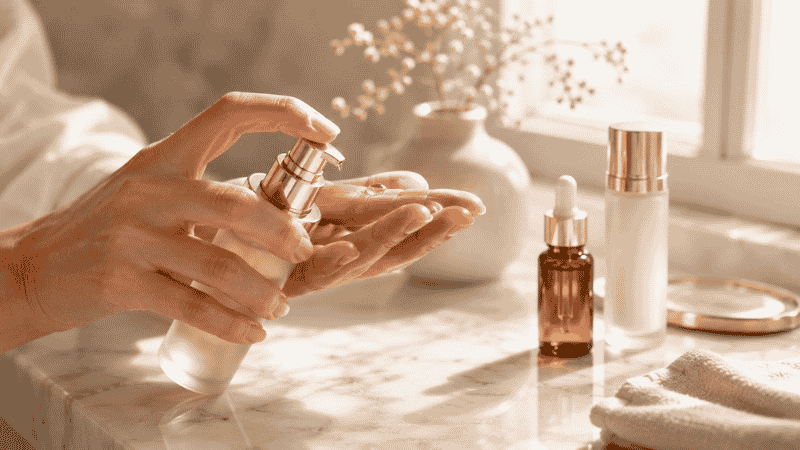
Peptide serums are one of the most routing-flexible actives in skincare — they can be used morning or evening, are photostable (unlike retinoids), and are compatible with the vast majority of other ingredients. This flexibility is partly why they integrate so well into a mature skin routine that already includes retinoids and Vitamin C.
The standard placement: after cleansing and any water-based toners or essences, before moisturiser. Apply to slightly damp skin (unlike retinol, which requires dry skin) to support absorption. Allow 60–90 seconds before the next step.
Morning use: Peptides pair well with Vitamin C serums in the morning routine. Apply Vitamin C first, allow it to absorb, then apply your peptide serum before moisturiser and SPF. The antioxidant protection of Vitamin C and the collagen-signalling of peptides are functionally complementary — addressing both the prevention (antioxidant protection against free radical damage) and treatment (structural protein stimulation) sides of anti-aging simultaneously.
Evening use: Peptides work particularly well in the evening, when the skin’s cellular repair activity peaks. Applied after retinol (allowing the retinoid to absorb first), a peptide-rich moisturiser or serum supports and extends the collagen-stimulating effect of the retinoid — the two actives working through different but complementary mechanisms in the same overnight window.
Retinol and Peptides Together — Complementary, Not Competing
One of the most common questions about peptides concerns their relationship with retinoids — and whether using both simultaneously makes sense or creates conflict. The answer is clear: retinol and peptides are complementary, not competing.
Retinoids stimulate collagen synthesis primarily by accelerating cellular turnover and directly activating retinoid receptors in skin cells. Peptides stimulate collagen synthesis through a completely different pathway — acting as external signals to fibroblasts rather than through intracellular receptor activation. The two mechanisms do not overlap or interfere; they are additive.
The practical protocol: apply retinol to dry skin in the evening, allow it to absorb (60–90 seconds), then apply a peptide-containing moisturiser over it. The peptide moisturiser serves a dual purpose — providing the barrier support that makes retinol more tolerable, while simultaneously delivering collagen-signalling actives through the same evening window.
For mature skin in the retinol adjustment phase, a peptide moisturiser buffered over retinol is one of the most effective strategies for improving tolerability without compromising retinoid efficacy. Niacinamide and peptides together in the buffering moisturiser create a genuinely powerful supportive layer.
Peptides and Vitamin C Together — A Safe and Effective Pairing
Unlike some ingredient combinations that require careful scheduling (retinol and AHAs, for instance), peptides and Vitamin C are straightforwardly compatible and can be used in the same routine without concern.
The more relevant question is sequencing. Vitamin C (L-ascorbic acid) requires a low-pH environment for optimal absorption — ideally pH 2.5–3.5. Peptides are typically formulated at a higher, more neutral pH. Applying a high-pH peptide product over a Vitamin C serum before the C has fully absorbed can raise the skin’s surface pH and reduce the acid’s penetration. The simple solution: apply Vitamin C first and allow it to absorb for 60–90 seconds before applying any peptide product.
Beyond sequencing, the pairing is genuinely synergistic. Vitamin C is an essential cofactor in collagen synthesis — without adequate Vitamin C, the enzymatic processes that create collagen cannot proceed efficiently. Using Vitamin C alongside peptides that signal fibroblasts to produce more collagen creates a dual support system: the signal is present (peptides), and the raw material for collagen production is available (Vitamin C). This is a combination that luxury formulations increasingly recognise — you’ll find both ingredients in many of the most sophisticated anti-aging serums on the market.
Peptides vs Hyaluronic Acid — Two Different Jobs, Not Competitors
This comparison comes up frequently in skincare conversations, but it represents a category error that’s worth correcting directly. Peptides and hyaluronic acid are not alternatives — they address entirely different biological needs.
Hyaluronic acid is a humectant. It attracts and binds water molecules in the skin, improving surface hydration, plumping fine lines caused by dehydration, and supporting the skin’s moisture barrier. Its effect is relatively immediate and surface-level — you can feel it within hours of application. It does not stimulate collagen, interact with fibroblasts, or produce structural change in the dermis.
Peptides are signalling molecules. Their effect is structural and cumulative — they communicate with fibroblasts to produce new collagen, inhibit breakdown enzymes, or modulate muscle activity. Their effect unfolds over weeks to months and occurs in the dermis, not at the surface.
A well-designed mature skin routine uses both, for different reasons: hyaluronic acid for immediate hydration and moisture support, peptides for long-term structural investment. In luxury serums, you’ll often find both in the same formula — a practical choice that addresses both the surface and the structural simultaneously.
What to Look for in a Luxury Peptide Serum for Mature Skin
Given the wide quality range in the peptide category, knowing how to evaluate a product before purchasing it is genuinely useful. For mature skin with anti-aging priorities, the following criteria apply.
Named peptides, positioned early in the ingredient list. Look for Palmitoyl Tripeptide-1, Palmitoyl Tetrapeptide-7, Palmitoyl Pentapeptide-4 (Matrixyl), GHK-Cu, or Acetyl Hexapeptide-3 (Argireline) listed within the first half of the ingredient list. Ingredient positioning indicates concentration; peptides listed near the end of a long formula are likely present at cosmetically insignificant levels.
Delivery technology. In luxury formulations, look for terms like liposomal delivery, micro-encapsulation, or nano-emulsion — these indicate that the brand has invested in ensuring the peptide reaches the dermis rather than sitting at the skin’s surface. Nanodelivery systems can increase the safety and bioactivity of anti-aging peptides, and this combination can lead to innovative solutions for novel or improved skincare products.
Packaging. Peptides, like Vitamin C, degrade on exposure to air and light. Airless pump packaging or opaque, sealed containers preserve peptide stability significantly better than open jars. A luxury peptide serum in a jar may be delivering considerably less active peptide than the label suggests by the time you’re halfway through the product.
Absence of destabilising ingredients. Some acids and oxidising ingredients can degrade peptides. A well-formulated luxury peptide serum will have a pH calibrated to stability, with the formulation chemistry supporting rather than undermining the active.
The honest investment case: In the luxury skincare market, peptide serums represent one of the categories where premium pricing reflects real functional differences — in peptide type, concentration, and delivery technology — rather than simply packaging aesthetics. For mature skin prioritising anti-aging outcomes, a well-formulated peptide serum from a brand that publishes its clinical data is a substantiated investment, not an act of hope.
If Your Peptide Serum Isn’t Working — An Honest Self-Audit
Before concluding that peptides don’t work for your skin, consider these variables:
Timeline: Eight weeks minimum, twelve weeks for meaningful assessment. If you’ve used a peptide serum for three weeks and see nothing, you haven’t given the biology sufficient time to respond.
Concentration: Is the primary peptide listed in the first half of the ingredient list? If it appears near the end, the concentration may be cosmetically irrelevant regardless of how prominently it’s featured in marketing.
Packaging: Has the product been stored appropriately? Peptides in clear, non-airless packaging exposed to light and heat will degrade. If your serum has been sitting on a sunny bathroom shelf, the active concentration may be significantly reduced from what the label states.
Expectations: Peptides produce gradual, cumulative structural change — not the immediate surface effect of hyaluronic acid or the accelerated turnover of retinoids. The results are real but subtle in their early stages. At six months of consistent use, the difference in skin firmness and resilience is meaningful. At four weeks, it may be imperceptible.
When Professional Guidance Adds Value
Peptides are among the safest and most universally tolerable actives in skincare — they carry a very low risk of irritation, photosensitivity, or adverse reaction, making them appropriate for virtually all skin types including reactive and rosacea-prone skin.
Professional input becomes relevant if: you’re interested in clinical-strength peptide treatments available only through medical aesthetics providers (some peptide mesotherapy protocols deliver active concentrations far beyond what topical products achieve); if your skin shows persistent sensitivity or barrier compromise that prevents even well-tolerated actives from being effective; or if you’re considering combining peptides with professional treatments — laser resurfacing, microneedling, or radiofrequency — where the interaction with the post-treatment skin warrants a clinician’s guidance.
FAQ
What do peptides do for skin that retinol doesn’t? Peptides and retinol stimulate collagen through different mechanisms — peptides signal fibroblasts via external receptor binding, retinoids act through intracellular receptor activation. Peptides are significantly more tolerable, photostable, and appropriate for use during pregnancy. They are also more effective for the “muscle relaxation” effect of expression lines (via Argireline) — a mechanism retinol doesn’t address. The most complete approach uses both.
Do peptides actually work for mature skin over 45? Yes, with appropriate expectations. The clinical evidence for peptides does not diminish with age — in fact, mature skin with lower baseline collagen density may show more visible relative improvement from collagen-stimulating peptides than younger skin. The timeline is the same (8–12 weeks minimum), but the need is arguably greater and the results proportionally meaningful.
What is Matrixyl 3000 and is it better than regular Matrixyl? Matrixyl 3000 is a combination of two peptides (palmitoyl tetrapeptide-7 and palmitoyl tripeptide-1) designed to address both collagen synthesis and the inflammatory cascade that accompanies skin aging. Regular Matrixyl (palmitoyl pentapeptide-4) targets collagen synthesis primarily. Matrixyl 3000 has a broader mechanism and a strong clinical record — for mature skin, it is generally considered the more comprehensive option of the two.
Can I use peptides every day? Yes. Unlike retinoids (which require a graduated introduction) or acids (which can be over-exfoliating with daily use), peptides are appropriate for twice-daily use from the first application. There is no adjustment period, no purge, and no photosensitivity concern. Consistent daily use produces better outcomes than intermittent application.
Peptides vs hyaluronic acid — which should I prioritise? They address different needs and should not be treated as alternatives. If your primary concern is anti-aging and structural support, peptides deliver the more relevant mechanism. If your primary concern is dehydration and surface smoothness, hyaluronic acid delivers faster visible results. For a mature skin routine addressing both concerns — which most 40+ routines should — using both, either in separate products or in a combined formula, is the appropriate approach.
How do I know if a peptide product is actually working? Assess at 12 weeks, not 4. The markers to look for: slight improvement in skin firmness when you press and release (resilience), a subtle refinement in overall texture, and an improvement in the appearance of expression lines in high-movement areas. Take a photograph in consistent lighting at weeks 0, 6, and 12 — the changes that are invisible day-to-day become visible in comparison photographs.
Understanding the Bigger Picture
Peptides occupy a specific and valuable position in a serious anti-aging skincare routine — not the most dramatic active (that remains the retinoid), not the most immediately gratifying (that remains hyaluronic acid), but perhaps the most broadly tolerable and consistently underestimated.
What peptides do for skin is precisely what the name suggests: they communicate. They send signals your skin’s own biology responds to, building and protecting structure in a way that compounds quietly over months into something genuinely meaningful.
For the complete routine framework that puts peptides in their proper context — alongside retinoids, Vitamin C, and barrier support — our guide to the full skincare routine for aging skin covers the architecture in detail [→ /skincare-routine-for-aging-skin/].
If you arrived here through a concern about skin firmness and elasticity, our guide on how to improve skin elasticity addresses the full ingredient landscape, including where peptides sit alongside retinoids and physical treatments [→ /how-to-improve-skin-elasticity/].
And if you’re currently navigating the retinol adjustment phase and wondering how peptides fit into that picture, the answer is in our guide on how long retinol takes to work — with specific guidance on using both actives in the same routine [→ /how-long-does-retinol-take-to-work/].
References
- Robinson, L.R., et al. (2005). Topical palmitoyl pentapeptide provides improvement in photoaged human facial skin. International Journal of Cosmetic Science, 27(3), 185–195.
- Wang, Y., et al. (2013). The anti-wrinkle efficacy of argireline, a synthetic hexapeptide, in Chinese subjects: a randomized, placebo-controlled study. American Journal of Clinical Dermatology, 14(2), 147–153.
- Pickart, L., & Margolina, A. (2018). Regenerative and protective actions of the GHK-Cu peptide in the light of the new gene data. International Journal of Molecular Sciences, 19(7), 1987.
- Errante, F., et al. (2020). Cosmetic ingredients as emerging pollutants of environmental and health concern: A mini-review. Cosmetics, 7(2), 46.
- Varani, J., et al. (2006). Decreased collagen production in chronologically aged skin. American Journal of Pathology, 168(6), 1861–1868.
- Ganceviciene, R., et al. (2012). Skin anti-aging strategies. Dermato-Endocrinology, 4(3), 308–319.
- Gorouhi, F., & Maibach, H.I. (2009). Role of topical peptides in preventing or treating aged skin. International Journal of Cosmetic Science, 31(5), 327–345.