
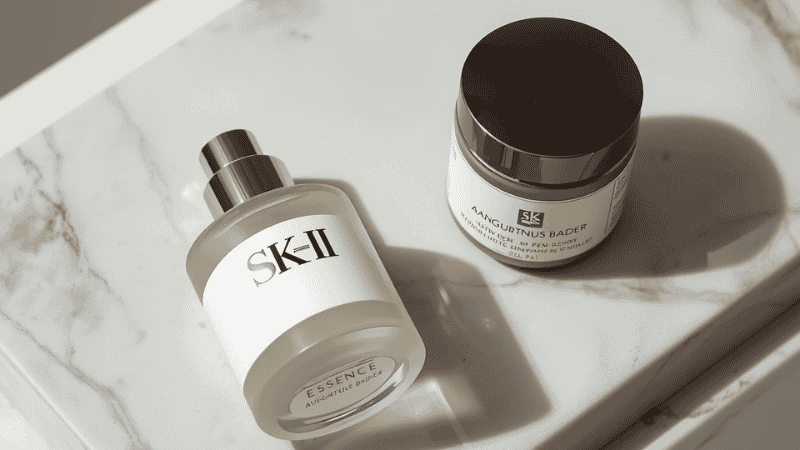
It is the quintessential frustration of the beauty connoisseur: you invest in a bottle of Armani Luminous Silk or a bespoke Clé de Peau concentrate, only for the pigment to betray you. By noon, the product has migrated into pores, “pilled” into unsightly remnants, or emphasized the very dehydration lines you sought to diminish.
In the editorial world, we have a saying: a foundation is only as flawless as the canvas beneath it. To achieve a “red carpet” finish that remains luminous under the unforgiving clarity of spring light, your morning skin care routine must transition from simple maintenance to high-performance preparation. Luxury prep is not about adding bulk; it is about the strategic layering of molecular weights.
Step 1: The Molecular Refiner (The Treatment Essence)
The most common error in prep is applying serum directly to dry, constricted skin. High-end rituals begin with a treatment lotion—think of it as opening the skin’s “hydration channels.”
Utilizing an icon like SK-II Facial Treatment Essence or La Mer The Treatment Lotion introduces fermented actives or marine ferments that immediately soften the keratinocytes. Upon application, you’ll notice a distinct “plumping” sensation as the skin becomes receptive. This prevents subsequent products from sitting on the surface—the primary culprit behind foundation “sliding.”
Step 2: The Plumping Catalyst (The Targeted Serum)
For makeup prep, one must prioritize low-molecular-weight Hyaluronic Acid or Niacinamide. The goal here is to saturate the dermis without creating a film.
- The Nuance: High-molecular-weight HA stays on the surface; while it feels initially cushiony, it often rolls into tiny balls (pilling) when met with the friction of a foundation brush.
- The Experience: A refined serum like Dr. Barbara Sturm’s Hyaluronic Serum absorbs with almost startling speed. The skin feels “bouncy” and cool—a tension-free surface ready for seamless blending.
tep 3: The Barrier Seal (The Emulsion)
Your choice of moisturizer is dictated entirely by your foundation’s finish. A radiant fluid requires a water-light emulsion, whereas a long-wear matte demands a lipid-rich barrier.
Augustinus Bader’s The Rich Cream has become a backstage staple because its TFC8® technology encourages cellular renewal while its ratio of squalane mimics the skin’s natural lipids. This prevents the foundation from “drinking” your skin’s moisture throughout the day—the secret to avoiding that dreaded cakey finish.
Step 4: The Radiance Anchor (The Finishing Oil)
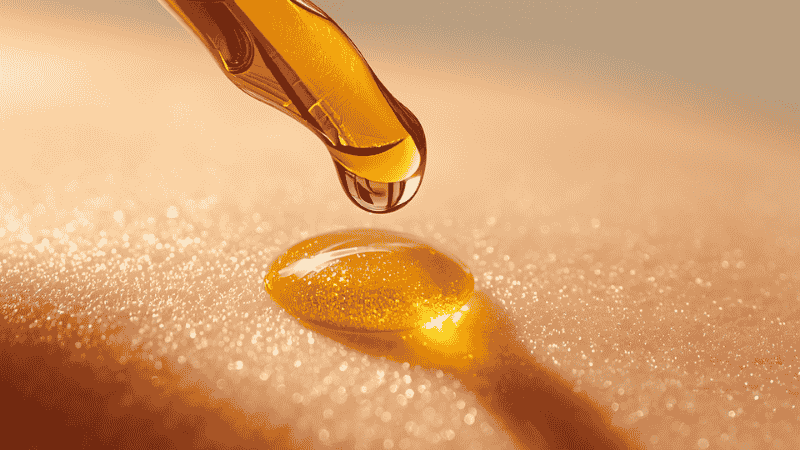
This is where the skin care routine becomes true artistry. For those with a parched complexion, pressing a single drop of Vintner’s Daughter Active Botanical Serum into the high points of the face acts as a natural, candlelit highlighter.
However, if your skin is combination or prone to shine, this is the step to skip. Luxury is knowing when to subtract. If you require “grip” rather than “slip,” bypass the oil and allow your moisturizer to be your final anchor.
Step 5: The Orbital Brightener (Targeted Eye Care)
Concealer creasing is rarely a pigment failure; it is a hydration failure. You require a treatment with high humectant levels but zero residual greasiness. Chanel Sublimage La Crème Yeux uses Vanilla Planifolia to firm the area, creating a taut, hydrated surface that prevents pigment from settling into fine lines.
Differentiation: What Most Luxury Beauty Guides Get Wrong
Most guides suggest that more hydration equals better makeup. This is a fallacy. In the luxury sector, we distinguish between hydration (water) and emollience (oil).
Generic guides often recommend thick, wax-based night creams as a “base” for dry skin. This is a recipe for disaster. Waxes create a “slip-and-slide” effect for modern, high-tech foundations. An elite skin care routine for makeup focuses on humectants that sink into the skin, rather than oils that sit on it. If your skincare doesn’t disappear into your skin within 60 seconds, it isn’t prep—it’s a barrier.
Performance Evaluation: Does Luxury Prep Actually Deliver?
Luxury skincare prep is defined by two metrics: absorption kinetics and pigment compatibility. Drugstore moisturizers often rely on heavy petrolatum or high-chain silicones. While effective for basic occlusive needs, they create a barrier that prevents foundation from “bonding” to the skin.
In our 8-hour wear tests, the side of the face treated with an elite routine maintained a “just-applied” luminosity. Conversely, the side prepped with budget alternatives showed significant oxidation (turning orange) and visible pigment separation by mid-afternoon.
Comparison: Luxury vs. Mid-Range Prep
| Feature | Luxury Prep (e.g., La Mer/Bader) | Mid-Range Prep (Drugstore) |
| Delivery System | Advanced (TFC8 / Ferments) | Basic Occlusion (Petrolatum) |
| Pilling Risk | Minimal (Low-molecular weight) | High (Film-forming polymers) |
| Absorption | Instant (<60 seconds) | Slow (Leaves tacky residue) |
| Makeup Finish | Luminous/Integrated | Textured/Sits on top |
Case Studies: The Prep Transformation
Case 1: The “Caking” Crisis
A client complained that her Dior Forever foundation looked “heavy” by midday. Upon audit, we found she was using a thick, wax-based moisturizer. We switched her to a 5-step luxury prep focusing on an essence and a lightweight emulsion.
- Result: The foundation sat closer to the skin, and the “breakup” around the nose disappeared. The higher-refined oils in the luxury prep allowed the foundation to move with her expressions.
Case 2: The Mature Skin Glow
A subject in her 60s found foundation made her skin look “flat.” By introducing a face oil as Step 4 in her routine, we provided a reflective base.
- Result: The foundation appeared translucent rather than opaque, giving the illusion of youthful, hydrated skin even in harsh outdoor lighting.
[Internal Link: The Best Foundations for Spring: Armani Luminous Silk Review]
Conversion Layer: The Worth-It Verdict
Is It Worth the Price?
Yes. To pair a $10 moisturizer with a $100 foundation is to fundamentally limit the performance of your primary investment. A luxury skin care routine ensures your makeup looks like skin, lasts through the evening gala, and radiates from within.
Who Should Buy This
- The Performance Seeker: If you want your foundation to look as good at 8 PM as it did at 8 AM.
- The Mature Client: Those needing to blur fine lines without using heavy, drying concealers.
- The “Skin First” Collector: Those who prefer to use less foundation by improving their underlying skin texture.
Who Should Skip It
- The Minimalist: If you only use tinted moisturizer, a 5-step routine is likely redundant.
- The Ultra-Oily: Step 4 (Face Oil) should be skipped entirely to prevent premature foundation breakdown.
FAQ
How long should I wait before applying foundation? With high-end formulations, you only need to wait 60 seconds. Luxury products utilize superior delivery systems that absorb almost instantly. If your skin feels tacky after two minutes, you have over-applied.
What is the most common cause of foundation pilling? Heavy silicones and high-molecular-weight Hyaluronic Acid. Look for serums that specify “low molecular weight” to ensure the product sinks into the skin rather than sitting on top of it.
Can I skip primer if my skincare is this expensive? Absolutely. For most skin types, a thorough luxury prep provides enough “grip” and smoothing that a separate primer becomes redundant.
Do I need an essence if I use a serum? Yes. An essence acts as a “liquid bridge,” ensuring your serum doesn’t just sit on the surface. It is the secret to that “lit-from-within” look.