
It is almost never a dramatic moment. It is more like looking at a photograph from three or four years ago and noticing — without being able to pinpoint exactly what has changed — that the face in the photograph looks somehow more defined. The jawline is crisper. The cheeks sit slightly higher. There is a quality of structure that is harder to see in the mirror now, not because it has disappeared entirely, but because it has shifted in a way that photographs capture more clearly than daily self-perception.
This is how skin laxity typically announces itself after 40: not as a sudden change but as a gradual loss of the structural precision that made a face look its age in the best possible way. The skin is still healthy. It is simply doing what skin does when collagen density declines, elastin degrades, and the fat pads that once anchored facial volume begin their slow, gravitational migration.
How to tighten skin on face is one of the most searched topics in mature skincare — and also one of the most poorly served by content that either overpromises topical skincare results or dismisses it entirely in favour of clinical treatments. This guide gives you the honest version: what is actually happening structurally, what topical skincare can and cannot achieve, where the evidence genuinely supports specific ingredients, and when professional consultation becomes the more efficient path.
Key Takeaways
- The American Academy of Dermatology is unequivocal: a cream or lotion cannot penetrate the skin deeply enough to physically lift sagging skin. What topical skincare can do is stimulate collagen synthesis — partially offsetting the loss that drives laxity — and protect existing collagen from further UV-induced degradation. These are meaningful interventions, not substitutes for structural restoration.
- Skin firmness is determined by two structural systems: the collagen matrix (tensile strength) and the elastin network (rebound capacity). Both decline with age through different mechanisms and respond to different topical and professional interventions.
- The most evidence-supported topical approach to skin tightening combines two complementary pathways: collagen synthesis stimulation (retinoids, signal peptides, Vitamin C) and collagen degradation protection (SPF and antioxidants that prevent UV-activated matrix metalloproteinase action). Using both simultaneously produces more durable results than either alone.
- Research on retinol concentrations showed that concentrations of 3,300–6,600 IU produced significantly better effects on dermal density and pore tightening than lower concentrations — supporting the case for progressive concentration increase as tolerance builds, rather than maintaining a starter concentration indefinitely.
- Lower facial laxity — the sagging cheeks and softened jawline that concern most women over 40 — has a specific anatomical driver beyond collagen loss: the descent of the malar fat pad and the progressive absorption of facial bone structure. This is why lower face laxity responds less completely to topical skincare than periorbital or forehead changes, and why professional treatments targeting deeper structural layers are more effective for this specific area.
Why Skin Loses Firmness After 40 — The Structural Story
Skin laxity is not a single phenomenon — it is the visible result of several simultaneous structural changes, each operating at a different tissue depth. Understanding what is actually happening changes what interventions are rational to prioritise.
The collagen collapse. Type I and III collagen fibres form the dermis’s tensile framework — the structural mesh that gives skin its resistance to deformation and its ability to return to position after movement. Collagen production begins declining at approximately 1% per year from the mid-20s. By 45, the cumulative loss is approximately 20% of peak dermal collagen density. The visible consequence — skin that deforms more easily, lines that are visible at rest rather than just during expression, a general loss of the “snap” quality of younger skin — reflects this progressive structural thinning.
The elastin degradation. Elastin fibres give skin its rebound capacity — the ability to return to its resting position after being stretched or compressed. Unlike collagen, elastin production essentially ceases after puberty. The elastin network present in the skin at 20 is the same network present at 50 — progressively degraded by UV exposure and oxidative stress, never replaced. This is why UV protection has a disproportionate impact on skin laxity compared to other aging concerns: every UV exposure event activates matrix metalloproteinases (MMPs) that specifically target and break down elastin fibres that cannot be regenerated.
The fat pad descent. Beneath the dermis, discrete fat compartments — the malar fat pad, the sub-orbicularis oculi fat (SOOF), the buccal fat — anchor the facial soft tissue and create the volumetric fullness that reads as youth. With age, these fat pads progressively lose volume and descend under gravity. This descent is why the cheeks that sat high in the 30s appear lower in the 40s, creating the nasolabial fold deepening and jowl formation that characterise lower facial aging. This process is not driven by the skin itself — it is a deeper soft tissue change that topical skincare cannot address.
The bone resorption. Beneath the soft tissue, the facial skeleton itself undergoes progressive resorption — the orbital rim retreats, the maxilla loses volume, the mandible resorbs at the chin and jaw angle. This skeletal contraction means that the skin and soft tissue overlying it has progressively less structural support — contributing to the appearance of excess skin that emerges in the 40s and 50s. This is also not addressable by topical skincare.
Editor’s note: Understanding this layered anatomy is not defeatist — it is clarifying. Topical skincare operates at the dermal level: it can meaningfully address collagen decline and the early loss of skin tension that results from it. It cannot address fat pad descent or bone resorption — which means that the more a woman’s primary concern is the lower face and jawline, the more quickly professional treatments become relevant. This is not a failure of skincare; it is the correct understanding of which tools address which problems.
The Two-Pathway Approach to Topical Skin Tightening
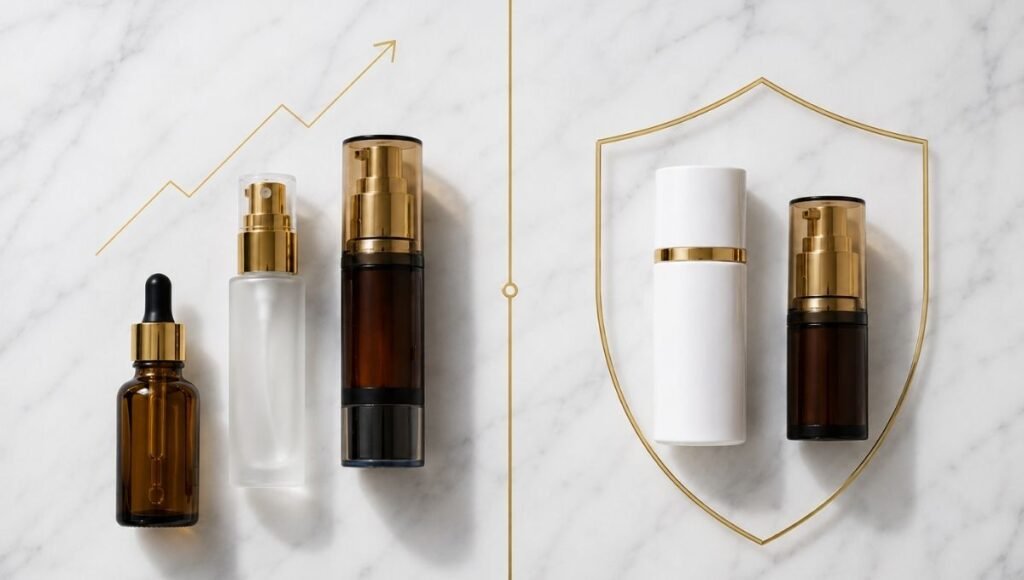
The most significant gap in most skin tightening content is the failure to explain that collagen maintenance requires two simultaneous strategies that most routines only partially implement.
Pathway 1: Collagen synthesis stimulation
These ingredients tell fibroblasts to produce new collagen, partially offsetting the annual 1% decline:
Retinoids — the most evidence-backed topical collagen synthesis stimulants. They activate nuclear retinoid receptors in fibroblasts, directly upregulating collagen-synthesising gene expression. The AAD notes that retinol specifically helps the body make more collagen — making it the only topical ingredient in the cosmetic category with this level of institutional endorsement. For the complete retinol protocol and timeline for mature skin, see our guide to how long retinol takes to work [→ /how-long-does-retinol-take-to-work/].
Signal peptides (Matrixyl, GHK-Cu) — peptides that directly stimulate fibroblast receptor pathways, producing collagen synthesis through a complementary mechanism to retinoids. Using both retinoids and signal peptides in the same routine is additive, not redundant — they operate on different receptor systems. For the complete peptide science, see our guide to what peptides do for skin [→ /what-do-peptides-do-for-skin/].
Vitamin C (L-ascorbic acid) — an essential enzymatic cofactor in prolyl hydroxylase, the enzyme that hydroxylates proline residues during collagen synthesis. Without adequate ascorbic acid, newly synthesised collagen fibres are structurally unstable. Morning Vitamin C supports the integrity of the collagen that retinoids and peptides are stimulating the skin to produce.
Pathway 2: Collagen degradation protection
These interventions prevent the ongoing enzymatic breakdown of existing structural proteins — the UV-activated MMP process that, left unprotected, counteracts everything in Pathway 1:
Daily broad-spectrum SPF 30+ — the single most effective intervention for preventing collagen and elastin degradation. UV radiation activates MMPs within minutes of exposure. The collagen that retinoids and peptides are stimulating the skin to build is simultaneously being broken down by UV-activated MMPs in unprotected skin. A 2013 randomised trial in Annals of Internal Medicine documented that consistent daily sunscreen use measurably slowed the development of skin aging compared to discretionary use. No serum compensates for unprotected UV exposure.
Antioxidants (Vitamin C, Vitamin E, ferulic acid) — neutralise the UV-generated free radicals that activate MMPs before they can reach the structural protein targets. The synergistic combination of Vitamin C + E + ferulic acid (the formulation validated by Duke University research) provides approximately tenfold increase in UV photoprotection compared to unprotected skin, operating as a real-time free radical defence that SPF alone does not provide.
The reason most skin tightening routines underperform is that they invest heavily in Pathway 1 (the serum, the retinol, the peptides) while being inconsistent with Pathway 2 — allowing ongoing UV-induced collagen destruction to partially or fully offset the synthesis they are stimulating.
Skin Tightening Serum — What the Evidence Actually Supports
The skin tightening serum category is large, commercially aggressive, and highly variable in terms of functional ingredient content. Evaluating a serum for genuine skin tightening support requires looking past the marketing and into the specific active content.
What a functional skin tightening serum contains:
Retinol or retinaldehyde at an effective concentration. Not “retinol complex” or “vitamin A derivative” without specification — but retinol at a stated concentration of 0.025% minimum, building toward 0.1% over time. This is where the evidence base for collagen synthesis sits.
Signal peptides at meaningful concentrations. Matrixyl (palmitoyl pentapeptide-4) and Matrixyl 3000 (palmitoyl tripeptide-1 and palmitoyl tetrapeptide-7) have the strongest independent clinical evidence among cosmetic peptides. They should appear in the first half of the ingredient list to indicate effective concentration.
Copper peptide (GHK-Cu) for elastin support. Unlike most skin tightening ingredients that focus on collagen, GHK-Cu has published evidence for both collagen and elastin synthesis stimulation — the latter being particularly relevant given that elastin cannot regenerate without specific molecular signalling.
What a functional skin tightening serum avoids:
Fragrance — an irritant that in sensitive mature skin can trigger low-grade inflammation that counteracts the collagen synthesis the serum is trying to support. High-alcohol formulations — barrier-disruptive and dehydrating to the skin that the actives depend on for penetration. “Lifting” or “firming” claims backed only by cosmetic film-forming ingredients (silicones, polymers) — these produce a temporary mechanical tightening sensation without any structural benefit.
For the complete science of each ingredient category in a firmness-supporting routine, see our comprehensive guide to skincare ingredients for mature skin (available in Beaudore’s ingredient guides).
Face Firming Serum — Where Luxury Investment Is Justified
For face firming specifically, the categories where the luxury premium translates to functional advantage are specific and identifiable.
Retinoid formulation technology. Encapsulated retinol in time-release microspheres delivers the same total retinol dose with reduced peak concentration exposure — making nightly use sustainable for mature skin that might otherwise experience barrier disruption at concentrations effective for collagen stimulation. This technology is more consistently available in luxury formulations and directly impacts the tolerability and therefore the consistency of use that produces results.
Peptide concentration and stability. Signal peptides at effective concentrations are more expensive raw materials than their prevalence on product labels suggests. A luxury serum that lists Matrixyl at the top of the active list is delivering meaningfully more than a budget product that lists it at the bottom. The relationship between peptide concentration and clinical efficacy is direct — there is no “a little bit works just as well” dynamic here.
Luxury collagen serum — the category with the most inflated claims in luxury skincare. The critical distinction: a luxury collagen serum that contains hydrolysed collagen (collagen fragments) in the formula is providing temporary hydration and surface film-forming benefit, not delivering collagen to the dermis. Collagen molecules are too large to penetrate the epidermis. What a luxury collagen serum should actually contain to support skin tightening is the collagen synthesis stimulants (retinoids, peptides, Vitamin C) that prompt the skin to produce its own — not the collagen molecule itself. For the complete collagen science and the distinction between collagen supplementation and collagen synthesis stimulation, see our guide to how to stimulate collagen production [→ /how-to-stimulate-collagen-production/].
How to Tighten Skin Naturally — The Lifestyle Factors That Multiply Topical Results
The lifestyle factors that influence skin firmness are not platitudes — they operate through specific biological mechanisms that directly interact with the topical interventions in the routine.
Sun protection as the highest-leverage lifestyle habit. Daily SPF is both a topical intervention and a lifestyle habit — and its absence is the single most common reason that otherwise well-designed skin tightening routines produce disappointing results. Every unprotected UV exposure event activates the MMP cascade within minutes. Years of inconsistent SPF use accumulates to a collagen and elastin deficit that no serum can compensate for.
Dietary protein and amino acid availability. Collagen is a protein — its synthesis requires adequate dietary protein supply, particularly the amino acids glycine, proline, and hydroxyproline. In women following very low protein diets, fibroblast capacity for collagen synthesis may be substrate-limited rather than stimulation-limited — meaning topical retinoids are stimulating a process that lacks the raw materials to execute. Adequate dietary protein (generally 0.8–1.2g per kg body weight daily) is the physiological foundation that topical collagen synthesis stimulation builds upon.
Sleep quality and the overnight repair cycle. The skin’s peak collagen synthesis and repair activity occurs during sleep — specifically during stages 3 and 4 of slow-wave sleep when growth hormone secretion peaks and fibroblast activity is highest. Evening application of retinoids works with this circadian rhythm; poor sleep quality or insufficient sleep duration directly reduces the repair cycle that the evening routine is trying to support.
Not smoking. Nicotine constricts dermal blood vessels, directly reducing oxygen and nutrient delivery to fibroblasts. Cigarette smoke chemicals independently activate MMPs. No skincare routine can outperform the structural collagen destruction that chronic smoking produces — the AAD’s skin firmness guidance specifically cites smoking cessation as among the most impactful changes available.
How to Lift Sagging Cheeks — Targeted Approach for the Lower Face
The lower face — cheeks, nasolabial folds, jowl area — is the region where the gap between topical skincare expectations and what topical skincare can achieve is most pronounced, because lower facial laxity involves fat pad descent and bone resorption that topical ingredients cannot address.
What topical skincare can meaningfully contribute to the lower face:
Improving dermal collagen density in the cheek skin itself. A retinoid routine consistently applied to the cheeks (including the full cheek surface, not just the under-eye area) does increase local dermal collagen density over 12–16 weeks. This improves the skin quality overlying the descended tissue — producing firmer, more resilient skin even if the underlying volume loss remains.
Niacinamide for barrier and inflammatory modulation. Low-grade chronic inflammation contributes to dermal collagen degradation in the lower face. Niacinamide at 4–5% twice daily has documented anti-inflammatory properties that may reduce this degradation pathway while simultaneously supporting ceramide synthesis.
Consistent SPF application to the full lower face and jaw. The jaw and neck typically receive less consistent SPF application than the centre of the face — contributing to greater UV-induced collagen loss in exactly the areas where structural support is most critical for maintaining definition.
What requires professional intervention for meaningful lower facial lifting:
Radiofrequency (monopolar or bipolar) reaches the SMAS (superficial musculoaponeurotic system) layer — deeper than any topical ingredient can penetrate — producing collagen contraction and neocollagenesis at the structural layer most relevant for lower facial lifting. The AAD notes that most people feel some tightening from radiofrequency right away, with best results appearing in about 6 months as the body produces new collagen, with results lasting 2–3 years with appropriate skincare maintenance.
High-intensity focused ultrasound (HIFU/Ultherapy) targets even deeper tissue layers than radiofrequency, producing lifting effects at the superficial muscular layer. A 2024 randomised blinded study confirmed that focused ultrasound produces measurable brow lifting and upper facial tightening effects, making it one of the few non-surgical interventions with clinical evidence for actual lifting rather than just tightening.
For women whose primary concern is lower facial laxity and sagging cheeks, the most efficient approach is a two-tier strategy: consistent topical collagen support (retinoids, peptides, Vitamin C, SPF) to maintain skin quality and slow further decline, combined with professional energy-based treatments targeting the deeper structural layers that topical products cannot reach.
How to Tighten Skin Naturally — What Works Without Clinical Intervention
For women in the early stages of skin laxity — mild loss of definition rather than significant sagging — consistent topical intervention produces meaningful results within 16–24 weeks. The “natural” approach that has the strongest evidence:
Non-negotiable foundation: Daily SPF 30+ (mineral, to the full face including jaw and neck), consistent evening retinoid at the highest well-tolerated concentration, morning Vitamin C under SPF.
Meaningful additions: Signal peptide serum morning or evening (complementary to retinoid), niacinamide twice daily, ceramide moisturiser twice daily to support barrier and reduce inflammatory collagen degradation.
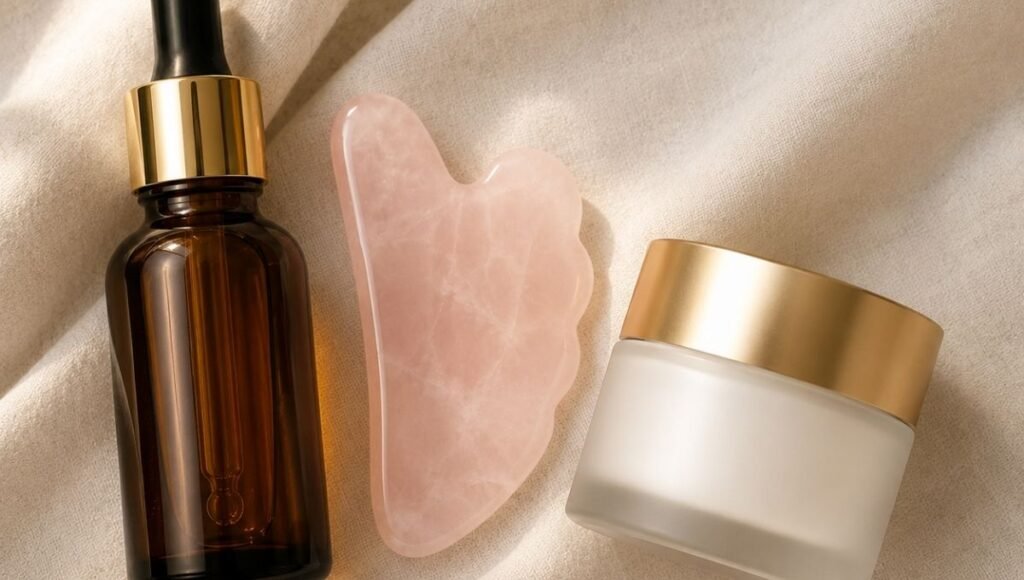
Facial massage and lymphatic drainage: While not a structural intervention, consistent facial massage — particularly along the jawline and neck — improves local circulation, reduces fluid retention that obscures definition, and may provide modest mechanical stimulation to fibroblast activity. Gua sha and facial massage tools produce real but transient lifting effects; their most significant benefit when used consistently is the circulation improvement rather than the temporary mechanical change.
The honest limit: for mild laxity, the above approach produces genuine improvement that becomes visible at 12–16 weeks and continues accumulating with sustained use. For moderate to significant laxity, the same approach provides meaningful maintenance and slowing of further decline — but the degree of visible restoration is more limited, and professional consultation becomes the more efficient next step.
How to Prevent Sagging Skin — Why the 30s Are the Strategic Decade
Prevention of sagging skin is dramatically more efficient than correction. The interventions that prevent laxity are the same ones that address it — but they require less concentration and less intensity when the collagen matrix is still largely intact.
For women in their 30s: consistent daily SPF (non-negotiable — UV-induced MMP activation is cumulative), retinoid introduction at a gentle starting concentration building over years, morning Vitamin C, adequate dietary protein. These habits in the 30s produce dramatically different collagen density outcomes at 45 than their absence.
For women in their 40s who are beginning these habits: later is still meaningful. The skin responds to collagen synthesis stimulation at every age; the results accumulate on a longer timeline and from a greater deficit, but they are real and measurable. Starting at 45 produces better skin at 55 than not starting — the opportunity for improvement does not close.
For the complete framework of age-appropriate skin firmness strategies, see our comprehensive guide to skincare for women over 40 [→ /skincare-for-women-over-40/].
When Topical Skincare Has Reached Its Limit — Signs to Seek Professional Assessment

The AAD is clear that topical skincare cannot lift sagging skin — it can support and slow the process at the dermal level but cannot address the deeper structural changes. Several presentations indicate that professional consultation is the more appropriate next step:
Significant jowl formation or marked nasolabial fold deepening — these involve fat pad descent and potentially bone resorption that topical products cannot meaningfully address. Radiofrequency, HIFU, or filler assessment are the appropriate professional discussions.
Skin laxity that has not responded to 6 months of consistent retinoid + peptide + SPF routine — a dermatologist can assess whether the laxity has a structural cause best addressed professionally, or whether the topical protocol needs adjustment.
Rapidly progressive laxity over 12–24 months — faster-than-expected structural change can occasionally reflect underlying health conditions (thyroid dysfunction, significant weight loss, certain medications) that warrant medical assessment alongside cosmetic intervention.
Desire for meaningful reversal rather than maintenance — topical skincare is most accurately described as a powerful maintenance and prevention tool, not a reversal tool for established laxity. For women seeking visible structural improvement in the lower face, professional consultation is the most efficient path rather than escalating product investment.
FAQ
Can retinol actually tighten skin on your face? Yes — with accurate expectations. The AAD confirms that retinol can help the body make more collagen, making it the only topical ingredient in the cosmetic category with institutional endorsement for collagen stimulation. Over 12–16 weeks of consistent use at an effective concentration, retinol produces measurable improvements in skin density and firmness. It cannot lift sagging skin in the way professional treatments can — but it meaningfully slows the structural decline and partially restores the dermal density that produces visible firmness loss.
What is the best skin tightening serum for mature skin? A functional skin tightening serum for mature skin should contain: retinol or retinaldehyde at a stated concentration (not “vitamin A complex” without specification), signal peptides such as Matrixyl at an effective concentration (first half of ingredient list), and copper peptide (GHK-Cu) for elastin support. It should be fragrance-free and formulated for barrier-compromised mature skin. The luxury premium is justified for encapsulated retinol delivery (better tolerance, sustained release) and high-concentration peptide formulations.
How long does it take to see results from skin tightening skincare? Surface firmness improvement — skin feeling more resilient, fine lines less apparent — typically becomes noticeable at 8–10 weeks of consistent retinoid use. Structural changes — measurable improvement in dermal density, reduced skin laxity — require 16–24 weeks minimum and continue accumulating over 12–24 months. The most common failure mode is assessing results at 4–6 weeks and concluding the routine isn’t working, precisely when the surface changes are just beginning and structural changes have not yet accumulated.
How to lift sagging cheeks without surgery? For mild sagging: a consistent retinoid + peptide + SPF routine produces meaningful dermal collagen improvement over 16–24 weeks, improving the skin quality overlying the area. Facial massage and gua sha improve circulation and reduce fluid retention, producing transient definition improvement. For moderate to significant sagging: non-surgical professional treatments including radiofrequency (targets superficial structural layers) and HIFU (targets even deeper tissue) produce more significant lifting effects than topical skincare alone. These are complementary, not competing, approaches.
Is a luxury collagen serum worth the investment for skin tightening? Only if it contains the right actives. A serum labelled “collagen serum” that contains primarily hydrolysed collagen (collagen fragments) is providing surface hydration and film-forming benefit — collagen molecules cannot penetrate the epidermis to reach the dermis where structural benefit would occur. A luxury collagen serum worth the investment contains retinoids, signal peptides, and Vitamin C — the ingredients that stimulate the skin’s own collagen production — rather than collagen itself.
How to tighten skin naturally on the face — what actually works? The evidence-supported natural approach: daily SPF 30+ (prevents MMP-mediated collagen and elastin degradation), consistent evening retinoid at an effective concentration (stimulates collagen synthesis), morning Vitamin C (antioxidant protection and collagen synthesis cofactor), signal peptides (complementary collagen synthesis stimulation), and adequate dietary protein (provides the amino acid substrate for collagen production). These are not supplements or gimmicks — each has a specific biological mechanism. Combined and used consistently for 16–24 weeks, they produce measurable structural improvement in mild to moderate skin laxity.
The Routine That Honours Both What’s Possible and What’s Realistic
Skin laxity after 40 is a structural story — collagen decline, elastin degradation, fat pad descent, and bone resorption operating simultaneously at different tissue depths. Topical skincare addresses the dermal layer of this story with genuine effectiveness. It does not address the deeper structural changes that professional treatments target.
How to tighten skin on face with topical skincare means committing to the two-pathway approach: collagen synthesis stimulation (retinoids, peptides, Vitamin C) consistently combined with collagen degradation protection (daily SPF, antioxidants). Over 16–24 weeks, this produces measurable improvement in the firmness and density of the skin that is visible — and over years of sustained use, it meaningfully slows the structural decline that is otherwise inevitable.
For the elasticity science that underpins the firmness concerns discussed in this guide, see our dedicated article on how to improve skin elasticity [→ /how-to-improve-skin-elasticity/].
For the complete collagen stimulation science — which ingredients produce the strongest response and at what concentration — see our guide to how to stimulate collagen production [→ /how-to-stimulate-collagen-production/].
References
- American Academy of Dermatology. Many ways to firm sagging skin. Retrieved from aad.org.
- Varani, J., et al. (2006). Decreased collagen production in chronologically aged skin. American Journal of Pathology, 168(6), 1861–1868.
- Hughes, M.C.B., et al. (2013). Sunscreen and prevention of skin aging: A randomized trial. Annals of Internal Medicine, 158(11), 781–790.
- Mukherjee, S., et al. (2006). Retinoids in the treatment of skin aging. Clinical Interventions in Aging, 1(4), 327–348.
- Chen, W., et al. (2024). Ultrasound rejuvenation for upper facial skin: A randomized blinded prospective study. Journal of Cosmetic Dermatology, 23(7), 2451–2458.
- Fisher, G.J., et al. (2002). Mechanisms of photoaging and chronological skin aging. Archives of Dermatology, 138(11), 1462–1470.
- Ganceviciene, R., et al. (2012). Skin anti-aging strategies. Dermato-Endocrinology, 4(3), 308–319.