
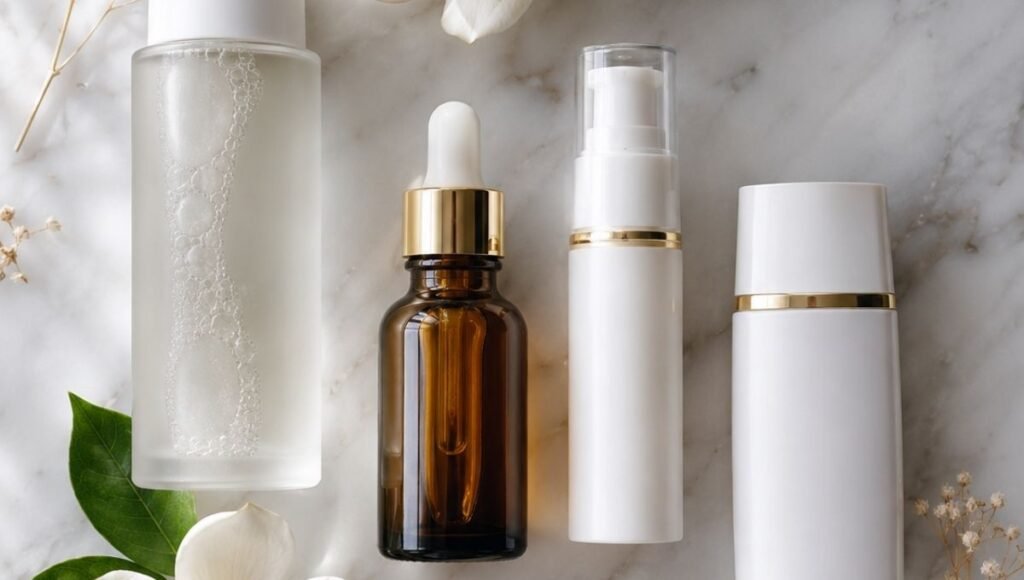
There is a particular quality of light — the kind you encounter in a well-lit bathroom mirror rather than your phone camera — that reveals skin texture in a way nothing else does. And at some point in the late 30s or early 40s, many women notice that the same mirror that showed smooth, light-reflecting skin a few years ago now shows something different. Not a dramatic change. Not a single visible problem. Just a subtle roughness. A flatness in certain lights that wasn’t there before. Pores that seem to have become more prominent. The foundation that used to sit smoothly now settles into fine lines and texture in a way it never did.
The instinct is to add more products. Another serum. A new exfoliant. The one the dermatologist recommended. And yet the texture persists — partly because the wrong products are being used, partly because the underlying biology hasn’t been clearly understood, and partly because some of what is supposed to help is working against the skin at the same time.
How to improve skin texture after 40 is a solvable problem — but it requires understanding which type of texture problem you’re actually dealing with, which actives address which mechanisms, and what a realistic timeline looks like. This guide gives you all three.
Key Takeaways
- Mature skin texture problems are typically a combination of three distinct biological issues that require different interventions: surface cell accumulation (addressed by chemical exfoliation), pore appearance (addressed by niacinamide, salicylic acid, and retinol), and dermal thinning (addressed by retinoids and collagen-stimulating actives). Most routines address only one.
- Pores cannot be physically shrunk — they are anatomical structures whose size is largely determined by genetics and sebaceous gland volume. What can be changed is how visible they appear: a combination of clearing their contents, reducing sebum overproduction, and improving the skin’s surrounding structure makes pores appear significantly smaller without changing their actual diameter.
- A 2021 study published in the Journal of Cosmetic Dermatology confirmed that glycolic acid at 8–25% increases dermal collagen levels through fibroblast stimulation — meaning it addresses skin texture at both the surface (exfoliation) and the deeper structural level (collagen support).
- SPF is the most underrated step in any skin texture routine. It does not directly improve texture, but UV exposure activates MMPs that break down collagen and elastin, producing the dermal roughness that topical actives are trying to repair. Daily SPF protects the structural improvement that every other step is building.
- Most texture improvement routines fail not because the ingredients are wrong but because the timeline is mismanaged. Surface smoothing becomes visible at 4–6 weeks; meaningful structural improvement from retinoids and collagen-stimulating actives requires 12–16 weeks of consistent use.
What Causes Uneven Skin Texture — The Mature Skin Biology
The same texture problem can have three different biological origins — and knowing which you’re dealing with changes everything about the approach. Most routines fail because they’re using a surface solution for a structural problem, or vice versa.
Origin 1: Surface cell accumulation
The skin’s cellular renewal cycle slows from approximately 28 days in your 20s to 45–60 days in your 40s. The practical result: dead skin cells accumulate at the surface for significantly longer before being shed naturally. These older, dehydrated surface cells are less reflective, less smooth, and less uniformly arranged than the freshly generated cells beneath them. This is the most immediately addressable form of mature skin texture — it responds relatively quickly to chemical exfoliation, and the improvement is visible within weeks.
Signs this is your primary texture issue: skin looks dull and uneven in all lights, foundation sits unevenly across the surface, skin feels rough to the touch but not bumpy or raised.
Origin 2: Pore visibility and sebum-related texture
Pores appear larger when three things happen simultaneously: sebum and dead cells accumulate within them (stretching them visually), the surrounding skin loses elasticity (removing the structural support that kept them tighter), and sun exposure damages the stratum corneum in ways that emphasise surface irregularities. The combination of these three factors — which all accelerate in the 40s — produces the “enlarged pore” texture that many women describe as worsening with age.
Signs this is your primary texture issue: the texture is most visible around the nose, cheeks, and chin, pores are visibly congested rather than just open, skin looks oily or uneven in certain light.
Origin 3: Dermal thinning and structural change
As collagen density and elastin decline, the dermis — the structural layer beneath the epidermis — becomes thinner and less organised. This produces a subtler, more diffuse texture change: skin that appears fine rather than smooth in certain light, small creases that appear even when the face is relaxed, and a general loss of the plumpness that made skin look smooth regardless of texture at the surface. This origin is the least responsive to surface interventions and requires the longest timeline to address.
Signs this is your primary texture issue: the roughness is more visible at rest than under physical examination, skin looks “crepey” rather than bumpy, and surface exfoliation produces brightening but not smoothing.
Most women over 40 are dealing with all three simultaneously — which is why one product is never sufficient, and why the most effective routines address each origin with a specific ingredient category.
How to Minimize Pores — What’s Actually Possible With Skincare
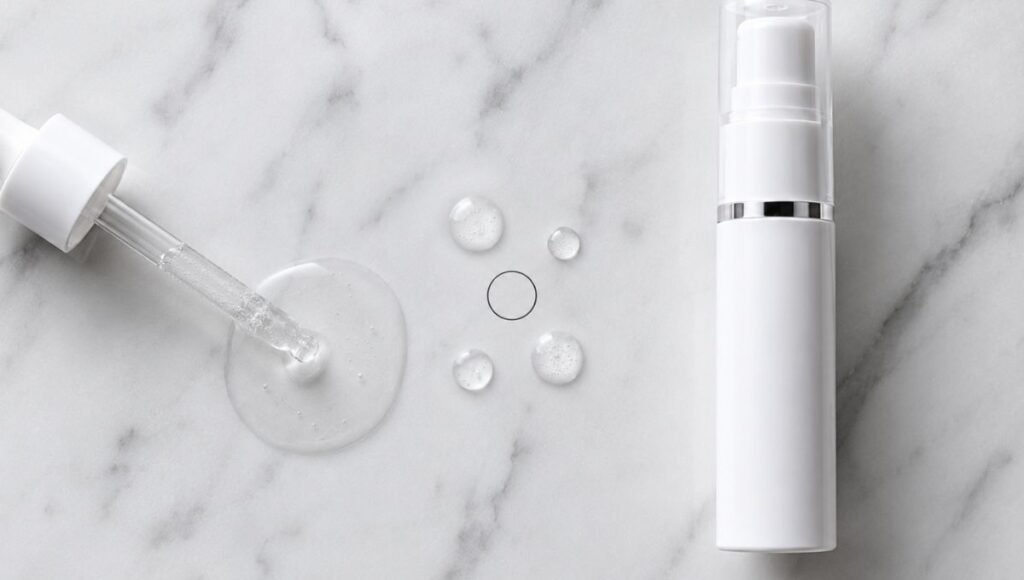
This is the question that generates the most unrealistic expectations in skincare — and addressing it honestly changes what products are purchased and what results are anticipated.
Pores are follicular openings — the orifices of the pilosebaceous unit that includes both the hair follicle and the sebaceous gland. Their baseline diameter is determined by genetics and the volume of the sebaceous gland beneath them. Topical skincare cannot alter the genetic size of a pore or reduce the gland that determines it. This is not a caveat or a limitation of current skincare technology — it is anatomy.
What topical skincare genuinely can do:
Clear pore contents. When sebum, dead cells, and environmental debris accumulate within the follicular canal, they visually widen the pore opening and cast a shadow that makes pores appear larger. Consistent use of salicylic acid (an oil-soluble BHA that penetrates the follicular canal) and glycolic acid (surface exfoliation that removes the keratin plugs at pore openings) clears this accumulation, allowing the pore to return to its baseline visual appearance.
Reduce compensatory sebum production. Niacinamide at 4–5% has documented sebum-reducing effects — studies at 2% concentration have shown measurable reductions in sebum excretion rates. Less sebum production means less accumulation within pores and less visible sebaceous activity at the surface.
Improve surrounding skin structure. As the collagen and elastin surrounding a pore degrade with age, the structural support that kept the pore opening tight is lost. Retinoids — by stimulating new collagen and improving dermal organisation — partially restore this structural support, producing a visible reduction in pore appearance over 12–16 weeks of consistent use. Research on retinol concentrations showed that consistent retinoid use improves pore appearance as a secondary benefit of dermal structural improvement.
Protect against UV-induced pore widening. UV exposure activates MMPs that degrade the elastin fibres surrounding pores — one of the mechanisms by which sun-damaged skin shows more visible pores than protected skin of the same age. Daily SPF is not a direct pore treatment, but it prevents one of the primary drivers of progressive pore widening.
Editor’s note: The phrase “pore minimising” on product labels is a cosmetic claim describing temporary visual improvement — not structural change. Most “pore minimising” products work by filling or blurring the pore opening temporarily, or by removing surface sebum that makes pores visually prominent. This is not deceptive — the visual improvement is real — but it should be understood as a different mechanism from the structural improvements that retinoids and consistent AHA use produce over months.
Bumpy Skin Texture — The Different Types and What Each Needs
Bumpy skin texture is not a single condition — the appearance of small raised irregularities on the skin surface can have several different origins, each responding to different treatments.
Comedonal texture (congestion-related): Small, flesh-coloured or slightly white bumps, often most visible around the forehead, nose, and chin. Usually due to follicular keratin accumulation — the same process as whiteheads and blackheads, but at a sub-clinical level. Responds well to: consistent use of salicylic acid (BHA) for follicular clearing, and glycolic acid for surface keratin disruption. Does not respond well to: heavy occlusives or rich facial oils that contribute to pore congestion.
Keratosis pilaris-like texture: Small, rough bumps — sometimes with a slightly red or flesh-coloured appearance — on the cheeks or jawline. More common in women with a history of sensitive or dry skin. Caused by keratin plugging in the follicle opening. Responds to: consistent gentle AHA exfoliation (lactic acid at 5–8% is often better tolerated than glycolic for this presentation), adequate barrier hydration, and avoiding harsh physical scrubbing that aggravates rather than removes the plugs.
Milia: Small, firm white cysts that appear under the surface of the skin — most common around the eyes and on the cheeks. Caused by trapped keratin beneath an intact skin surface. They cannot be “exfoliated away” because the keratin is enclosed, not at the surface. AHAs used consistently can prevent new milia formation by accelerating surface keratin turnover, but existing milia typically require professional extraction.
Sebaceous hyperplasia: Enlarged, slightly raised pale bumps with a central depression — most common in mature skin, particularly in women with historically oily skin. Caused by enlarged sebaceous glands that have grown with age. These do not respond significantly to topical skincare and typically require professional treatment (electrocautery, IPL, or laser) for meaningful improvement.
Glycolic Acid for Skin Texture — The Chemical Exfoliant That Works at Two Levels
Of all the chemical exfoliants for mature skin texture improvement, glycolic acid has the most comprehensive evidence base — and operates through two mechanisms that address the problem at two different levels simultaneously.
Surface level: corneodesmosomes dissolution. Glycolic acid dissolves the protein bonds holding dead skin cells together at the surface, accelerating their removal and revealing the fresher, smoother cells beneath. This produces the immediate visible improvement — improved light reflection, smoother makeup application, a general brightening — that appears within the first two to four weeks of consistent use. For mature skin with a 45–60 day cellular cycle, this surface acceleration is not trivial: it cuts the time each dull, accumulated surface cell spends visible by approximately half.
Dermis level: collagen and glycosaminoglycan stimulation. The 2021 Journal of Cosmetic Dermatology study (Narda et al.) confirmed that glycolic acid at 8–25% pH-adjusted formulations stimulate dermal collagen synthesis through fibroblast activation — not just surface exfoliation. This dermis-level effect is what makes consistent glycolic acid use produce the kind of skin quality improvement that reads as “her skin just looks different” rather than just “her skin looks cleaner.”
The correct frequency for mature skin: Two evenings per week, alternating with retinol on the other evenings. Never on the same evening — the combined exfoliant load exceeds most mature barriers’ capacity without producing irritation that counteracts the texture improvement being sought.
For the complete glycolic acid protocol including pH requirements and luxury product evaluation, see our dedicated guide to glycolic acid toner [→ /glycolic-acid-toner/].
Skin Texture Improvement With Retinol — The Structural Approach
Retinol’s contribution to skin texture improvement operates through a different mechanism than exfoliants — one that takes longer to produce visible change but addresses the underlying structural deficit that exfoliation alone cannot reach.
Retinol accelerates cellular turnover through nuclear retinoid receptor activation — producing fresher, more organised cells at the surface — while simultaneously stimulating fibroblasts to produce new collagen and elastin in the dermis. Research on retinol concentrations showed that concentrations producing meaningful dermal effects also produce measurable improvements in pore appearance, skin texture, and wrinkle depth over 12–16 weeks.
For mature skin texture specifically, retinol addresses the third origin of texture problems — dermal thinning and structural disorganisation — that chemical exfoliation cannot reach. The combination of glycolic acid (surface renewal and mild collagen stimulation) and retinol (structural collagen synthesis) addresses skin texture more completely than either alone.
The timeline: surface texture improvements from retinol typically become visible at 8–10 weeks. The structural improvements — reduced pore appearance from improved surrounding elastin, better skin organisation — require 12–16 weeks minimum, and continue improving over 12–24 months of consistent use.
For the complete retinol protocol including introduction sequence and concentration guidance for mature skin, see our guide to how long retinol takes to work [→ /how-long-does-retinol-take-to-work/].
Smooth Skin Texture — The Vitamin C and Niacinamide Contribution
Two ingredients that are primarily discussed for brightening and barrier function make meaningful contributions to skin texture improvement that are worth understanding.
Vitamin C addresses texture from the UV protection and collagen synthesis directions. Its antioxidant neutralisation of UV-induced free radicals prevents the ongoing MMP activation that breaks down the elastin network surrounding pores and contributes to surface roughness. Its role as a collagen synthesis cofactor supports the new collagen production that retinoids are stimulating — the two work on the same biological pathway through different mechanisms, making them additive rather than redundant.
For texture specifically: consistent morning Vitamin C application under SPF means the UV exposure of each day produces less cumulative elastin degradation than unprotected skin. Over 12 months, this difference in ongoing collagen preservation becomes visible as a maintenance of texture smoothness rather than dramatic improvement — but for a skin concern that is fundamentally about structural preservation, this preventive function is significant.
For the complete Vitamin C application protocol including morning timing and pH sequencing, see our guide to how to use vitamin c serum [→ /how-to-use-vitamin-c-serum/].
Niacinamide contributes to texture improvement through two mechanisms: sebum regulation (reducing the pore-filling sebum that contributes to pore visibility) and barrier support (allowing exfoliants and retinoids to work at higher effectiveness without the barrier disruption that counteracts texture improvement). At 4–5%, twice daily, it is the ingredient most directly supporting the texture improvement work of glycolic acid and retinol — not competing with them.
For the complete niacinamide science and concentration guide, see our dedicated article on niacinamide skincare [→ /niacinamide-skincare/].
Uneven Skin Texture — When It’s Pigmentation, Not Just Texture
Uneven skin texture and uneven skin tone frequently occur together in mature skin — and distinguishing between them changes the treatment priority.
True texture irregularity (roughness, bumps, pore visibility) is a physical surface variation that reflects light unevenly. Pigmentation irregularity (dark spots, post-inflammatory marks, melasma) is a colour variation at the cellular level that creates visual unevenness even on a physically smooth surface. Many women describe both as “uneven texture” because they produce a similar visual result under certain light conditions.
The distinction matters because the interventions differ:
For texture: glycolic acid, retinol, and niacinamide address the physical surface and structural causes.
For pigmentation: Vitamin C (tyrosinase inhibition), niacinamide (melanosome transfer inhibition), and SPF (prevention of new pigmentation) are the primary tools.
For both simultaneously: a routine that includes glycolic acid (2–3 evenings per week), retinol (2–3 evenings, alternating), morning Vitamin C, twice-daily niacinamide, and daily SPF addresses all dimensions of mature skin unevenness within a single, coherent protocol.
The CPC data for uneven skin tone and texture ($4.05) reflects the high commercial intent of users searching this combined concern — they are actively looking for solutions and ready to invest in the right products.
The Luxury Skincare Routine for Skin Texture Improvement
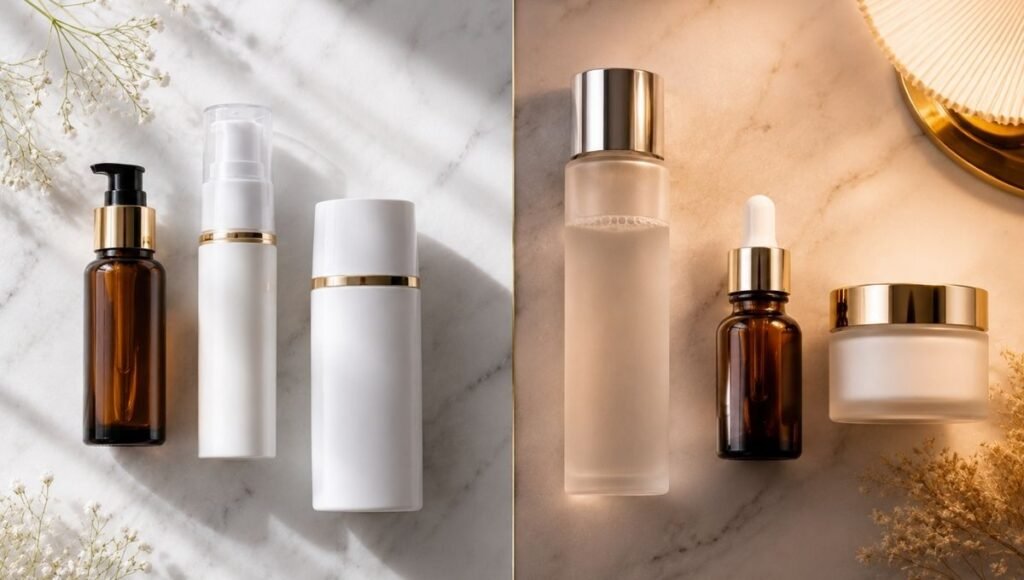
Morning: Gentle cleanse → Vitamin C serum (allow 60–90 seconds) → Niacinamide serum or moisturiser → SPF 30+ mineral
The morning routine’s texture function is protective: antioxidant defence against UV-induced elastin degradation (Vitamin C), pore visibility management (niacinamide’s sebum regulation), and structural protection (SPF).
Evening — glycolic acid nights (2–3 per week): Double cleanse → Glycolic acid toner at 7–10% (5–10 minute window) → Hyaluronic acid serum → Ceramide moisturiser
Evening — retinol nights (2–3 per week, alternating): Double cleanse → Dry skin wait (30 seconds) → Retinol → Ceramide moisturiser → Squalane if needed
Weekly addition: A higher-concentration glycolic acid treatment (10–15%, professional-use AHA mask used at home, time-limited to 5–10 minutes) once per week on a glycolic acid evening accelerates the surface texture improvement that the lower-concentration nightly toner maintains.
The simplified version (5 minutes): Gentle cleanse → Ceramide moisturiser → SPF (morning) Oil cleanse → Glycolic acid toner → Ceramide moisturiser (evening, 3× per week) Add retinol gradually on the other evenings once tolerance is established.
This simplified version captures 70% of the texture improvement of the full routine with half the complexity — appropriate for establishing the habit before optimising the protocol.
What Doesn’t Work for Mature Skin Texture
Physical scrubs. Mechanical exfoliation with walnut shells, sugar, or beads produces surface abrasion that temporarily smooths texture while disrupting the barrier and triggering low-grade inflammation. For mature skin with a less robust barrier, this inflammation cycle — repeated two to three times per week — counteracts the structural improvements that other actives are building. Chemical exfoliation addresses texture at the cellular level without the mechanical trauma.
Pore strips. They remove the visible top of a sebum plug without addressing the follicular environment that produced it. The pore refills within days. Consistent salicylic acid and glycolic acid address the follicular environment — which is why they produce lasting pore improvement while strips produce temporary improvement.
Silicone-heavy primers as a “texture fix.” Optical blurring products fill pore openings and fine texture visually — producing excellent photographic results and comfortable makeup application. But they have no cumulative structural effect and do not change the underlying texture over time. As a finishing step over a texture-improving routine, they are appropriate and effective. As a substitute for addressing the underlying texture biology, they produce satisfaction that masks the absence of improvement.
Adding more actives when the current ones aren’t working. The most common mature skin texture mistake is adding new products when existing ones appear ineffective at 4–6 weeks. Most structural texture improvement requires 12–16 weeks. Adding glycolic acid + bakuchiol + a new AHA + a new retinoid over the course of eight weeks creates compounded irritation that disrupts the barrier and prevents any of them from working effectively. The solution is usually not more products but more time with the existing ones.
When Skin Texture Needs Professional Assessment
Topical skincare addresses the majority of mature skin texture concerns within 12–16 weeks of consistent use. Several presentations benefit from professional intervention:
Sebaceous hyperplasia (raised, pale bumps with central depression) — does not respond to topical skincare; requires professional treatment.
Deep, established milia — existing milia beneath intact skin cannot be dissolved by topical actives; professional extraction prevents scarring and is more effective than topical dissolution attempts.
Significant photoaging texture — skin with extensive sun damage may benefit from professional laser resurfacing, chemical peels at clinical concentrations, or radiofrequency microneedling, which produce structural improvements beyond what home skincare can achieve.
Texture that worsens despite consistent correct use — if a well-designed routine consistently irritates rather than improves, a dermatologist can assess whether an underlying condition (rosacea, seborrhoeic dermatitis) is causing the texture and reactive response.
FAQ
How long does it take to improve skin texture? Surface texture improvements — reduced dullness, smoother makeup application — become visible at 4–6 weeks of consistent chemical exfoliation (glycolic acid 2–3 evenings per week). Structural improvements — reduced pore appearance, improved dermal smoothness — require 12–16 weeks of consistent retinoid use. The full benefit of a complete texture routine typically accumulates over 6–12 months of sustained use. Most routines are abandoned at 4–6 weeks, precisely when surface improvements have appeared but structural improvements have not yet begun.
Can you actually minimize pores, or is it just temporary? Pores cannot be physically reduced in diameter — their size is anatomically fixed. What changes is their visual appearance: clearing pore contents (salicylic acid, glycolic acid), reducing sebum production (niacinamide, retinol’s indirect sebum effect), and improving the surrounding skin structure (retinol, collagen-stimulating actives) produce genuine, sustained improvement in how visible pores appear. This is not temporary in the way that a primer’s blurring effect is — it is a slower, structural improvement that is maintained with continued use of the relevant actives.
Why is my skin texture rough despite using AHA regularly? Several possible reasons. If you’re using AHA consistently but seeing no improvement at 8–10 weeks, the most common causes are: pH too high for effective exfoliation (check that your toner specifies pH 3–4), barrier disruption from over-exfoliation or too many simultaneous actives reducing efficacy, or texture that has a structural rather than surface origin (dermal thinning) that AHA cannot fully address without retinoid support. Try reducing to twice weekly AHA only, adding ceramide barrier support, and assessing at 12 weeks before changing products.
What causes bumpy skin texture on the cheeks? Bumpy texture on the cheeks in mature skin typically has one of three origins: comedonal congestion (requires salicylic acid and glycolic acid), keratosis pilaris-like keratin plugging (responds to consistent lactic acid and barrier hydration), or sebaceous hyperplasia (requires professional treatment). Identifying which type is present changes the treatment approach significantly. Comedonal and keratosis pilaris-related bumps respond to topical treatment within 8–12 weeks; sebaceous hyperplasia does not.
Is glycolic acid or retinol better for skin texture? They address different aspects of skin texture and are most effective used together in alternating sessions. Glycolic acid produces faster visible surface improvement (4–6 weeks) through exfoliation and mild collagen stimulation. Retinol produces slower but more significant structural improvement (12–16 weeks) through cellular renewal and dermal collagen synthesis. Neither fully substitutes for the other in a mature skin texture routine.
How to get smooth skin texture in your 40s when nothing seems to work? The most common failure mode is expecting too much too soon, or using products that work against each other. The effective protocol: glycolic acid at correct pH (3–4) twice weekly, retinol on alternating evenings, niacinamide twice daily, morning Vitamin C, daily SPF — all consistently for 12 weeks minimum before assessing. Most “nothing works” situations involve either insufficient consistency, incorrect pH in the exfoliant, or assessment at 4–6 weeks before structural improvement has had time to accumulate.
The Skin That Reflects Your Routine
Skin texture is not one problem with one solution. It is three overlapping biological issues — surface accumulation, pore visibility, and structural thinning — each requiring a specific approach, each operating on a different timeline.
Understanding which type of texture problem is dominant changes what you prioritise. Understanding the timeline changes whether you persist through the weeks before visible structural change appears. And understanding what doesn’t work — physical scrubs, temporary blurring, perpetually adding new products — frees up the budget and the routine space for what does.
How to improve skin texture after 40 comes down to three consistent actives (glycolic acid, retinol, niacinamide), daily photoprotection, and 12–16 weeks of patience. The biology is on your side once the right inputs are consistently provided.
For the complete ingredient science that supports this routine — how each active works at the molecular level and how they interact — see our comprehensive guide to skincare ingredients for mature skin [→ /skincare-ingredients-for-mature-skin/].
For the complete routine architecture that places these texture-improving actives in their correct morning and evening positions alongside all other mature skin priorities, see our guide to skincare for women over 40 [→ /skincare-for-women-over-40/].
References
- Narda, M., et al. (2021). Glycolic acid adjusted to pH 4 stimulates collagen production and epidermal renewal without affecting levels of proinflammatory TNF-alpha in human skin explants. Journal of Cosmetic Dermatology, 20(2), 513–521.
- Bernstein, E.F., et al. (2001). Glycolic acid treatment increases type I collagen mRNA and hyaluronic acid content of human skin. Dermatologic Surgery, 27(5), 429–433.
- Mukherjee, S., et al. (2006). Retinoids in the treatment of skin aging. Clinical Interventions in Aging, 1(4), 327–348.
- Draelos, Z.D., et al. (2007). The effect of 2% niacinamide on facial sebum production. Journal of Cosmetic and Laser Therapy, 8(2), 96–101.
- Hughes, M.C.B., et al. (2013). Sunscreen and prevention of skin aging. Annals of Internal Medicine, 158(11), 781–790.
- Ganceviciene, R., et al. (2012). Skin anti-aging strategies. Dermato-Endocrinology, 4(3), 308–319.