
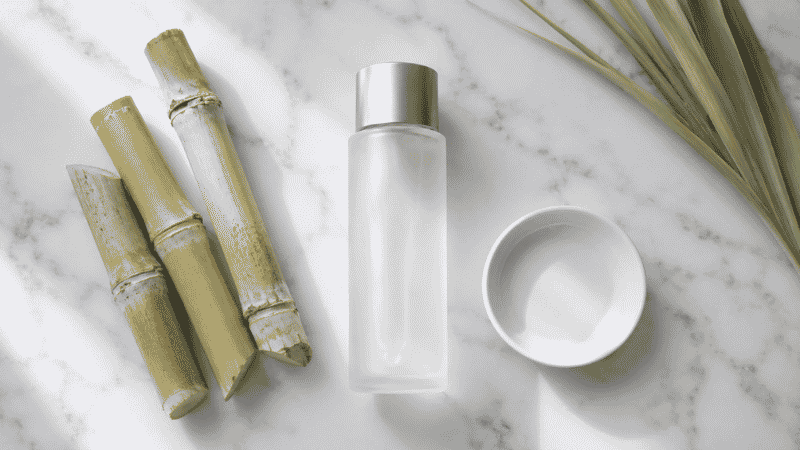
It happened slowly enough that you almost didn’t notice. The skin that used to look genuinely luminous after cleansing — the kind of glow that made you feel like your morning routine was working — began looking a little flatter. A little more uneven in certain light. Not a dramatic change, nothing you could point to in a single photograph, but a cumulative shift over the past few years toward something you might describe as dull. The serums and moisturisers still make your skin feel comfortable, but the visible radiance they used to produce has become harder to achieve.
This is almost always a cellular turnover story. In your 20s, your skin replaced its surface cells roughly every 28 days. By your 40s, that cycle has slowed to 45–60 days — meaning older, less reflective cells accumulate at the surface for longer before they are shed. The products that absorb beautifully into freshly renewed skin are sitting on top of a less receptive surface. And the antioxidants, peptides, and vitamins you’re applying are doing less visible work because the barrier they’re trying to penetrate is thicker with accumulated dead cells.
A glycolic acid toner — used correctly, at the right frequency, in a sequence that respects the rest of your routine — directly addresses this. Not by adding anything to the skin, but by accelerating the removal of what’s accumulated on top of it.
Key Takeaways
- Glycolic acid is the smallest-molecule alpha-hydroxy acid (AHA), derived from sugarcane, with a molecular weight of approximately 76 Daltons. Its small size gives it the deepest epidermal penetration of any common AHA — and produces both the strongest efficacy and the highest irritation potential.
- A 2021 randomised study published in the Journal of Cosmetic Dermatology tested glycolic acid formulations at 8–25% (pH 4) on human skin explants and found that all concentrations increased total collagen levels in a concentration-dependent manner — without triggering inflammatory TNF-alpha responses, meaning the acid stimulated collagen repair without causing inflammatory damage.
- For home use, the optimal glycolic acid concentration is 5–10%, at a pH of 3–4. Below 5%, efficacy is modest. Above 10% at home without professional guidance increases irritation risk — particularly for mature skin with a less robust barrier.
- Mature skin (40+) should start at lower frequency than younger skin — two evenings per week maximum during the first month, building to a maximum of three evenings per week — because the longer cellular turnover cycle means less frequent exfoliation achieves the same outcome, and over-exfoliation in mature skin produces more significant barrier disruption.
- Glycolic acid and retinol should never be used on the same evening. The two together create compounded exfoliant load that exceeds what most mature skin barriers can manage without inflammation. Alternate them across different evenings.
What Does Glycolic Acid Do — The Dual Mechanism That Makes It Valuable After 40
Most descriptions of glycolic acid stop at “it exfoliates dead skin cells” — which is accurate but incomplete, and misses the mechanism that makes it particularly relevant for mature skin.
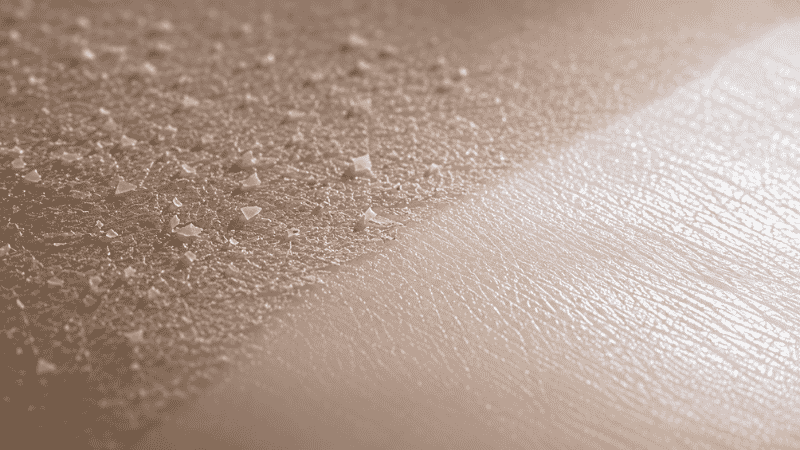
Surface level: Corneodesmosomes dissolution. Glycolic acid works by weakening the ionic bonds that hold corneodesmosomes together — the protein structures that “glue” dead skin cells (corneocytes) to each other at the surface of the stratum corneum. When these bonds weaken, the outermost layer of accumulated dead cells releases more readily, revealing the fresher, more reflective cells beneath. This is the mechanism behind the immediate luminosity improvement that most users notice in the first few weeks.
Dermis level: Collagen and glycosaminoglycan stimulation. This is the mechanism that most glycolic acid content skips — and it is the one most relevant to anti-aging. Research published in the Journal of Cosmetic Dermatology (Narda et al., 2021) demonstrated that glycolic acid at concentrations from 8–25% increases dermal collagen levels through two pathways: direct fibroblast stimulation in the dermis, and indirect stimulation through cytokines released by keratinocytes in the epidermis. Additionally, consistent glycolic acid use has been shown to increase glycosaminoglycan synthesis — including hyaluronic acid — which supports skin hydration and structural integrity at the dermal level.
Earlier research by Bernstein et al. (2001) similarly documented that 20% glycolic acid applied twice daily for three months produced significant increases in type I collagen mRNA and hyaluronic acid content in both the epidermis and dermis.
The combination of surface exfoliation and deeper collagen/glycosaminoglycan stimulation is what distinguishes glycolic acid from simple physical scrubs or enzyme exfoliants. It is not merely polishing the surface — it is communicating with the dermis to improve the underlying structure.
Glycolic Acid vs Retinol — Two Different Renewal Pathways, Both Needed
This comparison generates significant confusion — partly because both glycolic acid and retinol are described as “anti-aging exfoliants,” which obscures the fact that they work through entirely different biological mechanisms.
Glycolic acid accelerates surface renewal through chemical exfoliation — it dissolves the bonds between dead cells, allowing them to shed. Its collagen stimulation is a secondary effect of keratinocyte signalling, not direct cellular receptor activation. Its effects at the surface level are visible relatively quickly (weeks), and its collagen benefit, while real, is more modest than retinoids at home-use concentrations.
Retinol operates through intracellular retinoid receptor binding — it directly upregulates gene expression governing cellular turnover, collagen synthesis, and dermal matrix organisation. Its effects are structural and cumulative, becoming measurable at 12–16 weeks. It produces an adjustment phase (dryness, sensitivity) that glycolic acid does not.
They are not redundant. In a well-designed mature skin routine, glycolic acid addresses surface accumulation (and has some collagen benefit), while retinol addresses structural collagen synthesis and deeper cellular renewal. The two are complementary when used in a correctly separated protocol.
Editor’s note: The KD6 search volume for “glycolic acid vs retinol” reflects a genuinely common question that almost no content answers well. The honest answer: they are not competitors. If you had to choose one, retinol has the stronger structural anti-aging evidence. If you’re using both, glycolic acid 2–3 evenings per week and retinol on the other evenings is the protocol that allows each to work without compounding irritation.
Glycolic Acid vs Salicylic Acid — Surface Renewal vs Pore-Level Exfoliation
The distinction between glycolic acid (an AHA) and salicylic acid (a BHA) is one of the most useful in skincare — not because one is better, but because they are designed for different problems.
Glycolic acid is water-soluble and works at the skin’s surface, dissolving the intercellular bonds in the outer epidermis. It addresses dull skin, uneven texture, hyperpigmentation, fine lines, and collagen maintenance. For mature skin without significant congestion or active acne, glycolic acid is the more relevant choice.
Salicylic acid is oil-soluble — it can penetrate sebaceous follicles and dissolve the lipid plugs that form blackheads and congested pores. Its anti-inflammatory properties (through COX inhibition) also make it the more appropriate choice for inflammatory acne. For mature skin where pore congestion is a primary concern, salicylic acid addresses what glycolic acid cannot reach.
For most mature skin with anti-aging and brightening priorities — and without significant active breakouts — glycolic acid is the more strategically relevant AHA. If you’re managing both congestion and aging concerns, alternating: salicylic acid one or two evenings per week, glycolic acid one or two evenings, and retinol on the remaining evenings, provides a comprehensive multi-target approach.
Glycolic Acid vs Lactic Acid — Which AHA for Mature Skin?
Both glycolic and lactic acids are AHAs with similar exfoliating mechanisms — they differ primarily in molecular weight and the resulting penetration depth and irritation profile.
Glycolic acid (molecular weight: ~76 Daltons) is the smallest common AHA. Its small size enables deeper epidermal penetration, greater efficacy at equivalent concentrations, and stronger collagen-stimulating effects — but also higher irritation potential for sensitive or barrier-compromised skin.
Lactic acid (molecular weight: ~90 Daltons) is slightly larger, penetrates less deeply, and is generally better tolerated by sensitive, dry, or mature skin. It also has natural moisturising properties — lactic acid is a component of the skin’s own natural moisturising factor — giving it a mild hydrating dimension that glycolic acid lacks.
For mature skin navigating its first AHA introduction, lactic acid at 5–8% is often the gentler entry point. For mature skin that has adapted to AHA use and is seeking the stronger collagen-stimulating effect, glycolic acid at 7–10% produces more significant dermis-level benefits at equivalent concentrations.
The practical decision: if you have sensitive or reactive mature skin, or if you’ve previously found glycolic acid too stimulating, lactic acid is the more appropriate AHA. If you have tolerant mature skin seeking maximum AHA benefit, glycolic acid at appropriate concentration and frequency is the more efficacious choice.
Glycolic Acid for Hyperpigmentation and Dark Spots
Glycolic acid’s brightening effect on hyperpigmentation is one of its most clinically consistent benefits — and one that operates through multiple simultaneous mechanisms.
Surface cell turnover. By accelerating the shedding of the outermost skin cells, glycolic acid removes the cells that carry the accumulated melanin of existing dark spots more quickly than they would shed naturally. In a skin with a 45–60 day turnover cycle, this acceleration is not trivial — it meaningfully reduces the time each pigmented cell spends on the surface.
Tyrosinase inhibition. Some evidence suggests glycolic acid has mild tyrosinase-inhibiting activity — reducing the production of new melanin, in addition to accelerating the removal of existing pigmented cells. This is a secondary mechanism, less potent than dedicated tyrosinase inhibitors like Vitamin C, but additive.
Enhanced penetration of other actives. By removing the barrier of accumulated dead cells, glycolic acid improves the penetration of subsequently applied brightening actives — Vitamin C, niacinamide, alpha arbutin. This “pre-treatment” effect means that using a glycolic acid toner two to three evenings per week can improve the efficacy of the brightening serums used on subsequent mornings, even when those serums are not applied immediately after the glycolic acid.
For dark spots on mature skin, the most effective approach combines glycolic acid (surface accelerating exfoliation and mild tyrosinase inhibition), morning Vitamin C (tyrosinase inhibition and antioxidant protection), and niacinamide (melanosome transfer inhibition). Each addresses a different step in the pigmentation pathway — a genuinely complementary combination rather than redundant layering.
How to Use Glycolic Acid Toner — The Mature Skin Protocol
The application method for glycolic acid toner seems simple — apply after cleansing, let it absorb — but several variables significantly affect both efficacy and tolerability.
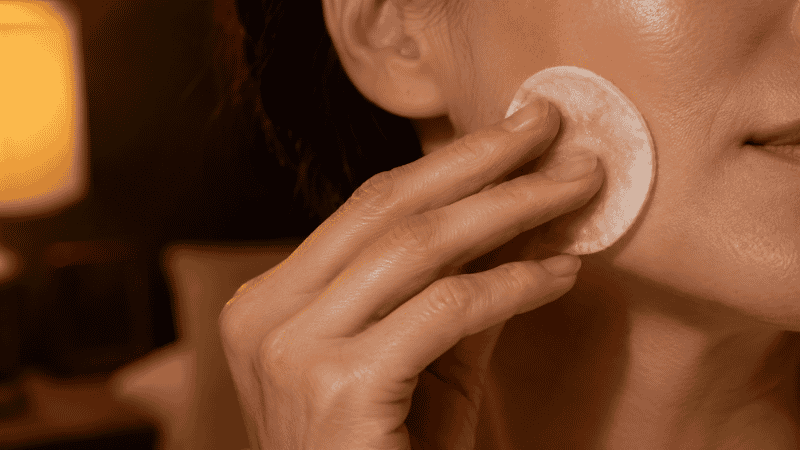
After double cleansing in the evening. Glycolic acid toner belongs in the evening, after the skin is clean and before any active serums. Do not use it in the morning — freshly exfoliated skin is more photosensitive, and the exfoliation process is more aligned with the skin’s nighttime renewal cycle.
Apply to dry skin. Applying glycolic acid toner to damp skin increases its penetration rate, which can tip the balance from effective exfoliation to irritation in mature skin. Allow skin to fully dry after cleansing — approximately 60–90 seconds — before applying.
Application method. A cotton pad saturated with toner, swept gently across the face and neck in single strokes, is the standard application. Avoid the immediate eye area. Avoid applying over any active breakouts, cuts, or compromised skin.
Timing after application. Allow 5–10 minutes after applying glycolic acid toner before proceeding with the next steps. During this window, the acid is actively dissolving intercellular bonds at the optimal pH. Applying a higher-pH product immediately over it can reduce its efficacy before the exfoliation is complete.
The first application sensation. A mild tingling or stinging sensation during the first few applications is normal — it reflects the low-pH formulation interacting with the skin surface. This typically diminishes as the skin adapts, usually within the first two to four applications. A burning sensation that persists beyond five minutes, or visible redness that does not resolve within an hour, indicates the concentration or frequency is too high for your current skin state.
After glycolic acid: Allow the 5–10 minute window, then proceed with your retinol (on retinol nights), or hyaluronic acid serum followed by ceramide moisturiser (on non-retinol nights). Always follow the next morning with SPF — glycolic acid removes the cells that provide some degree of UV screening, making freshly exfoliated skin more vulnerable to photodamage.
How Often to Use Glycolic Acid — The Frequency Guide for Mature Skin
This is the question with the widest variation in advice — and the one where most general guidelines fail to account for the specific biology of mature skin.
The mature skin case for lower frequency: Mature skin has a cellular turnover rate of 45–60 days, compared to approximately 28 days in younger skin. Because the cell cycle is longer, each glycolic acid application addresses a larger proportion of accumulated cells — the skin doesn’t need as frequent exfoliation to achieve the same outcome. Additionally, mature skin typically has some degree of reduced barrier function (less sebum production, thinner stratum corneum), making it more vulnerable to barrier disruption from over-exfoliation.
The frequency protocol:
Week 1–4 (introduction): One evening per week. Observe the skin’s response over the following 48 hours. No redness, tightness, or increased sensitivity: proceed to next stage after four weeks.
Month 2: Two evenings per week, non-consecutive nights (e.g., Monday and Thursday). Continue monitoring for barrier compromise signs: persistent dryness, increased reactivity to previously tolerated products, visible flaking that does not resolve.
Month 3 onwards (if well-tolerated): Two to three evenings per week. Most mature skin finds two evenings per week to be the sustainable long-term frequency. Three evenings per week is appropriate for skin that is fully adapted and shows no barrier compromise.
Signs you’re over-exfoliating with glycolic acid:
- Skin feels tight or uncomfortable after cleansing even without any active products applied
- Serums that previously absorbed comfortably now sting or pill on the skin
- Persistent redness that doesn’t resolve within a few hours of application
- Breakouts or congestion in areas that were previously clear
If any of these appear, stop glycolic acid for two to three weeks, use ceramide-focused barrier repair products, then reintroduce at once per week.
Glycolic Acid with Retinol — The Alternating Night Protocol
Using glycolic acid and retinol in the same evening routine is the most common mistake in mature skin AHA use — and it is the one most likely to produce the barrier disruption that makes people conclude “chemical exfoliants don’t work for my skin.”
Both glycolic acid and retinol accelerate cellular turnover. Retinol does so through intracellular receptor activation; glycolic acid does so through surface exfoliation. Used together on the same evening, the compounded exfoliant load frequently exceeds the barrier’s capacity to manage: cells are being replaced faster than the barrier lipids can form around the new cells, creating a temporarily compromised barrier that appears as dryness, sensitivity, and reactivity.
The correct approach is alternation, not combination:
Glycolic acid nights (2 evenings per week): After double cleanse, glycolic acid toner (5–10 minute window) → hyaluronic acid serum → ceramide moisturiser → squalane as final seal if needed.
Retinol nights (2–3 evenings per week): After double cleanse and ensuring skin is fully dry → retinol → allow to absorb (60–90 seconds) → ceramide moisturiser containing niacinamide.
Rest nights (1–2 evenings per week): Simple cleanse and ceramide moisturiser only. This rest is not optional for mature skin — it is what allows the barrier to consolidate the renewal that the active evenings have initiated.
The alternating protocol allows each active to work without competing with the other, prevents cumulative exfoliant overload, and gives the barrier the recovery time it needs to maintain integrity across a weekly cycle of active nights.
For the complete retinol protocol that fits within this framework, see our guide to how long retinol takes to work [→ /how-long-does-retinol-take-to-work/].
If Your Glycolic Acid Isn’t Working — What to Check
Before concluding that glycolic acid doesn’t suit your skin, audit these specific variables:
Is the pH correct? Glycolic acid must be formulated at approximately pH 3–4 to be effective at standard OTC concentrations. Products not listing their pH, or formulated in a higher-pH base to reduce irritation, may provide negligible exfoliation. The tingling sensation (mild as it should be) is one signal that the pH is low enough to be active.
Is the frequency sustainable? Seeing no results after using glycolic acid once in a week for two weeks is not a product failure — it’s an insufficient application frequency for any visible outcome to emerge. Two evenings per week for four to six weeks is the minimum assessment window.
Are you following with SPF? Without SPF the morning after glycolic acid use, you are exposing freshly exfoliated skin to UV-induced free radical damage that undoes the surface renewal the exfoliant just achieved. The SPF is not optional when glycolic acid is part of your routine.
Are you stacking too many actives? If your routine also includes retinol, an AHA serum, a BHA toner, and a physical scrub in the same week, the barrier disruption may be producing results that look like glycolic acid “not working” when they are actually collective over-exfoliation. Simplify and assess each active individually.
Is Luxury Glycolic Acid Worth the Premium?
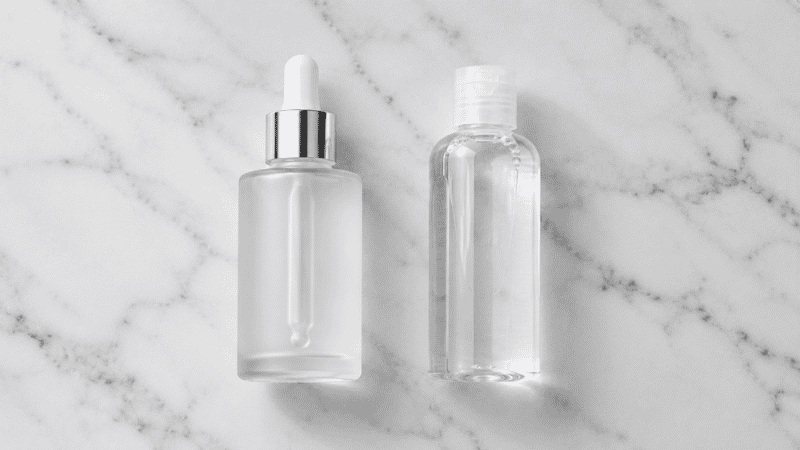
The glycolic acid toner category spans from The Ordinary’s $9 7% solution to professional-grade formulations at $40–$80 from SkinCeuticals, Paula’s Choice, and Pixi. Understanding where the premium earns its place changes the purchase decision.
Where the premium is functionally justified:
pH calibration and stability. A well-formulated luxury glycolic acid toner confirms its pH at 3–4 and uses a stabilised acid that maintains this pH throughout the product’s shelf life. Budget formulations may not maintain consistent pH across different batches or after extended storage.
Supporting ingredients. The most sophisticated glycolic acid toners combine AHA exfoliation with barrier-supporting ingredients — glycerin, panthenol, hyaluronic acid, niacinamide — that reduce post-exfoliation dryness and make the product more appropriate for mature skin. Paula’s Choice AHA 8% Gel and Pixi Glow Tonic (5%) are examples where formulation thoughtfulness adds functional value beyond the glycolic acid alone.
Concentration appropriateness for mature skin. Some luxury formulations are specifically calibrated for mature skin at 5–8% — lower than the 10%+ some budget products use — with pH and buffering systems designed to produce effective exfoliation with lower irritation potential. This calibration for a specific skin type is genuine added value.
Where the premium is less justified:
Pure glycolic acid at 7% in a stable, pH-appropriate formulation (such as The Ordinary’s toner) performs the same surface exfoliation function as a luxury version with fewer supporting ingredients. If your skin tolerates it well and you use appropriate post-exfoliation moisturisation, the functional outcome is similar. The luxury spend earns its place when it includes meaningful supporting actives that improve tolerability or provide additional benefit — not when it simply charges more for the same acid at the same concentration.
When to Seek Professional Guidance
Glycolic acid at home-use concentrations (5–10%) is appropriate for most adult skin types with a straightforward tolerance-building protocol. Professional input is relevant in specific circumstances:
If your skin does not adapt to glycolic acid even at the lowest available concentrations (5%) after four to six weeks of once-weekly use — persistent redness, burning, or barrier disruption suggests a dermatological assessment to rule out rosacea, perioral dermatitis, or barrier conditions that make AHA use inadvisable.
If you are interested in professional glycolic acid peels (20–70% concentrations) for more significant hyperpigmentation or textural concerns — these require clinical application and aftercare and should not be attempted at home.
If you are pregnant — AHA safety in pregnancy has not been formally established in controlled human trials. Most dermatologists consider low-concentration, brief-contact AHA use (such as a toner) lower-risk than retinoids, but this is a clinical judgment to make with your healthcare provider.
FAQ
How often should I use glycolic acid toner for mature skin? Begin with once per week for the first month, observing for any barrier disruption signs (persistent tightness, increased reactivity, uncomfortable dryness). Move to twice weekly in month two if the skin is tolerating the first stage without issue. Most mature skin finds two evenings per week to be the optimal sustainable long-term frequency — sufficient for meaningful surface renewal without accumulating exfoliant damage.
Does glycolic acid toner sting — is that normal? A mild tingling sensation during the first few applications is normal and reflects the low-pH formulation interacting with the skin surface. It typically diminishes within the first two to four applications as skin adapts. A sensation that could reasonably be described as burning — particularly if it persists beyond five minutes or is accompanied by visible redness that doesn’t resolve — indicates the concentration or frequency is excessive for your current skin state.
Glycolic acid vs retinol — can I use them in the same routine? Not on the same evening. The two together create compounded exfoliant load that exceeds most mature skin barriers’ capacity to manage. Use them on alternating evenings: glycolic acid toner two evenings per week, retinol two to three other evenings, with one to two rest evenings of simple cleansing and moisturising only.
Why is my skin drier after using glycolic acid toner? Two possible causes. First, you may be over-exfoliating — using it too frequently or at too high a concentration, producing barrier disruption rather than surface renewal. Second, you may not be following with adequate moisturisation after the toner. Apply hyaluronic acid serum and ceramide moisturiser within 10–15 minutes of the glycolic acid application to counteract the post-exfoliation moisture loss.
Glycolic acid vs lactic acid — which is better for aging skin? Both address surface exfoliation through similar mechanisms; the difference is penetration depth and irritation potential. Glycolic acid (smaller molecule) penetrates deeper and has stronger collagen-stimulating evidence at equivalent concentrations, but is more likely to cause irritation. Lactic acid is better tolerated by sensitive or barrier-compromised mature skin. Start with lactic acid if you have sensitive skin or are new to AHAs; graduate to glycolic acid if you want stronger efficacy and your skin has demonstrated good tolerance.
Can glycolic acid toner improve hyperpigmentation? Yes — through surface cell turnover acceleration (removing pigmented cells faster), mild tyrosinase inhibitory activity, and enhanced penetration of subsequently applied brightening actives. For mature skin managing dark spots, combining glycolic acid two to three evenings per week with morning Vitamin C and twice-daily niacinamide addresses the pigmentation pathway at multiple steps simultaneously.
The Step That Makes Everything Else Work Better
Glycolic acid is not the most celebrated ingredient in anti-aging skincare — it does not carry the structural collagen reputation of retinoids or the scientific mystique of advanced peptides. What it does is arguably more foundational: it maintains the surface conditions that allow every other active in your routine to reach its target.
A glycolic acid toner used two evenings per week, at the right concentration and in a correctly separated routine, creates a skin surface that reflects light more evenly, absorbs actives more effectively, and shows the results of consistent anti-aging investment more clearly. The luminosity that returns in the first few weeks is not a cosmetic trick — it is younger cells reaching the surface on a schedule that actually reflects your biological capacity for renewal, rather than the 45-60 day default of untreated mature skin.
For the complete routine framework that places glycolic acid in its correct position alongside retinol, Vitamin C, niacinamide, and ceramide moisturiser, see our guide to the full skincare routine for aging skin [→ /skincare-routine-for-aging-skin/].
For the Vitamin C sequencing that pairs with glycolic acid’s brightening effect in the morning routine, see our guide to how to use vitamin c serum [→ /how-to-use-vitamin-c-serum/].
And for the hyaluronic acid moisturiser step that makes post-exfoliation barrier recovery faster and more complete, our guide to hyaluronic acid moisturizer covers the application logic in detail [→ /hyaluronic-acid-moisturizer/].
References
- Narda, M., et al. (2021). Glycolic acid adjusted to pH 4 stimulates collagen production and epidermal renewal without affecting levels of proinflammatory TNF-alpha in human skin explants. Journal of Cosmetic Dermatology, 20(2), 513–521.
- Bernstein, E.F., et al. (2001). Glycolic acid treatment increases type I collagen mRNA and hyaluronic acid content of human skin. Dermatologic Surgery, 27(5), 429–433.
- Tang, S.C., & Yang, J.H. (2018). Dual effects of alpha-hydroxy acids on the skin. Molecules, 23(4), 863.
- Draelos, Z.D. (2000). The latest cosmeceutical approaches for antiaging. Journal of the American Academy of Dermatology, 42(1 Pt 2), S8–13.
- Ganceviciene, R., et al. (2012). Skin anti-aging strategies. Dermato-Endocrinology, 4(3), 308–319.
- Rawlings, A.V., et al. (1996). Stratum corneum moisturization at the molecular level: an update in relation to the dry skin cycle. Journal of Investigative Dermatology, 111(2), 344–349.