
She had been using it for three weeks. A well-reviewed serum from a brand she trusted, applied every morning after cleansing, exactly as directed. And yet her skin felt — if anything — slightly worse. Not dramatically dry, not broken out, just subtly tighter. Less comfortable. She told herself to give it more time. At week five, she quietly stopped using it and put it in the drawer, quietly wondering whether hyaluronic acid simply wasn’t for her.
It was for her. It just wasn’t being applied in a way that matched the science.
This experience — hyaluronic acid that seems to do nothing, or actively worsens dryness — is more common than any skincare content acknowledges, and it is entirely preventable with a clear understanding of what the molecule actually does, where it works, and the single application variable that determines whether it hydrates you or quietly dehydrates you. This guide covers all of it — including the molecular weight distinction that most brands never explain, the dry-climate paradox that trips up thousands of users, and how to build a hyaluronic acid moisturizer routine that works with your skin’s biology rather than against it.
Key Takeaways
- Hyaluronic acid (HA) is a humectant — it attracts and binds water molecules rather than creating an occlusive seal. It holds up to 1,000 times its weight in water, making it one of the most effective surface-hydrating molecules in skincare.
- Molecular weight determines where HA works in the skin: high molecular weight HA (1–1.5 million Daltons) sits on the skin’s surface, creating a plumping film; low molecular weight HA (under 50,000 Daltons) penetrates slightly deeper into the upper epidermis. Multi-molecular weight formulations address both levels simultaneously.
- In low-humidity environments, high-molecular-weight-only HA can draw moisture from deeper skin layers to the surface, where it then evaporates — producing a net drying effect. This is the scientific basis of the “HA made my skin drier” experience that many users report.
- Sodium hyaluronate is the salt form of hyaluronic acid, more stable and with slightly better penetration capacity than HA in its acid form. It is hyaluronic acid — seeing it on a label instead of “hyaluronic acid” does not mean the product lacks HA.
- HA is most effective when sealed immediately with a ceramide moisturiser and/or an occlusive. Applied alone in a dry environment without a follow-up emollient, surface HA begins to dehydrate as the moisture it attracted evaporates.
What Does Hyaluronic Acid Actually Do — The Humectant Mechanism
Before understanding how to use hyaluronic acid correctly, it helps to understand precisely what it is designed to do — because most HA marketing describes effects (“plumping,” “hydrating,” “dewy”) without explaining the mechanism, and the mechanism is what determines whether the ingredient works in your specific environment.
Hyaluronic acid is a glycosaminoglycan — a naturally occurring polysaccharide found throughout the body in connective tissue, eyes, and skin. In the dermis, it plays a structural role, holding water to maintain tissue volume and elasticity. In the epidermis, it functions as a humectant — a molecule that attracts water from its surroundings and binds it.
The oft-cited statistic that HA can hold 1,000 times its weight in water is accurate and meaningful. In optimal conditions — humid environment, intact skin barrier, properly applied and sealed — this capacity produces the genuinely hydrating, surface-plumping effect that HA’s reputation is built on. But HA does not create water. It attracts and holds water that is already present, either from the environment or from deeper skin layers. This is the critical understanding that changes everything about how you use it.
Natural HA production in the skin declines with age. Research published in the Journal of Investigative Dermatology documented significant reductions in HA concentrations in aged compared to young skin, contributing to reduced hydration capacity and the less-resilient skin texture characteristic of mature skin. Topical HA addresses this deficit by supplying the water-attracting molecules that the skin is producing less of — provided it is formulated and applied correctly.
High Molecular Weight Hyaluronic Acid — Why Size Determines Where It Works
The molecular weight of hyaluronic acid is the single most underexplained variable in consumer skincare content — and the one that most directly determines what a product can and cannot do for your skin.
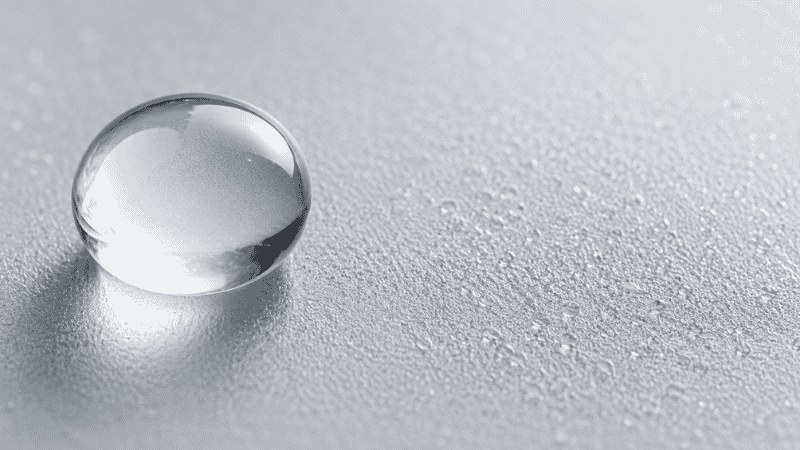
High molecular weight HA (1–1.5 million Daltons): These large molecules cannot penetrate the stratum corneum — they are simply too large to fit through the intercellular spaces. They sit on the skin’s surface, forming a hydrating film that temporarily fills in fine lines, creates a dewy appearance, and provides immediate surface comfort. The plumping effect you notice minutes after applying an HA serum is primarily this surface-level film effect. It is genuinely pleasant and genuinely real — but it is not the same as deep hydration.
Low molecular weight HA (under 50,000 Daltons): These smaller fragments can penetrate into the upper layers of the epidermis, providing hydration slightly deeper than the surface. Research suggests that low molecular weight HA may also interact with cell receptors to stimulate the skin’s own HA synthesis — potentially a more durable effect than simple surface application.
Multi-molecular weight formulations: The most sophisticated HA skincare products combine HA at several molecular weights — surface (high), mid-epidermal (medium), and upper epidermal (low) — to address hydration at multiple skin depths simultaneously. This is the formulation approach that luxury HA products are most likely to use, and where the premium over a single-weight formula is genuinely justified.
Editor’s note: When evaluating an HA serum label, “hyaluronic acid” alone tells you almost nothing about the molecular weight or depth of action. Brands that specify “low molecular weight hyaluronic acid,” “hydrolysed hyaluronic acid,” or “sodium hyaluronate” alongside regular HA are communicating a more sophisticated multi-weight formulation — and this specificity is worth paying attention to.
Sodium Hyaluronate vs Hyaluronic Acid — The Label Distinction That Matters
This is one of the most persistently confusing ingredient distinctions in consumer skincare — and the one most likely to cause an unnecessary product rejection.
Sodium hyaluronate is the sodium salt form of hyaluronic acid. It is produced by neutralising hyaluronic acid with sodium hydroxide, creating a more stable, more water-soluble molecule. Because of its smaller molecular structure and greater stability, sodium hyaluronate has slightly better penetration capacity than hyaluronic acid in its acid form, and a longer shelf life in formulations.
Critically: sodium hyaluronate is hyaluronic acid. They are not different ingredients. If a product lists sodium hyaluronate but not “hyaluronic acid,” it still contains the same humectant — the labelling reflects the chemical form, not the presence or absence of the ingredient. A significant number of consumers reject products believing they lack HA because they don’t see the exact phrase “hyaluronic acid,” when sodium hyaluronate is in fact the more common and more stable form used in quality formulations.
The practical guidance: look for either “hyaluronic acid” or “sodium hyaluronate” on the ingredient list. If you see both, the formulation likely contains multi-weight HA (as the two forms typically have different molecular weights). If you see neither, the product does not contain HA.
Why Hyaluronic Acid Sometimes Makes Skin Drier — And How to Fix It
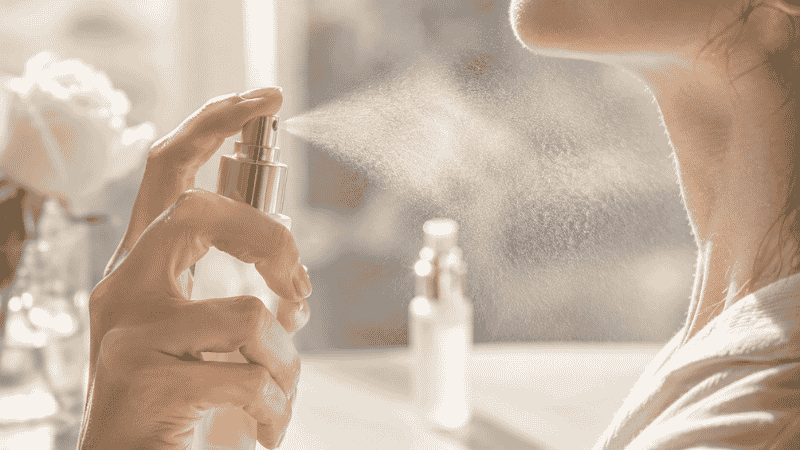
This is the experience that sends women quietly placing their HA serum in the drawer and concluding that “HA just doesn’t work for me.” It is one of the most common skincare complaints, and it has a specific, preventable cause.
In a low-humidity environment — which includes most heated indoor spaces in winter, air-conditioned offices in summer, and naturally arid climates at any time — the concentration of moisture in the air may be lower than the concentration of moisture in the skin’s upper layers. When high-molecular-weight HA is applied to dry skin in this environment, it does what it is designed to do: it seeks and draws water to the surface. But there may be insufficient atmospheric moisture to draw from — so the HA draws from deeper skin layers instead. That moisture then sits at the surface, where the dry air wicks it away. The net result is that water has been moved from deeper in the skin to the surface, from which it then evaporates — leaving the skin drier than before.
This is not a flaw of HA as an ingredient. It is a formulation and application issue.
The three-part fix:
Apply to damp skin. Applying HA serum to skin that is still slightly damp from cleansing provides the surface moisture for HA to bind to at the epidermal level, rather than drawing from deeper layers. Many users find this single adjustment resolves the dryness entirely.
Seal immediately. HA does not create an occlusive barrier — it attracts water but cannot prevent it from evaporating. Apply a ceramide-containing moisturiser over your HA serum within 30–60 seconds of application. This sealing step is not optional in dry conditions; it is what converts the surface hydration HA has created into retained hydration. For the complete science of ceramide barrier sealing, see our guide to ceramides moisturizer [→ /ceramides-moisturizer/].
Choose multi-weight or lower-weight formulations. In very dry climates, pure high-molecular-weight HA is most prone to the drawing-from-deeper-layers effect. Multi-weight formulations that include lower-weight fragments absorb into the epidermis more quickly, reducing the window during which surface HA is drawing from deeper layers before being sealed.
Hyaluronic Acid vs Niacinamide — Two Different Jobs, Both Needed
This comparison comes up frequently in skincare communities, and like most “vs” questions, it represents a false choice. HA and niacinamide address entirely different aspects of skin moisture and cannot substitute for each other.
Hyaluronic acid is a humectant — its function is water attraction and surface binding. It does not strengthen the barrier, stimulate ceramide synthesis, or regulate sebum. It draws water to the surface and holds it there, temporarily.
Niacinamide is a vitamin that works at the cellular and barrier level — it stimulates ceramide synthesis, reinforces tight junction proteins, inhibits melanosome transfer, and provides anti-inflammatory and antioxidant support. It does not attract or bind water directly.
Used together — HA as the water-attracting layer, niacinamide in the moisturiser that seals over it — the two provide complementary hydration support: surface water attraction (HA) and the barrier synthesis that keeps that water from escaping (niacinamide). For the complete science of niacinamide’s barrier and hydration mechanisms, see our guide to niacinamide skincare [→ /niacinamide-skincare/].
Hyaluronic Acid with Retinol — Reducing Adjustment-Phase Dryness
The combination of hyaluronic acid with retinol is one of the most practically important pairings in mature skin routines — particularly during the retinoid adjustment phase, when accelerated cellular turnover creates temporary barrier disruption and dryness.
Retinol’s mechanism — replacing older surface cells with newer ones at an accelerated rate — produces a transitional period during which the barrier is not fully formed around newly regenerated cells. Moisture loss during this period is higher than baseline, and the skin is more prone to the surface dehydration that HA is specifically designed to address.
Applying HA serum after retinol application (allowing the retinol to absorb first, then applying HA to damp skin, then sealing with a ceramide moisturiser) provides surface hydration that directly counteracts the transient dryness of the adjustment phase. This is not a complicated layering sequence — it is the difference between an uncomfortable first month with retinol and one that most women can manage without interrupting the routine.
The specific sequence: retinol on dry skin → 60–90 seconds to absorb → HA serum on the now-dry skin (or mist lightly with water first if in a dry climate) → ceramide moisturiser within 30–60 seconds as the sealing step. Squalane as a final occlusive over this complete stack, if needed for very dry skin, completes the moisture retention picture.
For the full retinol protocol and timeline, our guide on how long retinol takes to work [found in Beaudore’s skincare guides] covers the complete approach, including how hydration strategy affects tolerance.
Hyaluronic Acid with Vitamin C — Sequencing for Maximum Benefit
The combination of HA with Vitamin C is common in both the morning routine and in multi-active serum formulations. Understanding the sequencing logic makes the pairing significantly more effective.
The pH consideration: L-ascorbic acid Vitamin C requires a low-pH environment (pH 2.5–3.5) for optimal absorption. Most HA serums are formulated at a higher, skin-friendly pH (around pH 5–7). Applying a higher-pH HA serum over an L-ascorbic acid product before the Vitamin C has fully absorbed raises the skin’s surface pH and reduces the Vitamin C’s penetration.
The correct sequence: Apply your Vitamin C serum first, to clean skin. Allow 60–90 seconds for it to absorb — the low pH needs time to interact with the skin before the surface pH is altered by subsequent products. Then apply HA serum to slightly damp skin (or skin that has naturally equilibrated). Then seal with your ceramide moisturiser.
When they’re in the same formula: Many luxury serums combine stabilised Vitamin C derivatives (ascorbyl glucoside, ascorbyl phosphate) with HA in a single formulation. These derivatives are effective at higher pH ranges, removing the sequencing concern entirely. In these formulations, the Vitamin C and HA work synergistically without the pH conflict of pure L-ascorbic acid + HA sequencing.
Hyaluronic Acid for Oily Skin — Why It Works Despite Being a Moisturizer
The assumption that oily skin doesn’t need — or can’t use — hyaluronic acid is one of the most persistent skincare misconceptions, and it is particularly common among women who have managed oily skin in their 20s and 30s and are now navigating the shifts in skin type that come with the 40s.
Oily skin produces excess sebum — which is lipid-based. Hyaluronic acid is water-based. These are not the same thing, and excess sebum does not equal adequate hydration. Oily skin can be simultaneously over-producing lipids and dehydrated at the water level — a combination that HA directly addresses without contributing to the lipid excess.
Moreover, when oily skin is dehydrated, it frequently compensates by producing even more sebum — the skin’s attempt to regulate its own moisture balance. Providing adequate water-based hydration through HA can actually reduce sebum production over time, as the skin no longer needs to compensate for surface dehydration.
HA is also non-comedogenic — it does not contribute to pore congestion or breakouts. Its water-attracting mechanism has no interaction with the sebaceous gland activity that produces comedones. For oily skin in its mature phase — where sebum production may be decreasing but dehydration concerns are increasing due to hormonal shifts — a lightweight HA serum under a non-greasy niacinamide moisturiser is often the ideal combination: hydration without heaviness, barrier support without occlusion.
How to Use Hyaluronic Acid Correctly — The One Mistake Most People Make
The most common HA application error — and the one responsible for the majority of “it didn’t work” and “it made my skin drier” experiences — is applying it to completely dry skin in a low-humidity environment, then moving on without sealing.
The correct protocol, step by step:
After cleansing, do not wait for your skin to dry completely. If your environment is moderately humid, applying HA to slightly damp skin provides the surface moisture for the HA to draw from at the epidermal level. If your environment is very dry (heated indoor air, desert climate, cold winter air), mist your face lightly with a thermal water or mineral water spray before applying HA — this surface moisture becomes what HA binds, rather than drawing from deeper layers.
Apply HA serum evenly across the face and neck. A small amount is sufficient — HA does not require a thick layer to be effective, and overapplication leads to a tacky surface that pills when subsequent products are applied.
Within 30–60 seconds — before the surface moisture has time to evaporate — apply your ceramide moisturiser. This is the sealing step. Without it, the HA is holding surface moisture that then evaporates. With it, the ceramide matrix traps that moisture against the skin. The two work together; neither is optional if you want the system to function as designed.
If your routine includes squalane as a final oil step, that comes after the ceramide moisturiser — see our guide to squalane moisturizer [→ /squalane-moisturizer/] for the complete three-tier moisture system.
The simplified version: damp skin → HA → seal immediately. This sequence solves the vast majority of “HA doesn’t work” experiences.
Is Luxury Hyaluronic Acid Worth the Premium?
Hyaluronic acid and sodium hyaluronate are available at almost every price point — from The Ordinary’s $8 HA 2% + B5 serum to La Roche-Posay’s Hyalu B5 at $50 to luxury multi-weight formulations from Shiseido, Tatcha, and La Mer that incorporate HA alongside multiple supporting actives.
Where the premium is functionally justified:
Multi-molecular weight formulations. Luxury HA products that specify multiple molecular weights in their formulation — combining surface-acting high-weight HA with penetrating low-weight HA and sodium hyaluronate — provide more comprehensive hydration than single-weight alternatives. This is the most common functional justification for luxury HA pricing.
Supporting ingredient quality. The best luxury HA serums don’t rely on HA alone. They combine it with supporting humectants (glycerin, panthenol, sodium PCA), barrier-supporting ingredients (ceramides, fatty acids), and anti-aging actives (peptides, encapsulated Vitamin C). The premium here reflects the supporting cast, not the HA alone.
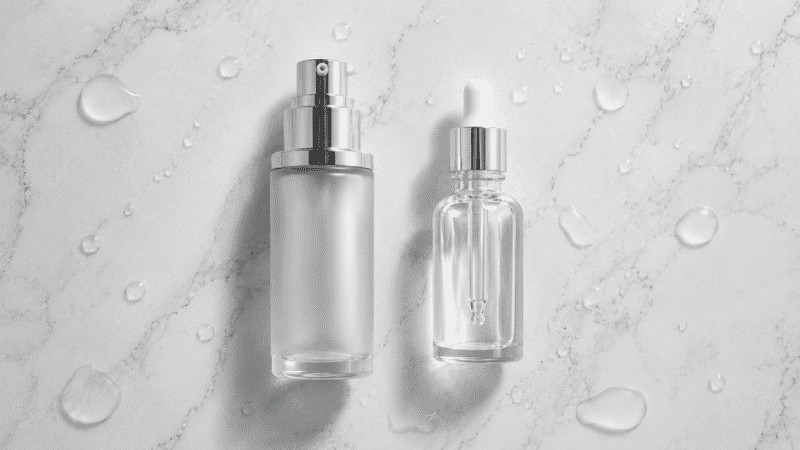
Formulation stability and packaging. HA itself is relatively stable, but multi-active formulations require careful stability management. Airless pumps and opaque packaging that protect both the HA and the supporting actives from degradation are more common in luxury formulations.
Where the premium is less justified:
Pure HA at high concentration in a stable, well-formulated base performs the same surface-hydrating function regardless of brand. The Ordinary’s HA 2% + B5 contains two molecular weights of HA alongside panthenol — a genuinely well-formulated option at its price point. If your primary need is surface hydration from HA, the functional case for spending five to ten times more is modest.
The honest guidance: if a luxury HA formulation combines multi-weight HA with meaningful concentrations of supporting actives — and you’ll enjoy using it consistently — the investment may produce better outcomes through better compliance. But pure HA is not an ingredient that requires luxury pricing to be effective. The science is in the molecule; the luxury is in the experience.
When to Seek Professional Input
Hyaluronic acid is among the most universally safe skincare ingredients — it is the same molecule your body naturally produces, it is non-allergenic for the vast majority of users, and it has an excellent safety record across decades of clinical use. Professional input is rarely necessary for HA specifically.
Consider a consultation if: you notice persistent sensitivity or reactivity despite using simple, fragrance-free formulations — this may indicate a different underlying skin condition (perioral dermatitis, contact allergy, or rosacea) that requires clinical assessment. If you’re interested in injectable hyaluronic acid fillers for volume restoration — which is a clinically different application of the same molecule, with different risk profiles and entirely different outcomes from topical use. Or if you have any concerns about a new skin lesion or unusual skin change — unrelated to HA but always warranting professional assessment.
FAQ
Why is my hyaluronic acid making my skin dry? The most likely cause is applying HA to completely dry skin in a low-humidity environment, then not sealing it with a moisturiser. In this scenario, the HA draws moisture from deeper skin layers to the surface, where it then evaporates — leaving the skin net-drier. The fix: apply HA to slightly damp skin (or mist first if your environment is very dry), then seal immediately with a ceramide moisturiser before the surface moisture evaporates. This single protocol adjustment resolves the dryness experience for most users.
Sodium hyaluronate vs hyaluronic acid — is one better? They are the same ingredient in different chemical forms. Sodium hyaluronate is the salt form of hyaluronic acid — more stable, slightly smaller molecule, and with modestly better penetration into the upper epidermis. Neither is definitively “better” — products containing sodium hyaluronate are not inferior to those listing hyaluronic acid. Many quality formulations contain both, providing a combination of surface (larger HA) and slightly deeper (sodium hyaluronate) hydration.
How to use hyaluronic acid for mature skin specifically? Apply to damp skin after cleansing. Use a multi-molecular weight formulation if possible (containing both HA and sodium hyaluronate, or labelled as containing multiple weights). Seal within 30–60 seconds with a ceramide-containing moisturiser. In very dry environments or during winter, add squalane as a final occlusive over the ceramide moisturiser. Consistent twice-daily use produces more reliable results than once-daily or intermittent application.
Hyaluronic acid with retinol — can I use them in the same routine? Yes — and for mature skin in a retinoid routine, HA is a particularly valuable companion during the adjustment phase. Apply retinol first (on completely dry skin), allow 60–90 seconds to absorb, then apply HA to slightly damp skin before sealing with ceramide moisturiser. The HA step directly counteracts the surface dryness of the retinol adjustment phase, making the routine significantly more comfortable without compromising the retinoid’s efficacy.
Does hyaluronic acid work for oily skin? Yes. Oily skin produces excess sebum (lipid-based), but can simultaneously be dehydrated at the water level — HA addresses water-based dehydration without contributing to the lipid excess. A lightweight HA serum under a non-comedogenic, niacinamide-containing moisturiser is often ideal for oily or combination mature skin: hydration without heaviness, and barrier support that may actually reduce compensatory sebum over-production.
How often should I use hyaluronic acid? Twice daily — morning and evening — is the standard and appropriate frequency. Unlike actives that require cycling (retinoids, AHAs), HA is gentle enough and beneficial enough for daily use at both sessions. Consistent twice-daily application produces more stable and durable hydration than once-daily or intermittent use.
The Foundation of Every Good Routine
Hyaluronic acid is not the most dramatic active in a mature skin routine — it does not stimulate collagen, address pigmentation, or exfoliate. What it does is provide the fundamental surface hydration that makes every other step more effective and more comfortable. A skin surface that is adequately hydrated tolerates retinoids better, absorbs Vitamin C more evenly, responds more readily to peptide signalling, and shows the results of good skincare more clearly.
A hyaluronic acid moisturizer routine that applies HA correctly — to damp skin, sealed immediately with ceramides — is the water-management system that the rest of your routine depends on.
For the complete framework that places HA in its proper position within the three-tier moisture system alongside ceramides and squalane, see our complete guides to ceramides moisturizer [→ /ceramides-moisturizer/] and squalane moisturizer [→ /squalane-moisturizer/].
And for the full morning and evening routine architecture that makes all of these moisture ingredients work in context, our guide to the skincare routine for aging skin covers the complete sequence [→ /skincare-routine-for-aging-skin/].
References
- Papakonstantinou, E., et al. (2012). Hyaluronic acid: A key molecule in skin aging. Dermato-Endocrinology, 4(3), 253–258.
- Bukhari, S.N.A., et al. (2018). Hyaluronic acid, a promising skin rejuvenating biomedicine: A review of recent updates and pre-clinical and clinical investigations. International Journal of Biological Macromolecules, 120(Part B), 1682–1695.
- Draelos, Z.D. (2010). The science behind skin care: Moisturizers. Journal of Cosmetic Dermatology, 17(2), 138–144.
- Ganceviciene, R., et al. (2012). Skin anti-aging strategies. Dermato-Endocrinology, 4(3), 308–319.
- Keen, M.A. (2017). Hyaluronic acid in dermatology. Skinmed, 15(6), 441–448.
- Longas, M.O., et al. (1987). Evidence for structural change in dermatan sulfate and hyaluronic acid with aging. Carbohydrate Research, 159(1), 127–136.