
At some point — perhaps recently, perhaps a while ago — you opened your Vitamin C serum and noticed the colour had shifted. What was once a pale, clear-to-slightly-yellow liquid had deepened to amber, or even orange. Maybe you ignored it, telling yourself it was a normal change. Maybe you used it anyway, reasoning that it was probably fine. Or maybe you quietly wondered whether the $90 you spent on that bottle had been partly wasted.
If you’re in any of these scenarios, you’re not alone — and the consequences are more significant than most people realise. Vitamin C is the most oxidation-prone active in skincare. When it oxidises, it doesn’t just stop working. It can produce pro-oxidant compounds that actively counteract the antioxidant benefits you were seeking in the first place. The bottle in your medicine cabinet may have been partially neutralised before you even opened it, depending on how it was packaged, stored, and formulated.
This guide is about changing that. How to use Vitamin C serum correctly is not a simple question of “apply it and wait.” It involves formulation science, application timing, packaging evaluation, ingredient sequencing, and realistic timeline expectations — every one of which determines whether your investment is delivering results or quietly degrading on your shelf.
Key Takeaways
- Vitamin C (L-ascorbic acid) requires a pH of 2.5–3.5 for optimal skin penetration. Above pH 4, absorption drops significantly. This pH requirement directly affects how you layer it with other products.
- L-ascorbic acid is effective at concentrations of 10–20%. Below 10%, collagen-stimulating effects are modest. Above 20%, irritation risk increases without proportional benefit for most skin types.
- A study published in the Journal of Investigative Dermatology documented that Vitamin C (ascorbic acid) applied topically for 3 days produced a tenfold increase in cutaneous antioxidant protection versus untreated skin — confirming the genuine protective value of consistent VC application.
- Oxidised Vitamin C serum is identifiable by colour (deeper than pale straw yellow), smell (metallic or “off”), and sometimes texture (slightly thicker). Using oxidised VC does not provide antioxidant protection; it may provide mild pro-oxidant activity at the skin surface.
- In luxury skincare, the categories where premium pricing for Vitamin C is genuinely justified are packaging technology (airless, opaque, nitrogen-purged systems that prevent oxidation) and formulation stabilisation (Ferulic acid + Vitamin E combinations that dramatically extend L-ascorbic acid stability).
Vitamin C Serum Morning or Night — The Photostability Answer
This is the question with the clearest scientific answer in the entire Vitamin C topic, and it is frequently complicated by well-meaning but imprecise advice.
Vitamin C serum belongs in the morning. Not occasionally, not “either works equally well” — morning. The reason is specific and mechanistic.
Vitamin C’s primary anti-aging function is antioxidant protection: it neutralises reactive oxygen species (ROS) — the free radicals generated by UV exposure, pollution, and other environmental stressors — before they can activate matrix metalloproteinases (MMPs) and trigger collagen breakdown. This protective function is most valuable when it is present in the skin during the period of UV exposure. Applying Vitamin C in the morning creates an antioxidant reservoir in the epidermis that is actively consumed as UV exposure occurs throughout the day. Applied in the evening, when you are indoors and UV exposure is minimal, this primary function operates at significantly reduced strategic value.
There is a secondary argument for morning Vitamin C that is equally compelling: synergy with SPF. Applied under sunscreen, Vitamin C does not increase photosensitivity (a common misconception). Instead, research suggests it actually enhances the protective effect of SPF against UV-induced free radical damage — with the two working through complementary mechanisms. A well-applied Vitamin C serum under your morning SPF is not redundant; it is additive.
The photostability of L-ascorbic acid is the one legitimate concern about morning use. L-ascorbic acid is degraded by UV exposure — which is why it must be covered by SPF and cannot function as a standalone photoprotective agent. Applied under SPF, this degradation is largely prevented, and the antioxidant activity is preserved for the duration of UV exposure.
Editor’s note: The advice to use Vitamin C “morning or night, whichever works for you” is well-intentioned but imprecise. The morning is not just a preference — it is the timing that aligns with the mechanism. Using Vitamin C only at night is like applying sunscreen at 9pm.
When to Apply Vitamin C Serum — The Exact Step-by-Step Sequence
The position of Vitamin C in a morning routine is not flexible if you want to preserve its efficacy. The pH requirement — 2.5–3.5 for L-ascorbic acid to penetrate effectively — means that applying higher-pH products before the Vitamin C serum has fully absorbed raises the skin surface pH and significantly reduces penetration.
The correct morning sequence:
Cleanse — gentle, fragrance-free cleanser. Do not use a cleanser with a high alkaline pH (common in some traditional foaming cleansers), as it leaves the skin surface temporarily at a higher pH that takes time to normalise.
Allow skin to normalise — 30–60 seconds is sufficient for skin pH to return toward its natural slightly acidic state after cleansing.
Apply Vitamin C serum — to clean, dry skin. A few drops are sufficient for the full face and neck. Use fingertips to press gently into skin rather than rubbing, which can increase surface pH variation.
Allow 60–90 seconds to absorb — this is the critical window. During this time, the low-pH L-ascorbic acid is interacting with the skin surface. Applying a higher-pH product (most moisturisers sit at pH 5–7) over it before this window closes raises the surface pH and reduces absorption.
Apply hyaluronic acid serum (if using) — after the Vitamin C has had its 60–90 second window. See the dedicated section below for sequencing details.
Apply moisturiser — ceramide-containing, at the standard pH 5–7.
Apply SPF — always the final morning step, non-negotiable when using Vitamin C. For the complete layering logic, see our guide to how to layer skincare products [→ /serum-before-or-after-moisturizer/].
The Stability Problem — How to Know If Your Vitamin C Serum Has Oxidised
This is the section most Vitamin C content refuses to engage with honestly, because it implies that the product you bought — or the way you stored it — may have compromised its efficacy.
L-ascorbic acid oxidises in the presence of air, light, heat, and certain metals. The oxidation is a sequential chemical process: L-ascorbic acid → dehydroascorbic acid (still some activity) → diketogulonic acid (no antioxidant activity, may have mild pro-oxidant activity). The colour change you observe in your serum reflects this process.
How to assess your serum’s condition:
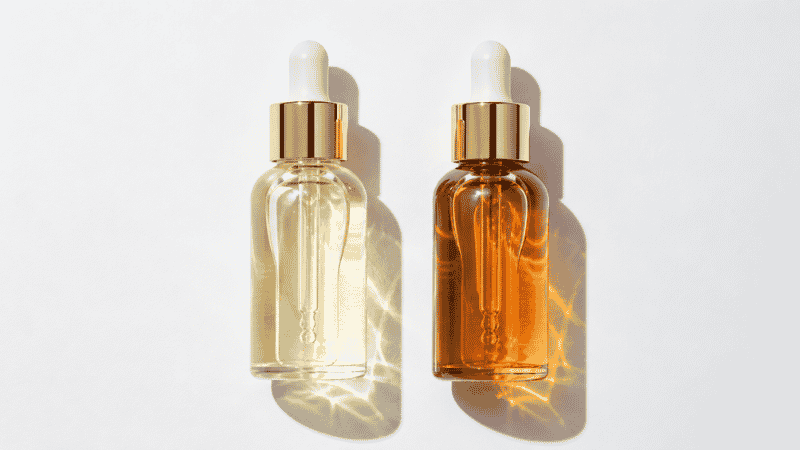
Fresh and active: Colourless to very pale straw yellow. No metallic or unusual smell.
Beginning to degrade: Light yellow to golden. Still largely effective, but accelerated use is advisable.
Significantly oxidised: Amber to orange-brown. Antioxidant efficacy substantially reduced. At this point, the serum is providing minimal Vitamin C benefit and should be replaced.
Fully oxidised: Deep orange-brown, possibly with a metallic or slightly rancid smell. Should not be applied to skin.
The practical questions this raises for your current products:
- Is your Vitamin C stored in a clear glass bottle? If so, the UV degradation is occurring every time light hits it.
- Is it in a jar or wide-mouth bottle with significant air exposure each time you open it? The oxidation is compounding daily.
- Is it stored in a bathroom? Temperature and humidity fluctuations accelerate degradation.
The correct storage conditions for any L-ascorbic acid product: cool, dark, away from the bathroom environment. Refrigeration is not required but extends shelf life, particularly after opening. Replace within 3 months of opening for L-ascorbic acid formulations in non-optimal packaging; within 6 months for well-stabilised, airless formulas.
What Concentration of Vitamin C Serum Actually Works?
The concentration question is where most Vitamin C guidance becomes either too cautious or too aggressive, and where the accurate answer genuinely changes product selection decisions.
Below 10%: Provides some antioxidant protection and mild brightening benefit. The evidence for meaningful collagen synthesis stimulation (which requires Vitamin C as a cofactor in enzymatic hydroxylation) at sub-10% concentrations is modest. Appropriate for very sensitive skin beginning with VC, but not the range that produces the full anti-aging benefit profile.
10–15%: The most comprehensively studied range. Multiple clinical trials demonstrating brightening, collagen support, and antioxidant protection have used concentrations in this range. For mature skin with a competent barrier, this is the optimal target — effective enough for meaningful results, tolerable enough for consistent daily use.
15–20%: More potent, with enhanced collagen-stimulating effects at the higher end. More likely to produce initial tingling or sensitivity. For mature skin that is well-adapted to Vitamin C and seeking maximum anti-aging benefit, 20% L-ascorbic acid represents the upper threshold of evidence-supported efficacy.
Above 20%: The dose-response curve flattens for anti-aging applications. Irritation risk increases significantly. Not generally recommended for mature skin, which typically has a less robust barrier than younger skin and is more prone to reactive responses.
L-Ascorbic Acid vs Vitamin C Derivatives — The Honest Comparison
The Vitamin C derivative landscape has expanded significantly — partly in response to the genuine stability challenges of L-ascorbic acid, and partly because newer derivatives allow brands to formulate at higher pH values (more pleasant on skin) and avoid the oxidation problem. Understanding the trade-offs makes product selection considerably more informed.
L-ascorbic acid — the original, most studied, most effective form. Requires pH 2.5–3.5 for penetration. Highly unstable. When fresh and well-formulated, provides the strongest evidence-based anti-aging benefit.
3-O-Ethyl Ascorbate (Ethyl Ascorbic Acid) — highly stable derivative, penetrates skin well, converts to active ascorbic acid within the skin. One of the most functionally promising derivatives, with published evidence for brightening and antioxidant activity.
Ascorbyl Glucoside — stable, gentle, converts to ascorbic acid via skin enzymes. Lower potency than L-ascorbic acid at equivalent concentrations, but significantly better tolerated by sensitive skin. Appropriate for those who cannot tolerate L-ascorbic acid.
Sodium Ascorbyl Phosphate — stable, water-soluble, gentler than L-ascorbic acid. Used frequently in formulations targeting acne-prone skin (has some antimicrobial activity). Less evidence for collagen synthesis at typically used concentrations.
Ascorbyl Tetraisopalmitate — fat-soluble derivative, stable, penetrates the lipid-rich stratum corneum differently than water-soluble forms. Used in oil-based formulations. Less clinical data than L-ascorbic acid.
The honest ranking for anti-aging purposes: L-ascorbic acid (in stable, correctly packaged formulation) > 3-O-Ethyl Ascorbate > Ascorbyl Glucoside ≈ Sodium Ascorbyl Phosphate.
The practical implication: if you have tolerant skin and want maximum anti-aging benefit, a well-formulated L-ascorbic acid product in airless, opaque packaging is the target. If you have sensitive or reactive mature skin, 3-O-Ethyl Ascorbate or Ascorbyl Glucoside provides meaningful benefit with considerably better tolerability.
Vitamin C vs Retinol — Two Different Mechanisms, One Complete Routine
The comparison between Vitamin C and retinol is frequently framed as a choice, when in reality they represent the two most complementary evidence-backed actives in anti-aging skincare.
Vitamin C addresses anti-aging through antioxidant protection (preventing ongoing UV-induced damage) and collagen synthesis support (as an essential enzymatic cofactor). Its mechanism operates primarily at the surface and upper dermis, and its effects on pigmentation (through tyrosinase inhibition) are in the melanin production pathway.
Retinol addresses anti-aging through intracellular receptor activation — triggering gene expression changes that stimulate collagen synthesis, accelerate cellular turnover, and improve skin organisation. Its mechanism is deeper and more structurally significant, but it takes longer to show results and requires a careful introduction protocol.
The two are not competing for the same biological territory. They are addressing different aspects of skin aging through entirely different pathways — which is why using both, in their correct sessions, produces results that neither can achieve alone.
For the complete retinol protocol — including how Vitamin C’s morning antioxidant protection affects what retinol achieves at night — see our guide to how long retinol takes to work [→ /how-long-does-retinol-take-to-work/].
Vitamin C and Retinol Together — Why the Morning/Evening Split Is the Answer
The correct way to use Vitamin C and retinol together is not to mix them in the same session — it is to give each its optimal timing:
Morning: Vitamin C serum → SPF. Antioxidant protection for the day. Collagen synthesis cofactor support. Pigmentation management through tyrosinase inhibition.
Evening: Retinol → ceramide moisturiser. Structural collagen stimulation. Cellular turnover acceleration. MMP inhibition and skin organisation improvement.
This split is not primarily about chemical incompatibility (the concern that Vitamin C and retinol oxidise each other at normal skincare concentrations and temperatures is not well-supported by current evidence). It is about giving each ingredient the optimal context for its specific function. Vitamin C is most valuable in the morning when UV exposure is occurring; retinol is most valuable in the evening when the skin’s repair cycle is most active and photodegradation is not a risk.
The two actives through this morning/evening split address anti-aging from both the preventive direction (Vitamin C’s antioxidant defence) and the structural repair direction (retinol’s collagen synthesis stimulation). This is the foundation of any serious mature skin anti-aging routine.
Vitamin C Serum with Hyaluronic Acid — Sequencing for Maximum Absorption
The combination of Vitamin C serum with hyaluronic acid is common and effective — but the sequencing matters in a way that most products and guides don’t clearly explain.
The issue is pH. L-ascorbic acid requires a low-pH environment (2.5–3.5) for penetration. Hyaluronic acid serums are typically formulated at a higher, skin-friendly pH (5–7). If you apply HA over your Vitamin C before the VC has fully absorbed, the higher-pH HA product raises the skin surface pH, reducing the penetration of the Vitamin C that’s still interacting with the skin.
The correct sequence: Vitamin C first, on clean skin. Allow 60–90 seconds. Then apply hyaluronic acid serum to slightly damp skin (or the skin that now has a slightly higher surface moisture from the VC). Then moisturiser.
This sequence respects the pH requirements of L-ascorbic acid without sacrificing the hydration benefits of HA. For the complete science of how HA works and how to apply it correctly, see our guide to hyaluronic acid moisturizer [→ /hyaluronic-acid-moisturizer/].
The combination is genuinely synergistic: Vitamin C’s antioxidant and collagen-supporting function is enhanced by adequate skin hydration, and HA’s moisture-attracting function benefits from a healthy, non-inflamed skin surface that Vitamin C’s antioxidant activity helps maintain.
Vitamin C Serum with Niacinamide — The Brightening Combination That Works Better Than Either Alone
The concern that Vitamin C and niacinamide react to form niacin (a skin-flushing compound) at skincare concentrations has been largely debunked. At normal formulation percentages and skin temperatures, this reaction does not meaningfully occur. The two are compatible — and more than compatible, they are genuinely synergistic for brightening and anti-aging.
Vitamin C addresses pigmentation by inhibiting tyrosinase — the enzyme that catalyses the first step in melanin synthesis. It reduces how much melanin is produced.
Niacinamide addresses pigmentation by inhibiting melanosome transfer — the step at which formed melanin is delivered to keratinocytes (surface cells). It reduces how much melanin reaches the skin surface, regardless of how much was produced.
These two mechanisms address sequential steps in the same pathway — which means using both produces more comprehensive brightening than either alone. It is not redundant; it is complementary at the molecular level.
For practical application: apply Vitamin C first (at its low pH), allow 60–90 seconds, then apply a niacinamide-containing moisturiser or serum. Both can be used in the morning routine without concern. For the complete niacinamide science and routine placement, see our guide to niacinamide skincare [→ /niacinamide-skincare/].
Is Luxury Vitamin C Serum Worth the Premium?
This is one of the clearest cases in all of skincare where the premium is genuinely functional — in specific, identifiable ways.
Where luxury Vitamin C formulations justify their price:
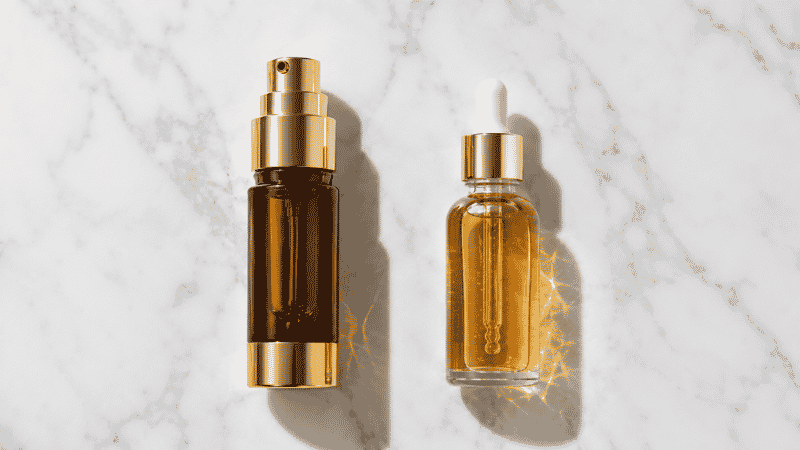
Packaging technology. The $166 SkinCeuticals C E Ferulic comes in a specific bottle engineered to minimise air exposure and UV degradation. The darkened glass, the precise dropper system, the nitrogen purging during filling — these are not aesthetic choices. They are what keeps the L-ascorbic acid effective for the product’s shelf life. A $25 Vitamin C serum in clear glass packaging degrades differently from week two onwards. The price difference may partly reflect real functional longevity.
Ferulic acid stabilisation. The combination of L-ascorbic acid + Vitamin E (tocopherol) + ferulic acid — as used in SkinCeuticals C E Ferulic and several luxury competitors — dramatically extends the stability and efficacy of L-ascorbic acid. Research published in the Journal of Investigative Dermatology demonstrated that this combination provides a tenfold increase in antioxidant protection versus unformulated L-ascorbic acid. Ferulic acid is a phenolic antioxidant that both stabilises ascorbic acid against oxidation and independently neutralises free radicals. This formulation innovation is not available in most budget Vitamin C products.
Vitamin C derivative quality. Higher-grade, more purified forms of stable Vitamin C derivatives (such as 3-O-Ethyl Ascorbate at high purity) are more expensive raw materials. Luxury formulations using premium-grade derivatives may deliver more consistent active concentration than budget alternatives using lower-grade raw materials.
Where the premium is less justified:
Vitamin C is not an intrinsically expensive active — pure ascorbic acid is relatively affordable to produce. A well-formulated, well-packaged Vitamin C at a mid-range price point (Paula’s Choice C15 Super Booster, for example) can perform comparably to luxury alternatives if the formulation and packaging are sound. The luxury premium in this category is worth paying for specific formulation features (ferulic acid stabilisation, nitrogen-purged packaging), not for the Vitamin C itself.
Editor’s note: When evaluating a luxury Vitamin C serum, ask: does it use L-ascorbic acid or a derivative? Does it contain ferulic acid? Is the packaging airless and opaque? If yes to all three, the premium is likely earning its place. If the luxury is primarily in the brand name and the glass bottle is clear, the formulation may not justify the cost.
Why Your Vitamin C Serum Might Not Be Working
Before concluding that Vitamin C doesn’t work for your skin, audit these specific variables:
Is the product oxidised? Check the colour. If it has moved beyond pale yellow, significant potency has been lost. This is the most common cause of disappointing Vitamin C results.
Is the concentration sufficient? Sub-10% formulations provide modest benefit for collagen stimulation. If your primary goal is anti-aging rather than surface brightening, confirm your product is at least 10% active.
Are you applying it in the correct sequence? Vitamin C applied over a moisturiser or after a toner that has already raised the skin surface pH will not absorb at the efficacy level that clinical studies demonstrate. It goes first, on clean skin.
Are you sealing with SPF? Vitamin C’s antioxidant protection is a real-time response to UV exposure. Without SPF, the UV-induced free radical load may exceed what the VC reservoir can neutralise — and the collagen breakdown continues. The two work together; neither is optional.
Have you given it enough time? Surface brightening from Vitamin C becomes visible at 4–8 weeks of consistent use. Collagen synthesis support — which requires the enzymatic processes that VC cofactors to proceed over weeks — accumulates over 12+ weeks of daily use. If you’ve been using a product for three weeks and see nothing, you haven’t given the biology sufficient time to respond.
FAQ
Vitamin c serum morning or night — can I use it at both times? The most strategic and well-evidenced use is morning — where it provides real-time antioxidant protection against UV-induced free radical damage. Some users with tolerant skin and non-sensitive formulations (particularly those using stable derivatives rather than L-ascorbic acid) apply Vitamin C both morning and evening for enhanced collagen synthesis support. For most mature skin, once daily in the morning is the primary evidence-based protocol. Evening use is an enhancement, not a requirement.
How long before vitamin c serum shows results for wrinkles? For surface brightening and initial texture improvement: 4–8 weeks of consistent daily use. For anti-aging effects related to collagen synthesis support (reduced fine line depth, improved firmness): 12–24 weeks. Vitamin C is not a rapid-result ingredient for structural skin concerns — it operates as a long-term investment in skin quality, compounding over months of consistent use.
Does vitamin c serum make skin more sensitive to sun? L-ascorbic acid does not increase photosensitivity in the way that retinoids or AHAs do. There is no evidence that applying Vitamin C increases your risk of sunburn or UV-induced damage. Applied under SPF, it actually enhances photoprotection by providing antioxidant defence against UV-induced free radical damage that SPF alone does not address. SPF remains essential, but not because Vitamin C requires it for safety — because UV protection is essential regardless.
Vitamin c and retinol together — which goes first? They go in different sessions rather than one after the other. Vitamin C in the morning (before SPF); retinol in the evening (on dry skin, followed by ceramide moisturiser). This split is not primarily about compatibility concerns — it is about giving each ingredient the optimal timing for its specific function.
Can I use vitamin c serum every day? Yes, and consistency is what produces results. Once-daily morning application is the standard and appropriate frequency for most users. Daily use is both safe and more effective than intermittent application — Vitamin C’s antioxidant reservoir in the skin is consumed by UV exposure each day, and consistent daily replenishment maintains protective levels.
Why does my vitamin c serum tingle? A mild tingling sensation with L-ascorbic acid formulations is normal, particularly at concentrations above 15% and in the initial weeks of use. It reflects the low pH of the formulation interacting with the skin surface. If the tingling is uncomfortable or persists beyond a few minutes, the concentration may be too high for your current skin tolerance — consider a lower concentration or more stable, less acidic derivative form.
The Active That Earns Its Place Every Morning
There is no anti-aging active that provides the combination of benefits that Vitamin C offers in the morning routine: real-time antioxidant protection against UV-induced collagen breakdown, essential cofactor support for new collagen synthesis, tyrosinase inhibition for more even skin tone, and synergistic enhancement of your SPF’s photoprotective effect. Used correctly — fresh, at the right concentration, in the right sequence, under SPF — it is among the most justified investments in any mature skin routine.
The key word is “correctly.” How to use Vitamin C serum is a question that genuinely changes outcomes — and the answer involves more nuance than “apply in the morning before moisturiser.” Formulation choice, packaging evaluation, pH sequencing, and realistic timeline expectations all determine whether your serum is delivering what the science supports.
For the complete routine framework that places Vitamin C in its strategic position within a comprehensive anti-aging approach, our guide to the full skincare routine for aging skin covers the morning-to-evening architecture in detail [→ /skincare-routine-for-aging-skin/].
References
- Farris, P.K. (2005). Topical vitamin C: A useful agent for treating photoaging and other dermatologic conditions. Dermatologic Surgery, 31(7 Pt 2), 814–818.
- Lin, J.Y., et al. (2003). UV photoprotection by combination topical antioxidants vitamin C and vitamin E. Journal of the American Academy of Dermatology, 48(6), 866–874.
- Telang, P.S. (2013). Vitamin C in dermatology. Indian Dermatology Online Journal, 4(2), 143–146.
- Murray, J.C., et al. (2008). A topical antioxidant solution containing vitamins C and E stabilized by ferulic acid provides protection for human skin against damage caused by ultraviolet irradiation. Journal of the American Academy of Dermatology, 59(3), 418–425.
- Pullar, J.M., et al. (2017). The roles of vitamin C in skin health. Nutrients, 9(8), 866.
- Ganceviciene, R., et al. (2012). Skin anti-aging strategies. Dermato-Endocrinology, 4(3), 308–319.