
There is a moment — usually somewhere in the mid-to-late 30s, though occasionally earlier — when the skincare approach that has worked reliably for years begins to feel insufficient. Not dramatically. Not with any single visible failure. Just a quiet sense that the routine is maintaining rather than improving, that the products are doing less than they once did, and that something in the underlying equation has changed.
What has changed is the skin itself. The biology of mature skin is genuinely different from the biology of skin at 25 — in ways that make certain ingredients more important, certain approaches less effective, and certain categories of investment more strategically valuable than they were a decade earlier.
This guide is the complete reference for skincare ingredients for mature skin — what changes in the skin after 35, which ingredients address those changes with the strongest clinical evidence, how they work at the molecular level, and how to sequence them into a routine that allows each one to function at its best. Every ingredient discussed here has a dedicated deep-dive article linked within this guide; this is the map, and those are the territories.
How Mature Skin Changes — And Why Ingredients Matter More
Before choosing any ingredient, understanding the biological landscape of mature skin changes the selection logic entirely. There are five simultaneous shifts that occur from the mid-30s onward, each requiring a specific category of intervention.
Collagen and elastin decline. Collagen production decreases at approximately 1% per year from the mid-20s. By 40, the dermis has lost roughly 15% of its peak structural density. The visible result — fine lines becoming static, skin feeling less resilient when pressed — reflects a genuine architectural change in the dermis, not a surface problem that hydration alone can resolve.
Cellular turnover slows. The skin’s renewal cycle extends from approximately 28 days at 25 to 45–60 days by 45. Surface cells accumulate for longer before shedding, contributing to dullness, uneven texture, and reduced penetration efficiency for active ingredients. Products that absorbed readily at 30 may sit on a more accumulated surface at 42.
Sebum production decreases. The sebaceous glands produce progressively less lipid-based sebum from the late 20s onward. By the mid-40s, the natural lipid film that protected the stratum corneum and contributed to a naturally dewy complexion is significantly reduced — one of the primary drivers of the chronic low-grade dryness that many women notice in this decade.
Barrier function declines. The stratum corneum’s lipid matrix — ceramides, cholesterol, free fatty acids — becomes less complete as ceramide synthesis slows. The barrier that tolerated active ingredients easily at 32 may respond with sensitivity and reactivity at 44, not because the ingredients changed but because the protective architecture that previously buffered them is less robust.
Oestrogen and hormonal changes. From perimenopause onward, declining oestrogen directly affects collagen synthesis, ceramide production, hyaluronic acid content, and sebaceous gland activity. Post-menopausal skin consistently shows accelerated changes in all of the above categories — requiring more deliberate ingredient strategy than the same chronological age without hormonal transition would suggest.
Each of these five shifts corresponds to a specific ingredient category. Understanding the match is what transforms a collection of products into a coherent routine.
Skincare Ingredients for Wrinkles — Ranked by Clinical Evidence
The evidence hierarchy for topical anti-wrinkle ingredients is clearer than marketing would suggest. Several actives have decades of peer-reviewed research; others have promising early evidence; many have primarily marketing support. This ranking reflects the clinical evidence, not the price tag.
Tier 1: Retinoids (strongest evidence) Retinoids — encompassing prescription tretinoin, retinaldehyde, and OTC retinol — have the most extensive and consistent evidence base of any topical anti-aging active. They stimulate collagen synthesis through nuclear retinoid receptor activation, accelerate cellular turnover to renew the surface layer, and partially inhibit the matrix metalloproteinases (MMPs) that break down existing structural proteins. A 48-week clinical study published in the Archives of Dermatology documented measurable improvements in wrinkle depth, skin thickness, and surface texture with consistent tretinoin application.
OTC retinol produces equivalent results on a longer timeline — typically 16–24 weeks for measurable structural change. The introduction protocol matters: begin at 0.025% every third evening, build tolerance over 8–12 weeks before increasing concentration or frequency. The adjustment phase (temporary dryness, mild sensitivity) is expected and manageable with adequate barrier support.
For the complete retinoid introduction protocol, timeline, and concentration guidance, see our dedicated guide → [/how-long-does-retinol-take-to-work/]
Tier 1: Vitamin C (L-ascorbic acid) Vitamin C addresses wrinkle formation through two distinct mechanisms: it is an essential enzymatic cofactor in collagen synthesis (the hydroxylation reactions that create stable collagen fibres require ascorbic acid), and it provides real-time antioxidant neutralisation of the UV-induced free radicals that activate collagen-degrading MMPs. A study published in the Journal of Investigative Dermatology documented a tenfold increase in cutaneous antioxidant protection with consistent topical Vitamin C application.
Effective delivery requires L-ascorbic acid (the active form) at 10–20% concentration, at pH 2.5–3.5, in packaging that protects against oxidation. Applied in the morning under SPF, it provides both structural collagen support and real-time photoprotective enhancement that SPF alone cannot replicate.
For the complete Vitamin C application protocol and formulation guide, see → [/how-to-use-vitamin-c-serum/]
Tier 2: Peptides Signal peptides (Matrixyl, GHK-Cu) stimulate collagen and elastin synthesis through cellular receptor binding — a mechanism complementary to, not duplicating, retinoids. They are significantly better tolerated than retinoids and appropriate for morning use, the eye area, and skin that cannot tolerate retinoid adjustment phases. Neurotransmitter-inhibiting peptides (Argireline) address the dynamic component of forehead and expression line deepening by modulating muscle contraction amplitude.
For the complete peptide science and clinical evidence breakdown, see our dedicated guide → [/what-do-peptides-do-for-skin/]
Tier 2: Bakuchiol The 2019 randomised trial published in the British Journal of Dermatology demonstrated that 0.5% bakuchiol applied twice daily produced comparable improvements in fine lines and firmness to 0.5% retinol over 12 weeks — with significantly less irritation. Bakuchiol activates many of the same collagen synthesis gene pathways as retinoids without sharing their chemical structure, making it photostable (usable morning and evening) and appropriate for those who cannot tolerate retinoids.
For the complete bakuchiol science, concentration guidance, and comparison with retinol, see → [/bakuchiol-serum/]
Tier 3: Glycolic acid A 2021 study in the Journal of Cosmetic Dermatology confirmed that glycolic acid at 8–25% increases dermal collagen levels through fibroblast stimulation — not just surface exfoliation. Used two to three evenings per week (alternating with retinoids, never on the same evening), it addresses the surface cellular accumulation of slower turnover while providing a secondary dermis-level structural benefit.
For the complete glycolic acid guide including frequency protocol and combination rules, see → [/glycolic-acid-toner/]
Skincare Ingredients for Hydration — The Three-Layer System
Hydration in mature skin requires a three-tier approach because the biological deficit is at three different levels simultaneously — and no single ingredient addresses all three.
Layer 1: Humectants (attract water) Hyaluronic acid — specifically multi-molecular-weight formulations combining high-weight surface HA with lower-weight penetrating HA — attracts and binds water molecules to the skin surface. It holds up to 1,000 times its weight in water, producing the immediate plumping and surface comfort that single-ingredient moisturisers often fail to sustain. Applied to slightly damp skin and sealed within 30–60 seconds, it provides the water-attracting foundation that the other two layers retain.
Sodium hyaluronate (the salt form) is functionally equivalent and more commonly used in formulations — seeing it on a label instead of “hyaluronic acid” indicates the same active, not its absence. Glycerin and panthenol are supporting humectants with their own moisture-attracting properties, commonly found alongside HA in well-formulated hydrating serums.
For the complete HA molecular weight guide, application protocol, and the dry-climate paradox (why HA sometimes makes skin drier), see → [/hyaluronic-acid-moisturizer/]
Layer 2: Barrier lipids (repair and retain) Ceramides — specifically the three physiological ceramide types (ceramide NP, AP, and EOP) — form the lipid matrix of the stratum corneum that retains the moisture attracted by humectants. As ceramide synthesis declines with age, the barrier’s ability to prevent transepidermal water loss (TEWL) progressively diminishes — which is why consistently hydrated skin in the 20s can become persistently dry skin in the 40s despite identical water intake.
A well-formulated ceramide moisturiser applied within 30–60 seconds of the HA serum creates the structural seal that makes surface hydration durable rather than temporary. Look for ceramide NP, AP, and EOP listed alongside cholesterol and free fatty acids — the complete lipid ratio produces more effective barrier repair than ceramides alone.
For the complete ceramide science, the three-tier moisture system explanation, and formulation evaluation guide, see → [/ceramides-moisturizer/]
Layer 3: Occlusives (seal the surface) Squalane — the hydrogenated, plant-derived form of the skin’s own squalene — provides the final lipid seal over ceramide moisturiser. As sebum production declines in mature skin, the natural occlusive layer that prevented overnight moisture loss progressively diminishes. Squalane, being structurally identical to a component of human sebum, integrates with the skin surface without comedogenic risk, providing the final moisture retention layer that makes the complete three-tier system more effective than any single approach.
For the complete squalane guide including oil vs moisturiser positioning and the anti-oxidant bonus function, see → [/squalane-moisturizer/]
Skincare Ingredients for Hyperpigmentation and Dark Spots
Mature skin’s hyperpigmentation challenges are typically more persistent than younger skin’s, for two reasons: the longer cellular turnover cycle (45–60 days vs 28 days) means existing dark spots remain visible at the surface longer, and post-inflammatory responses leave marks that resolve more slowly than they did at 25. Addressing hyperpigmentation in mature skin requires ingredients that work at multiple steps in the pigmentation pathway simultaneously.
Vitamin C (tyrosinase inhibition) L-ascorbic acid inhibits tyrosinase — the enzyme that catalyses the first committed step in melanin biosynthesis. By reducing how much melanin is produced at the source, consistent morning Vitamin C application reduces new pigmentation formation and gradually lightens existing spots through cumulative cellular turnover.
Niacinamide (melanosome transfer inhibition) Niacinamide addresses a downstream step in the pigmentation pathway — it inhibits the transfer of melanosomes (melanin-containing organelles) from melanocytes to keratinocytes. This is a different mechanism from Vitamin C’s tyrosinase inhibition, meaning the two work additively rather than redundantly. Used together — Vitamin C in the morning, niacinamide at 4–5% morning and evening — they address the pigmentation pathway at two separate points.
For the complete niacinamide science including the 2024 PMC clinical review and the concentration guide (why 2–5% is the optimal range), see → [/niacinamide-skincare/]
Glycolic acid (surface cell renewal) By accelerating the shedding of the outermost skin cells, glycolic acid removes the cells carrying accumulated melanin more quickly than natural turnover would achieve in mature skin. This surface renewal component — combined with the mild tyrosinase-inhibiting activity some research attributes to AHAs — makes glycolic acid a meaningful supporting ingredient in a hyperpigmentation routine.
The complete hyperpigmentation protocol: Morning: Vitamin C serum → niacinamide moisturiser → SPF Evening (alternating): Glycolic acid toner (2–3 evenings) / Retinol (2–3 evenings) → ceramide moisturiser Throughout: consistent daily SPF to prevent ongoing UV-induced new pigmentation
Skincare Ingredients for Brightening — Beyond Surface Luminosity
Brightening and hyperpigmentation treatment overlap but are not identical goals. Brightening — the restoration of overall skin luminosity and radiance — involves multiple mechanisms beyond dark spot reduction.
Cellular turnover acceleration is the most direct brightening mechanism for mature skin. Older, less reflective surface cells accumulated over a slower turnover cycle produce the flat, dull complexion that many women notice in their late 30s. Retinoids and glycolic acid both address this at the source — by accelerating the replacement of accumulated surface cells with fresher, more light-reflective ones.
Antioxidant protection maintains the quality of newly generated cells. UV-induced oxidative damage produces not just pigmentation but a generalised skin quality decline — reduced translucency, irregular texture, and loss of the skin’s characteristic “glow” that comes from healthy cell membranes and intact structural proteins. Consistent morning Vitamin C — combined with SPF — prevents ongoing oxidative degradation of surface skin quality.
Niacinamide’s structural contribution to brightening operates beyond melanosome transfer inhibition. At 4–5%, niacinamide improves skin barrier function, reduces the low-grade inflammation that dulls skin tone, and has been clinically documented to improve overall skin luminosity at 12 weeks of consistent use.
The squalane contribution to brightening is less discussed but real: a skin surface with adequate lipid support reflects light more evenly than a dehydrated, microscopically rough surface. The subtle luminosity improvement that users describe from consistent squalane use is partly optical — an adequately lipid-supported stratum corneum surface scatters light more uniformly than a depleted one.
Skincare Ingredients for Firmness and Elasticity
Skin firmness depends on two structural systems: the collagen matrix (primarily type I and III collagen fibres) that provides tensile strength, and the elastin network that allows skin to rebound after deformation. Both decline with age; both respond differently to topical intervention.
Retinoids stimulate fibroblasts to produce new type I collagen — the primary structural collagen of the dermis. This is the most extensively documented topical approach to structural firmness improvement. The results are cumulative and require sustained use at therapeutic concentrations.
Signal peptides provide complementary collagen and elastin stimulation through a different pathway — direct fibroblast receptor signalling rather than nuclear receptor activation. Matrixyl (palmitoyl pentapeptide-4) has clinical evidence for type I collagen synthesis stimulation; GHK-Cu (copper peptide) has evidence for both collagen synthesis and elastin support. Using peptides and retinoids in the same routine produces additive structural benefit.
Vitamin C as collagen cofactor is the mechanism most commonly described but least precisely explained. L-ascorbic acid is an essential enzymatic cofactor in prolyl hydroxylase — the enzyme that hydroxylates proline residues during collagen synthesis. Without adequate ascorbic acid, collagen fibres form but are structurally unstable. Consistent topical Vitamin C supports not just protection but the structural integrity of newly synthesised collagen.
For the complete collagen stimulation science — including the clinical evidence hierarchy and lifestyle factors that multiply topical results, see our guide → [/how-to-stimulate-collagen-production/]
Bakuchiol’s elastin contribution — documented in published research alongside its collagen stimulation — makes it the most comprehensively supportive retinol alternative for women who cannot manage retinoid adjustment phases. At 0.5% applied twice daily, it addresses both collagen and elastin synthesis pathways through retinoid-independent mechanisms.
How to Layer Skincare Ingredients — The Mature Skin Sequence
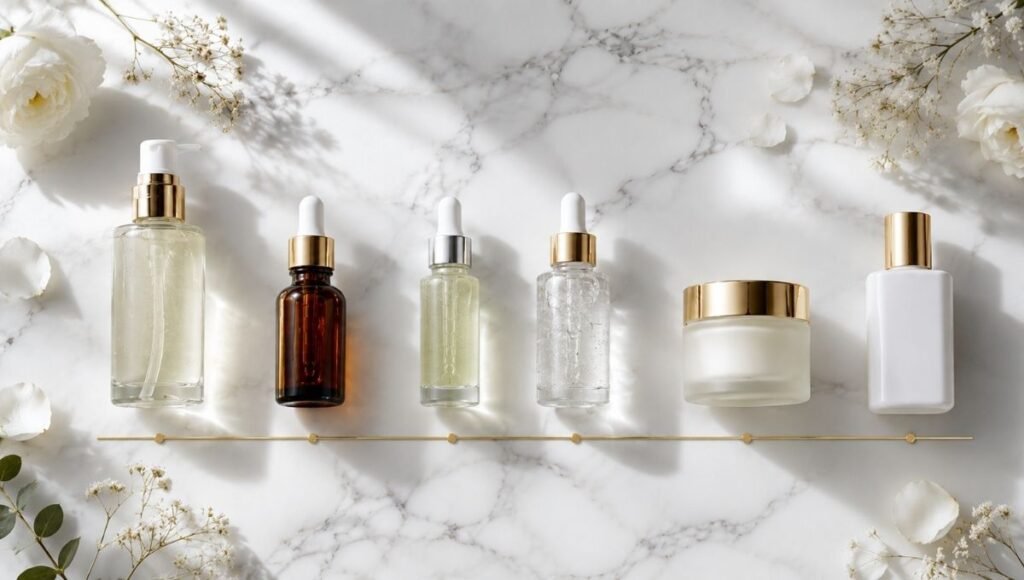
Layering logic for mature skin is governed by two principles: thinnest to thickest (allowing each product to reach its target without being blocked by a denser layer), and lowest pH to highest (preserving the active function of pH-sensitive ingredients like Vitamin C and glycolic acid).
Morning sequence:
- Gentle cleanse
- Vitamin C serum (lowest pH, apply to dry skin, allow 60–90 seconds)
- Peptide or niacinamide serum
- Hyaluronic acid serum (apply to slightly damp skin)
- Ceramide moisturiser (within 30–60 seconds of HA)
- SPF 30+ broad-spectrum (final step, non-negotiable)
Evening sequence (retinoid nights, 2–3 per week):
- Double cleanse
- Allow skin to fully dry (20–30 seconds)
- Retinol (pea-sized amount, fully dry skin)
- Allow 60–90 seconds to absorb
- Ceramide moisturiser (barrier support over retinoid)
- Squalane (final occlusive seal if needed)
Evening sequence (glycolic acid nights, 2 per week):
- Double cleanse
- Glycolic acid toner (5–10 minute window before next steps)
- Hyaluronic acid serum
- Ceramide moisturiser
- Squalane if needed
The non-negotiable combination rules:
- Retinol and glycolic acid: never the same evening
- Vitamin C and retinol: never the same session — morning/evening split
- Vitamin C and niacinamide: compatible, apply VC first (60–90 seconds), then niacinamide
- Bakuchiol and retinol: compatible — use bakuchiol morning, retinol evening
For the complete layering logic with every product category in the precise sequence, see our guide → [/serum-before-or-after-moisturizer/]
Ingredients to Approach With Caution After 40
Not every ingredient that works well in younger skin continues to be appropriate as the barrier becomes less robust. Several categories warrant more careful use or avoidance in mature skin.
High-concentration alcohol (denatured alcohol / SD alcohol / alcohol denat.) as a primary ingredient: Alcohol at high concentrations disrupts barrier lipids — particularly counterproductive in mature skin that is already producing less sebum and fewer ceramides. It appears in some toners and essence formulations where it contributes to a lightweight texture. In mature skin, barrier preservation takes priority over texture elegance.
Over-exfoliation stacking: Using glycolic acid, retinol, and a physical scrub in the same week creates compounded exfoliant load that mature skin’s less robust barrier cannot manage without inflammation. The alternating protocol — AHA evenings and retinoid evenings separated — is specifically designed for this constraint.
High-fragrance formulations: Fragrance in skincare — both synthetic and natural (essential oils) — is a common sensitiser. Mature skin’s lower barrier tolerance means previously well-tolerated fragrance-containing products may begin producing reactive responses. Fragrance-free formulations are not a preference but a practical advantage for the barrier conditions of post-35 skin.
Vitamin C at above 20% without adequate tolerance building: At concentrations above 20%, L-ascorbic acid produces irritation risk that increases without proportional efficacy gain. Mature skin’s reduced barrier tolerance makes starting at 10–15% and building tolerance more important than reaching for maximum concentration.
Building Your Routine Around These Ingredients
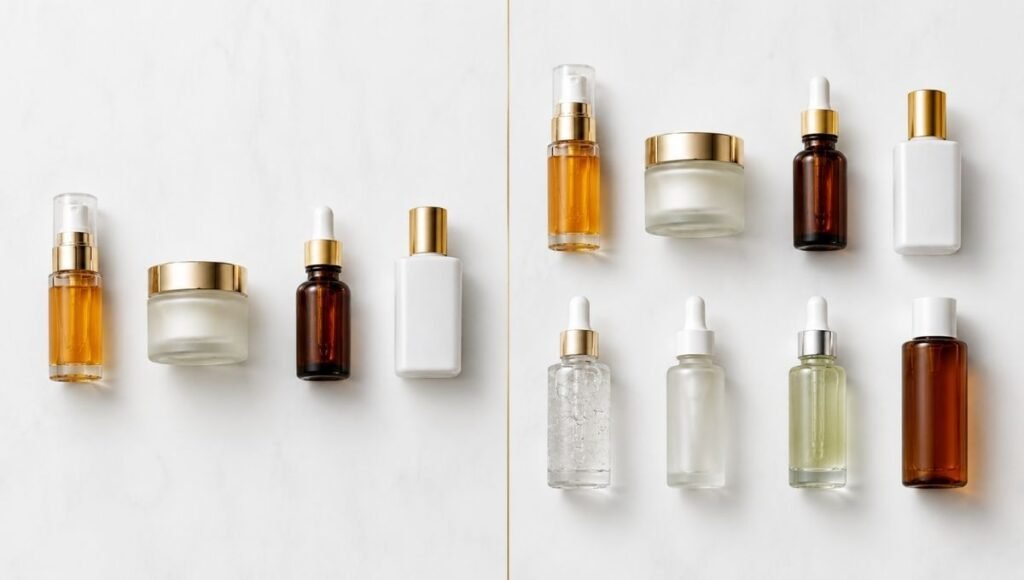
The complete ingredient picture for mature skin can feel overwhelming — retinoids, Vitamin C, peptides, niacinamide, ceramides, squalane, HA, glycolic acid. The practical reality is that these ingredients are most effective when integrated into a simple, consistent daily structure rather than applied simultaneously.
The minimum effective routine (five minutes, morning and evening) addresses every category with four products:
- Vitamin C serum (morning antioxidant + collagen support)
- Ceramide moisturiser (barrier repair + hydration retention)
- Retinol (evening structural renewal — every third night, building to nightly)
- SPF 30+ (morning photoprotection — non-negotiable)
Everything else in this guide — niacinamide, squalane, glycolic acid, peptides, HA — adds meaningful benefit without being required for the foundational anti-aging protocol to function.
The expanded routine builds on this foundation over time, adding ingredients as the skin adapts and as specific concerns become priorities. The complete expanded routine — with every step, every ingredient, and the sequencing logic for morning and evening — is covered in our comprehensive guide to the skincare routine for aging skin [→ /skincare-routine-for-aging-skin/].
For the age-specific application of these ingredients — how the priorities shift between your 30s and your 40s and 50s — see our complete guide to skincare for women over 40 [→ /skincare-for-women-over-40/].
FAQ
What are the most important skincare ingredients for mature skin? In priority order: daily SPF (preventing ongoing UV-induced collagen breakdown that counteracts everything else), retinoids (structural collagen stimulation and cellular renewal — the most evidence-backed anti-aging active), Vitamin C (antioxidant protection and collagen synthesis cofactor in the morning), and ceramide moisturiser (barrier lipid repair that makes every other active more tolerable and effective). Everything else — niacinamide, peptides, HA, squalane, glycolic acid — adds meaningful benefit to this foundation.
What skincare ingredients should not be mixed for mature skin? The key combinations to avoid on the same session: retinol and glycolic acid (same evening — compounded exfoliant load exceeds mature skin barrier capacity); Vitamin C (L-ascorbic acid) and retinol (same session — morning/evening split is correct); high-concentration Vitamin C and niacinamide (compatible but apply VC first with 60–90 second absorption window). Bakuchiol pairs well with both Vitamin C (morning) and retinol (complementary evening addition).
How long do skincare ingredients take to work on mature skin? Surface ingredients (HA, squalane, niacinamide for immediate barrier support): visible improvement within days to weeks. Brightening ingredients (Vitamin C, niacinamide for pigmentation, glycolic acid): 8–12 weeks for measurable dark spot improvement. Structural ingredients (retinoids for collagen and wrinkle depth): 12–16 weeks for measurable change, 24 weeks for full effect. Consistent use over months — not weeks — is what produces the results that anti-aging skincare science documents.
Are expensive skincare ingredients better for mature skin? Not categorically. The ingredients with the strongest clinical evidence — L-ascorbic acid, retinol, ceramides, glycolic acid, niacinamide — are available at a wide range of price points. The premium is functionally justified in two specific categories: Vitamin C formulations (where packaging technology and stabilisation directly affect whether the active ingredient is still functional when it reaches your skin), and retinoid formulations (where encapsulation technology reduces adjustment-phase irritation without compromising efficacy). Ceramides, HA, and squalane are categories where mid-range formulations perform comparably to luxury alternatives at equivalent concentrations.
What skincare ingredients are best for mature skin over 50? The foundation remains the same (SPF, retinoid, Vitamin C, ceramide moisturiser) with several adjustments: richer lipid delivery is needed (ceramide cream plus squalane as a standard evening step, not occasional), retinoid concentration may appropriately progress to prescription tretinoin after years of OTC retinol use, and barrier sensitivity typically requires more careful monitoring of active ingredient frequency. Post-menopausal skin benefits particularly from consistent niacinamide (ceramide synthesis support alongside topical ceramide replenishment) and from bakuchiol as a morning collagen-stimulating complement to evening retinoids.
How to layer skincare ingredients for mature skin without irritation? Three rules prevent most irritation in mature skin active routines. First, separate retinoids and AHAs to different evenings — never the same night. Second, apply Vitamin C on completely dry skin with a 60–90 second absorption window before any higher-pH product. Third, always apply ceramide moisturiser after retinol — the barrier support reduces adjustment-phase disruption and makes nightly retinoid use sustainable. Building new actives gradually (one at a time, every third day initially) before reaching daily use prevents the compounded barrier disruption that causes most mature skin to abandon otherwise appropriate routines.
The Complete Ingredient Picture
Every ingredient discussed in this guide has a specific biological target, a documented mechanism, and a clinical evidence base that ranges from extensive (retinoids) to emerging (bakuchiol). None of them work in isolation — the most effective mature skin routines use multiple ingredients in combination, each addressing a different aspect of the five simultaneous biological shifts that define mature skin.
The map is this article. The territories are the dedicated guides linked throughout — each one covering a single ingredient category in the depth that a guide of this scope cannot. Together, they represent the complete evidence base for what skincare ingredients for mature skin can and cannot do — and how to put them to work in a routine that is both scientifically grounded and practically sustainable.
References
- Varani, J., et al. (2006). Decreased collagen production in chronologically aged skin. American Journal of Pathology, 168(6), 1861–1868.
- Kafi, R., et al. (2007). Improvement of naturally aged skin with vitamin A (retinol). Archives of Dermatology, 143(5), 606–612.
- Murray, J.C., et al. (2008). A topical antioxidant solution containing vitamins C and E stabilized by ferulic acid provides protection for human skin against damage caused by ultraviolet irradiation. Journal of the American Academy of Dermatology, 59(3), 418–425.
- Dhaliwal, S., et al. (2019). Prospective, randomized, double-blind assessment of topical bakuchiol and retinol for facial photoageing. British Journal of Dermatology, 180(2), 289–296.
- Narda, M., et al. (2021). Glycolic acid adjusted to pH 4 stimulates collagen production and epidermal renewal without affecting levels of proinflammatory TNF-alpha in human skin explants. Journal of Cosmetic Dermatology, 20(2), 513–521.
- Marques, C., et al. (2024). Mechanistic insights into the multiple functions of niacinamide. Antioxidants (Basel), 13(4), 425.
- Ganceviciene, R., et al. (2012). Skin anti-aging strategies. Dermato-Endocrinology, 4(3), 308–319.
- Hughes, M.C.B., et al. (2013). Sunscreen and prevention of skin aging: A randomized trial. Annals of Internal Medicine, 158(11), 781–790.