
There is a very specific moment that most SkinCeuticals C E Ferulic users remember. You’ve finally justified the $182. You open the box, pump out your first three drops — which is approximately $1.82 worth of serum, if you’re doing the maths — and then something unexpected happens: it smells like hot dogs. Not vaguely, not metaphorically. Distinctly, unmistakably, like the water from a packet of frankfurters.
If you’ve read enough about the product, you may have known this was coming. If not, the experience is genuinely disorienting — partly because of the smell itself, and partly because of the sudden, sharp awareness that you have just opened a $182 bottle of face serum that smells like processed meat, and you now have to decide whether to put it on your face.
Most people do. And most people find, over the following weeks, that the skin changes it produces are real enough to make the smell feel like a fair trade.
But $182 for 30ml of anything is a significant ask — which is why the search for a SkinCeuticals C E Ferulic dupe is one of the most persistent discussions in serious skincare. This guide gives you the complete picture: what makes the original work, why it costs what it does, what actually changed when the patent expired in March 2025, and which alternatives — from closest match to most pragmatic — are genuinely worth considering for mature, anti-aging-focused skin.
Key Takeaways
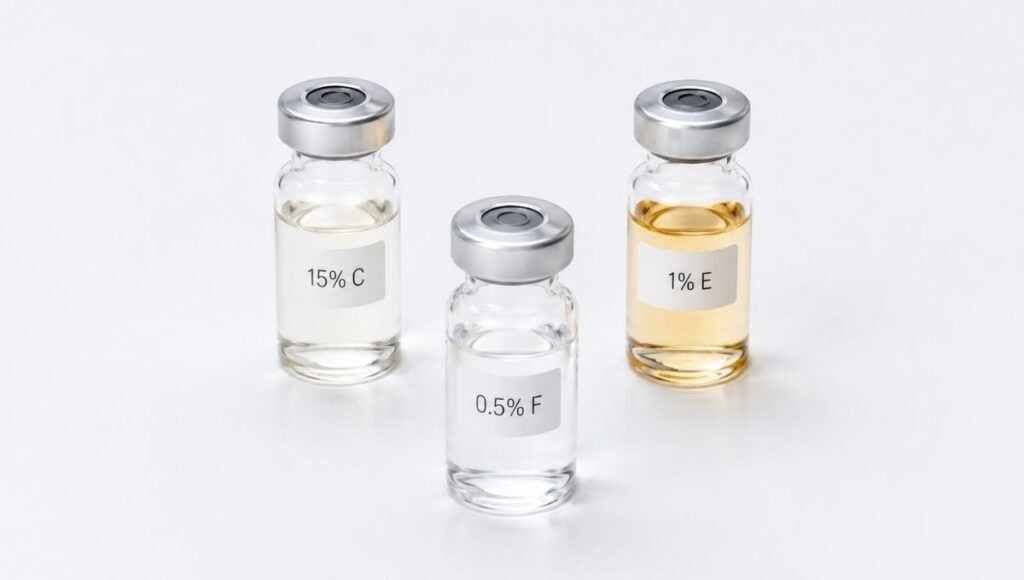
- C E Ferulic contains 15% L-ascorbic acid, 1% alpha-tocopherol (Vitamin E), and 0.5% ferulic acid in a stable, low-pH aqueous solution (approximately pH 2.5–3.0). The specific combination — not any single ingredient — is what the original patent protected and what the research validated.
- The patent expired in March 2025. This is the most significant development in the C E Ferulic dupe landscape — any brand can now legally replicate the exact formula without licensing restrictions. True 1:1 ingredient alternatives are already entering the market.
- A 2008 study by Duke University dermatologist Dr. John Carroll Murray documented that the C E Ferulic formula provided tenfold UV photoprotection compared to unprotected skin — validating the formula’s antioxidant synergy rather than just its individual components.
- The characteristic “hot dog water” scent is not a quality defect. It is produced by the oxidation byproducts of L-ascorbic acid in a low-pH environment and is associated with a fresh, active product. An alternative that lacks this scent may be formulated differently — this difference deserves scrutiny, not reassurance.
- For mature skin (40+), the 15% concentration of the original may actually be more appropriate than the 20% alternatives — higher concentrations of L-ascorbic acid are associated with increased irritation risk, and the skin’s tolerance tends to decrease rather than increase with age.
SkinCeuticals C E Ferulic Ingredients — The Formula Decoded
Understanding what makes C E Ferulic work is the only way to evaluate whether any alternative genuinely replicates it. The formula, despite its price, is not complex in its ingredient count — it is complex in its formulation precision.
The 12-ingredient formula: L-Ascorbic Acid 15%, Alpha Tocopherol 1%, Ferulic Acid 0.5%, Aqua/Water, Ethoxydiglycol, Panthenol, Glycerin, Triethanolamine (pH adjuster), Sodium Hyaluronate, Phenoxyethanol.
Why each component matters:
L-Ascorbic Acid at 15%: The active form of Vitamin C that most directly inhibits tyrosinase (reducing melanin synthesis), acts as a cofactor for collagen-synthesising enzymes, and neutralises free radicals generated by UV exposure. It is both the most effective and the most unstable form of Vitamin C. Below pH 3.5, it maintains stability long enough to penetrate the epidermis; above pH 4, skin penetration drops dramatically.
Alpha Tocopherol (Vitamin E) at 1%: Vitamin E is a fat-soluble antioxidant that works synergistically with Vitamin C — they recycle each other, extending the antioxidant activity of both beyond what either provides alone. The combination was central to Dr. Pinnell’s original research and to the formula’s clinical evidence.
Ferulic Acid at 0.5%: A plant-derived phenolic antioxidant that serves two functions: it independently neutralises free radicals, and it dramatically stabilises L-ascorbic acid against oxidation in the formula. Research showed that adding ferulic acid to the VC + VE combination doubled the formula’s antioxidant protection. This is why ferulic acid’s inclusion is not cosmetic — it is pharmacokinetically significant.
pH approximately 2.5–3.0: Not an ingredient but a formulation parameter. L-ascorbic acid must be formulated at low pH for effective skin penetration. This low pH is also what produces the characteristic smell — and is what makes replicating the formula at a higher pH (for better sensory experience) functionally compromised.
The combination of these four elements — VC at 15%, VE at 1%, ferulic acid at 0.5%, at pH ~3 — is what the patent covered and what the clinical evidence validates. Any alternative that changes any of these variables is producing a different product, not a dupe of this one.
Why Is SkinCeuticals So Expensive — The Real Cost Breakdown
This question deserves a direct answer rather than the usual deflection (“it’s the research,” “it’s the formulation”) — because some of the reasons are legitimate, and some are not.
The legitimate reasons the price was high:
Patent protection. From 2005 to March 2025, SkinCeuticals held a patent on the specific combination of L-ascorbic acid, Vitamin E, and ferulic acid at defined pH ranges and concentrations. This patent prevented any competitor from legally selling a product with the same formula. The $182 price reflected two decades of effective monopoly over the most clinically validated vitamin C serum formula on the market.
Research investment. The original Pinnell research at Duke University, the stability studies, the clinical trials, and the ongoing dermatologist relationship programme that SkinCeuticals maintains all represent genuine investment. A portion of the premium reflects real science costs.
Formulation complexity and manufacturing. Stabilising L-ascorbic acid at effective concentrations in an aqueous solution at low pH is genuinely technically challenging. The manufacturing conditions, quality control, and raw material specifications that maintain consistency across production batches are more demanding than for most skincare products.
L’Oréal’s distribution and marketing overhead. SkinCeuticals is owned by L’Oréal, which means a portion of the price reflects the cost structure of a global beauty conglomerate, retail distribution margins, and significant marketing investment — none of which directly improves the product’s efficacy.
The honest assessment:
The research investment is real. The formulation challenge is real. The patent premium was also real — and now it is gone. With the patent expiry in March 2025, the legitimate technical barrier to a functional dupe no longer exists. What remains is brand equity and the decades of clinical validation attached to the SkinCeuticals name.
Editor’s note: The “hot dog water” smell is worth addressing here, because it’s real and it matters. L-ascorbic acid in a low-pH environment with Vitamin E produces pentanal and related aldehydes during minor oxidation — the compounds responsible for the characteristic smell. This smell is, counterintuitively, a positive quality signal: it indicates the product is at the right pH, contains active L-ascorbic acid, and has not fully oxidised. When C E Ferulic users describe the smell fondly, they’ve learned to associate it with efficacy. When a dupe lacks it, it may be formulated at a higher, less effective pH — or it may simply use a different carrier system.
Is SkinCeuticals Worth It — The Post-Patent Honest Analysis
This is the question that approximately 590 people search for every month — and the answer has changed meaningfully since March 2025.
Before March 2025: Yes, with significant caveats. The patent meant that no competitor could legally replicate the validated formula. The alternatives were approximations — similar formulas but not identical. For women over 40 who had the budget and wanted the most clinically validated formula with the longest track record, C E Ferulic was the most defensible choice.
After March 2025: The calculation is more complex. The patent’s expiry means genuine 1:1 formulation replication is now legally accessible. Brands like Skincare Generics have already released CE Serum formulations with 100% ingredient matching. The question is no longer “can anyone replicate the formula?” — they can — but “does the SkinCeuticals version have meaningful manufacturing, stability, or consistency advantages that justify $182 versus $25?”
The honest answer is: possibly, for now. SkinCeuticals’ manufacturing processes, raw material sourcing, and quality control have been refined over twenty years. The consistency of their active concentrations across batches, the stability of the product in real-world storage conditions, and the assurance of pH calibration are all areas where an established brand with a two-decade track record may have genuine advantages over a rapidly produced generic.
That advantage is likely to narrow quickly as more established manufacturers enter the post-patent market. The first wave of generics may not be as consistent. Over the next two to three years, as the market stabilises, the functional case for the original will be harder to sustain.
For mature skin specifically: The clinical evidence supporting C E Ferulic — the Duke University research, the photoprotection studies, the real-world dermatologist outcomes — is attached to the original formula at its specified concentrations and pH. Until equivalent clinical data exists for a specific alternative, the original carries a research-backed assurance that alternatives currently cannot match on documentation alone.
SkinCeuticals Vitamin C Dupe — What to Look For in an Alternative
Whether the original is right for your budget or not, evaluating any alternative requires the same checklist — because the vast majority of “vitamin C serums” on the market are not genuine functional equivalents of C E Ferulic.
The non-negotiable criteria for a genuine C E Ferulic dupe:
L-Ascorbic Acid (not a derivative) at 10–20%: Only L-ascorbic acid — not ascorbyl glucoside, not sodium ascorbyl phosphate, not ascorbyl tetraisopalmitate — has the clinical evidence base equivalent to C E Ferulic. Derivatives are more stable but not equivalent in mechanism or potency at equivalent concentrations.
Vitamin E (alpha-tocopherol) at approximately 1%: The synergistic antioxidant recycling between Vitamin C and Vitamin E is central to the formula’s documented efficacy. Products containing only Vitamin C miss a foundational element of what makes this specific formula work.
Ferulic acid at approximately 0.5%: The stabilisation and independent antioxidant contribution of ferulic acid are not cosmetic additions. Products that omit ferulic acid are missing the ingredient that made the VC + VE combination significantly more stable and effective.
Low pH formulation (approximately pH 2.5–3.5): This is the element most frequently compromised in alternatives to improve sensory experience. A formula at pH 4 or above provides significantly reduced L-ascorbic acid penetration. The characteristic smell is one proxy indicator; another is the slight tingling on application that low-pH L-ascorbic acid produces.
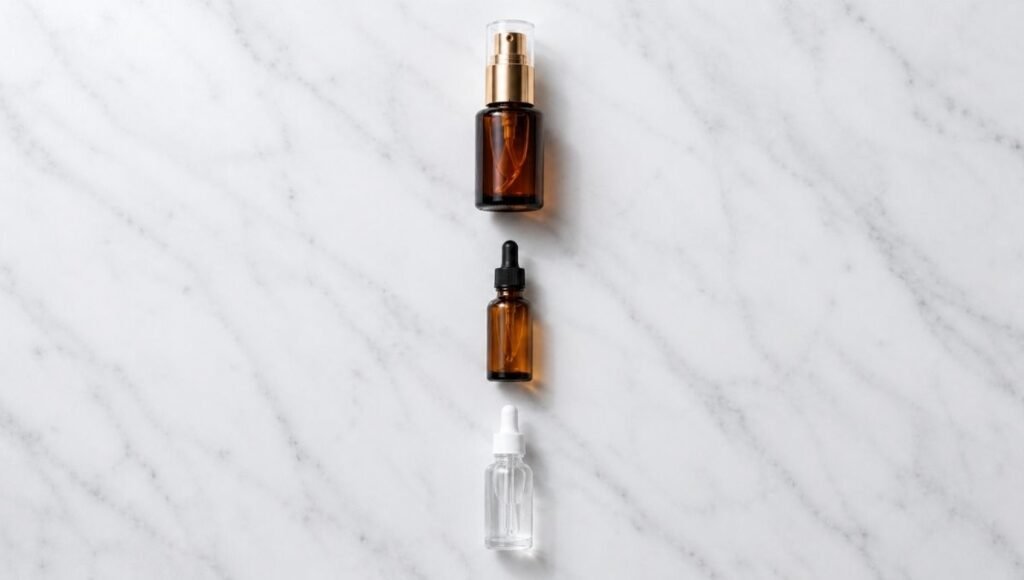
Opaque, airless or minimal-exposure packaging: L-ascorbic acid oxidises in the presence of light and air. A product in clear glass packaging or a jar degrades faster than one in an airless pump or opaque bottle with controlled air exposure.
The Alternatives Ranked — From Closest Match to Most Pragmatic
Tier 1: True Formula Equivalents (Post-Patent)
Skincare Generics CE Serum — 100% ingredient match to C E Ferulic according to independent ingredient analysis. This is the most direct functional equivalent currently available. Post-patent production means the formula is legally identical. The unknowns are manufacturing consistency and long-term stability data — but for budget-conscious users who understand these caveats, this is the most defensible post-patent dupe available.
Tier 2: High-Quality Approximations (Pre-Patent, Established)
Timeless Skin Care 20% Vitamin C + E Ferulic Acid Serum (~$25): The most frequently discussed and most consistently recommended alternative in serious skincare communities. Contains L-ascorbic acid at 20% (higher than the original’s 15%), Vitamin E, ferulic acid, and hyaluronic acid. The formula is functionally aligned with C E Ferulic’s mechanism.
The nuances worth knowing: the 20% concentration is higher than the clinically validated 15% and may produce more irritation — particularly relevant for mature skin where barrier tolerance is reduced. Timeless uses clear glass bottles with a dropper, which provides less protection against oxidation than the original’s packaging. The shelf life after opening is meaningfully shorter. Despite these caveats, it remains the most evidence-adjacent alternative at a fraction of the cost.
Maelove The Glow Maker (~$35): Contains 15% L-ascorbic acid at the correct concentration, Vitamin E, and ferulic acid — very close to the original specification. The formulation has been independently praised for pH calibration and stability, and it is significantly better packaged than Timeless. This is arguably the closest pre-patent alternative in terms of formula accuracy at 15%, and the price point remains dramatically more accessible than the original.
Tier 3: Adjacent Formulas (Similar But Not Equivalent)
Paula’s Choice C15 Super Booster (~$49): Contains L-ascorbic acid at 15% alongside Vitamin C derivatives and additional supporting ingredients. Well-formulated, well-packaged, and by a brand with rigorous scientific standards. However, the additional ingredients move it away from the specific VC + VE + ferulic acid triple combination and toward a more complex multi-active formula — different, not better or worse.
SkinCeuticals C E Ferulic vs Phloretin CF — Which Formula for Mature Skin?
SkinCeuticals’ own second vitamin C serum — Phloretin CF — is worth addressing here, because the brand frequently recommends it alongside or instead of C E Ferulic for specific skin concerns, and it represents a meaningfully different formulation.
C E Ferulic contains 15% L-ascorbic acid, Vitamin E, and ferulic acid — the triple antioxidant synergy combination validated in the original research. It is designed for normal to dry skin and addresses UV protection, brightening, and collagen synthesis support.
Phloretin CF contains 10% L-ascorbic acid (lower concentration), 2% phloretin (a polyphenol antioxidant from apple trees), and 0.5% ferulic acid. It omits Vitamin E, uses a lower VC concentration, and adds phloretin — which has different antioxidant properties and some evidence for reducing discolouration through pathways complementary to ascorbic acid.
For mature skin over 40: C E Ferulic is generally more appropriate. The higher L-ascorbic acid concentration provides stronger collagen synthesis cofactor activity — more directly relevant to the structural anti-aging concerns of mature skin. Phloretin CF is often recommended for oily or acne-prone skin, or for skin managing significant discolouration — concerns that, while present in mature skin, are typically secondary to collagen support and UV protection.
The cost comparison: both products are priced similarly at approximately $182 for 30ml. If a dupe exists for C E Ferulic’s formula, no equivalent dupe exists for Phloretin CF — phloretin is a more unusual ingredient with a smaller market of alternatives.
SkinCeuticals Vitamin C Review — What Consistent Use Produces for Mature Skin
For women over 40 using C E Ferulic or a close alternative consistently, the realistic timeline of effects is:
Weeks 1–4: Surface texture improvements are the most immediately noticeable — skin appears slightly more radiant after cleansing, the dullness that accumulates from slower cellular turnover is reduced. Some mild tingling on application is normal with low-pH L-ascorbic acid; if significant burning occurs, the concentration or pH may be too aggressive for the current skin state.
Weeks 4–8: Hyperpigmentation response becomes visible — existing dark spots appear lighter, post-inflammatory marks resolve somewhat faster. The antioxidant protection against ongoing UV-induced pigmentation is less visible in this timeline but is operating continuously.
Weeks 8–16: The collagen synthesis cofactor activity begins to contribute to measurable skin quality changes — improved firmness, fine line reduction that results from structural rather than surface change. This is the timeline at which most consistent users describe the “my skin looks different” rather than just “my skin looks better” observation.
The critical variable for all timelines: SPF. Without consistent daily SPF application over the Vitamin C, the ongoing UV-induced free radical generation partially or fully offsets the antioxidant protection the serum is providing. The serum prepares the defence; SPF determines whether the defence holds. For the complete guide on using Vitamin C serum correctly — including the pH sequencing with other products — see our comprehensive guide to how to use vitamin c serum [→ /how-to-use-vitamin-c-serum/].
When the Dupe Is Enough and When It Isn’t
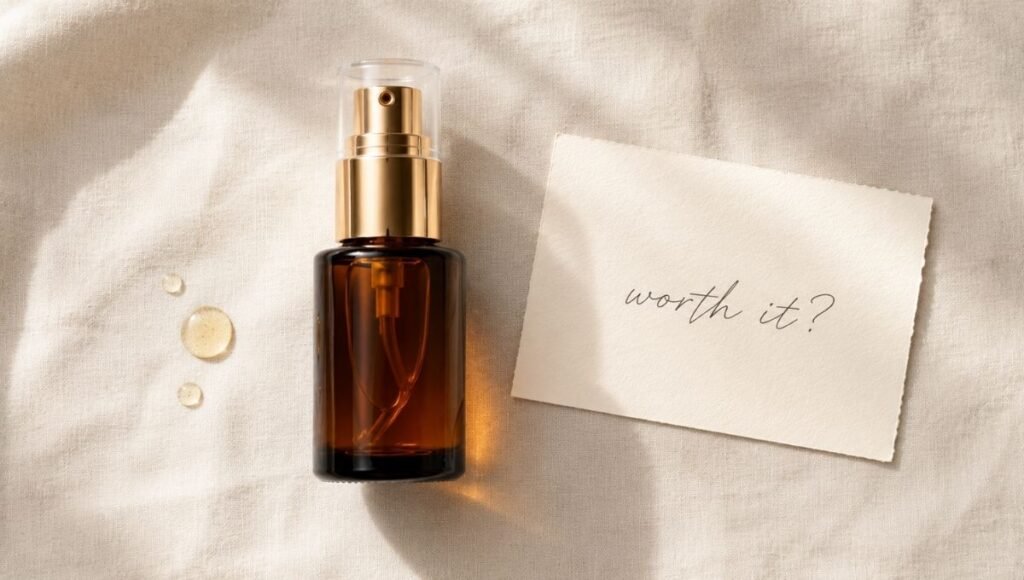
The honest framework for this decision:
A dupe is likely enough when: You are new to L-ascorbic acid Vitamin C and want to establish whether your skin tolerates the category before committing $182. Starting with Maelove or Timeless at low frequency allows you to build tolerance and confirm the category works for your skin — a reasonable and financially prudent approach.
You are budget-constrained but want the anti-aging and photoprotective benefits of the VC + VE + ferulic acid combination. At $25–$35, Timeless or Maelove provide genuine access to the formulation’s mechanism for a fraction of the original’s cost.
You are comfortable with the caveats: shorter shelf life (particularly for Timeless in clear glass), slightly less manufacturing consistency, and no multi-decade clinical track record attached to the specific product.
The original may be worth it when: You have tried alternatives and found consistency issues — colour changes faster than expected, efficacy seems lower than described, product seems to oxidise within weeks. The original’s manufacturing quality and quality control are areas where the premium may produce real functional differences.
You want the dermatologist-validated clinical assurance. The body of research attached to C E Ferulic’s specific formula is not transferable to alternatives — even those with identical ingredients. The Duke University photoprotection study, the clinical outcome data, the dermatologist professional recommendation network — these belong to the original product, not to its formulation equivalents.
You have the budget and the routine consistency. A $182 serum that you use consistently daily for four months is more cost-effective than a $25 serum you use inconsistently because it oxidises faster or you’re not confident in its efficacy.
FAQ
Is there a true dupe for SkinCeuticals C E Ferulic after the patent expired? Yes — as of March 2025, the patent covering the C E Ferulic formula has expired, meaning any manufacturer can legally produce an identical formula. Skincare Generics CE Serum has already been independently verified at 100% ingredient match. The remaining variable is manufacturing consistency and long-term stability data from the new entrants — which will accumulate over the coming years as the post-patent market matures.
Why does SkinCeuticals C E Ferulic smell like hot dogs? The characteristic smell is produced by pentanal and related aldehydes — oxidation byproducts of L-ascorbic acid in a low-pH, aqueous formulation. It is not a quality defect. It is the expected sensory consequence of formulating active L-ascorbic acid at the pH required for skin penetration. A fresh product with this smell is confirming that the L-ascorbic acid is active and the pH is correct. If your product smells like this, it is behaving as it should.
Is 20% vitamin C better than 15% for anti-aging? Not necessarily — and for mature skin, possibly the opposite. The dose-response curve for L-ascorbic acid in skin photoprotection and collagen synthesis plateaus at approximately 15–20%. Above 20%, irritation risk increases without proportional efficacy gains. For mature skin over 40, where barrier tolerance is typically reduced, 15% is the more appropriate concentration — producing equivalent anti-aging benefit with meaningfully lower irritation risk.
How long does SkinCeuticals C E Ferulic last after opening? SkinCeuticals recommends use within three months of opening. L-ascorbic acid in an aqueous solution oxidises progressively after exposure to air — the colour will shift from pale yellow toward amber and eventually orange-brown as oxidation proceeds. Monitor colour: pale straw yellow indicates an active product; amber or orange indicates significant oxidation and reduced efficacy. Store in a cool, dark location (not the bathroom) to extend shelf life.
Skinceuticals C E Ferulic vs Phloretin CF — which is better for women over 40? For most mature skin with anti-aging and UV protection as primary goals, C E Ferulic is the more appropriate choice. It contains 15% L-ascorbic acid (versus Phloretin CF’s 10%) and includes Vitamin E — providing stronger collagen synthesis support and the triple antioxidant synergy that the original research validated. Phloretin CF is better suited for oily or acne-prone skin, or skin with significant discolouration as a primary concern.
The $182 Question, Honestly Answered
The SkinCeuticals C E Ferulic is not an overpriced product selling on hype. It is a genuinely well-formulated, clinically validated vitamin C serum with twenty years of dermatologist endorsement and research attachment — priced, until recently, to reflect its patent protection.
The SkinCeuticals C E Ferulic dupe question has a clearer answer in 2025 than it ever has before. The patent is gone. True formulation equivalents are entering the market. For budget-conscious users willing to navigate the new post-patent landscape carefully, functional alternatives have genuinely arrived.
For women over 40 whose primary investment consideration is clinical certainty and manufacturing reliability, the original still carries advantages that no post-patent generic can yet match on documentation. For those whose primary consideration is accessing the VC + VE + ferulic acid mechanism at a fraction of the cost, Maelove or the post-patent generics represent a genuine and defensible choice.
For the complete guide on using any Vitamin C serum correctly — including how to layer it with the other actives in your anti-aging routine — our article on how to use vitamin c serum covers the full protocol [→ /how-to-use-vitamin-c-serum/].
For the anti-aging routine framework that places Vitamin C in its strategic morning position alongside retinoids, ceramides, and SPF — our guide to skincare for women over 40 covers the complete architecture [→ /skincare-for-women-over-40/].
References
- Murray, J.C., et al. (2008). A topical antioxidant solution containing vitamins C and E stabilized by ferulic acid provides protection for human skin against damage caused by ultraviolet irradiation. Journal of the American Academy of Dermatology, 59(3), 418–425.
- Lin, J.Y., et al. (2003). UV photoprotection by combination topical antioxidants vitamin C and vitamin E. Journal of the American Academy of Dermatology, 48(6), 866–874.
- Pinnell, S.R., et al. (2001). Topical L-ascorbic acid: percutaneous absorption studies. Dermatologic Surgery, 27(2), 137–142.
- Farris, P.K. (2005). Topical vitamin C: A useful agent for treating photoaging and other dermatologic conditions. Dermatologic Surgery, 31(7 Pt 2), 814–818.
- Pullar, J.M., et al. (2017). The roles of vitamin C in skin health. Nutrients, 9(8), 866.
- Ganceviciene, R., et al. (2012). Skin anti-aging strategies. Dermato-Endocrinology, 4(3), 308–319.