
It doesn’t look like the acne you remember. It isn’t the surface-level, cluster-of-small-spots kind that arrived around exams and disappeared in your early 20s. This kind is deeper. It tends to settle along the jawline and the lower face — a single large, painful cyst that takes two weeks to resolve rather than the five days it used to. Sometimes there are two or three at once. And the confusing part: your skin is simultaneously drier than it has been in years, with a tightness and flakiness that makes it feel like it shouldn’t be breaking out at all.
You are 42, or 45, or 48. You haven’t changed your diet or your sleep routine or your skincare products. And your skin is doing something it hasn’t done since your 20s, for reasons that don’t seem to connect to anything obvious.
Perimenopause acne is one of the least discussed and most poorly understood skin changes associated with hormonal transition. Approximately 30% of women in perimenopause or menopause experience acne or spots — a figure that is significant, and that makes this a genuinely common experience that deserves a serious, science-led response. This guide gives you the hormonal mechanism, the specific skincare adjustments that address it, and an honest account of what topical skincare can and cannot do for hormonally-driven breakouts.
Key Takeaways
- Approximately 30% of women in perimenopause or menopause experience acne or breakouts — making perimenopause acne a common rather than unusual presentation of hormonal transition.
- The mechanism is not elevated androgen levels. It is increased androgen receptor sensitivity following oestrogen decline — which is why hormone panels in perimenopausal women with acne often return normal results, even when active breakouts are occurring.
- Perimenopause acne characteristically appears on the lower third of the face — jawline, chin, and sometimes the neck — rather than the forehead and T-zone pattern typical of adolescent hormonal acne.
- The simultaneous presentation of acne and dry skin is not a contradiction — it reflects two different biological mechanisms operating at the same time: increased deep sebaceous gland activity (driving cystic breakouts) alongside surface barrier lipid loss (driving dryness).
- The most common skincare error is treating perimenopause acne with products designed for teenage oily skin. These products — harsh cleansers, alcohol-containing toners, high-concentration benzoyl peroxide — further compromise an already-compromised barrier, trigger compensatory sebum production, and worsen rather than resolve the situation.
Skin Changes During Perimenopause — The Complete Picture
Before focusing specifically on perimenopause acne, it helps to understand the full scope of what is happening in the skin during this hormonal transition — because acne does not occur in isolation.
Perimenopause — which can begin anywhere from the late 30s to mid-50s — is characterised by the irregular fluctuation and gradual decline of oestrogen and progesterone. The skin registers these changes at a biological level that goes significantly deeper than surface dryness or breakouts.
Oestrogen’s role in skin biology is profound. Oestrogen receptors are found directly on fibroblasts, keratinocytes, and sebaceous glands. While oestrogen is present in adequate levels, it stimulates collagen synthesis, supports ceramide production (barrier integrity), enhances hyaluronic acid synthesis (skin hydration), regulates sebum production, and maintains blood flow and nutrient delivery to the skin. When oestrogen declines, all of these functions are simultaneously affected.
Research published in the Journal of the American Academy of Dermatology documents that women lose up to 30% of dermal collagen in the first five post-menopausal years — a rate of loss significantly faster than during the preceding decades. The Journal of Cosmetic Dermatology (2025 review) describes perimenopause as impairing the extracellular matrix — the structural web of collagen, elastin, and hyaluronic acid — in ways that no topical product was originally formulated to compensate for.
The result is a skin that has genuinely changed its operating conditions. Products that worked well at 38 may feel wrong at 45 — not because the products deteriorated, but because the skin they were designed for no longer exists.
The full spectrum of perimenopausal skin changes includes:
- Accelerated collagen loss and reduced skin thickness
- Decreased ceramide synthesis, compromising barrier function
- Reduced hyaluronic acid production, reducing intrinsic hydration
- Slower cellular turnover (extending from 28 days at 25 to 45–60 days at 45+)
- Increased sensitivity and reactivity to previously tolerated products
- Hyperpigmentation from post-inflammatory responses that resolve more slowly
- And — the focus of this article — hormonal acne driven by androgen receptor changes
Why Perimenopause Causes Acne — The Androgen Receptor Mechanism
This is the mechanism that most perimenopause acne content gets wrong — and understanding it correctly changes both the expectations and the strategy.
The common explanation — “your androgen levels go up during perimenopause” — is imprecise, and leads many women to have hormone panels run, find normal results, and conclude that their acne must be caused by something else. In most cases, it is not androgen levels that change significantly. It is androgen receptor sensitivity.
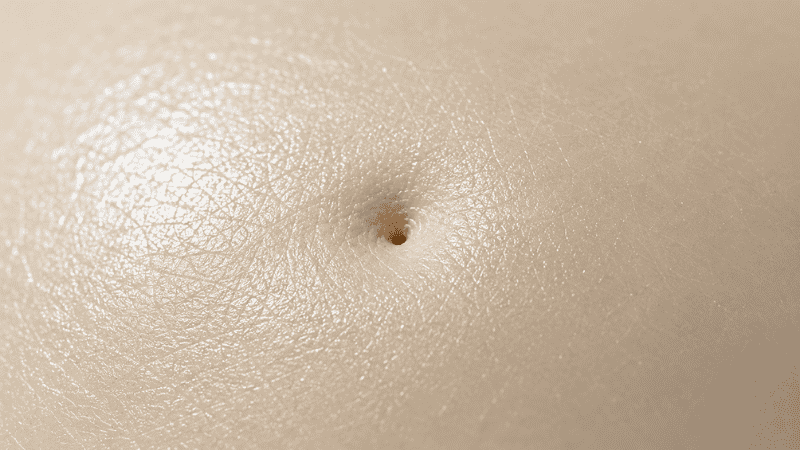
Here is what actually occurs: throughout a woman’s reproductive years, oestrogen acts as a moderating influence on androgen receptors — it suppresses the receptors’ response to circulating androgens such as testosterone. When oestrogen declines during perimenopause, this moderating function is reduced. The sebaceous glands, no longer adequately moderated by oestrogen, become hypersensitive to the same androgen levels that were always present but previously well-managed. They produce a thicker sebum in greater quantities. Simultaneously, the pores — also affected by oestrogen loss — undergo structural changes that can make them slightly smaller, creating a situation where thicker oil cannot move as freely through the follicular opening. The result: blockage, inflammation, and the deep, cystic type of acne that is characteristic of perimenopause.
Research published in PMC (Menopausal Acne — Challenges and Solutions, 2019) identifies hyperandrogenism — defined as increased androgen receptor sensitivity rather than necessarily elevated androgen levels — as the primary aetiological factor in perimenopausal acne. This clarification matters enormously for treatment decisions: targeting androgen receptor sensitivity is different from trying to reduce androgen production.
Editor’s note: This is why women in their 40s who see their GP about jawline acne and have a hormone panel run are frequently told “your hormones are normal” — and leave the appointment without answers. The panel may be entirely accurate. The mechanism driving the acne operates at the receptor level, not the circulating level. This distinction is critical, and most clinical encounters do not adequately explain it.
Why Perimenopause Acne Appears on the Jaw and Chin — Not Where You’d Expect
The location of perimenopause acne is diagnostically significant — and is one of the clearest ways to distinguish it from other types of adult breakouts.
Adolescent hormonal acne typically affects the forehead, nose, and T-zone — areas where the sebaceous glands are largest and most numerous, and where teenage-level androgens drive the highest sebum production. Adult hormonal acne, including perimenopause acne, characteristically appears on the lower third of the face: the jawline, chin, and sometimes the neck and lower cheeks.
This distribution reflects the different distribution of androgen receptor density in adult skin compared to adolescent skin, and the specific sebaceous gland activity that responds to the perimenopausal hormonal shift. The lower face contains sebaceous glands that are particularly sensitive to the androgen-receptor-mediated sebum increase associated with relative androgen excess.
The practical implication: if you are experiencing persistent cystic breakouts specifically on your jawline and chin, and you are in your early-to-late 40s or 50s, these breakouts are almost certainly hormonally driven — regardless of what your hormone panel shows. The location is a more reliable diagnostic indicator than the lab results.
This also means that topical treatments applied uniformly across the face (as one would for adolescent acne) are less efficient than targeted lower-face treatment with actives appropriate for the specific sebaceous gland overactivity driving the perimenopause presentation.
Perimenopause Dry Skin and Acne at the Same Time — The Paradox Explained
This is the combination that most confuses women — and most products are not formulated to address simultaneously.
Dry skin implies insufficient oil. Acne implies excess oil. Experiencing both at the same time seems contradictory. It is not — because the two phenomena are driven by different biological mechanisms operating at different levels of the skin.
The dryness originates from the surface barrier — specifically, the decline in ceramide synthesis and sebum production that reduces the stratum corneum’s lipid matrix. Oestrogen supports ceramide production; as it declines, the barrier’s protective lipid layer becomes less complete. Transepidermal water loss increases. The skin feels tight, rough, and uncomfortable even after applying a moisturiser that previously felt adequate.
The acne originates from within the follicular unit — specifically, from the sebaceous glands responding to androgen receptor hypersensitivity with increased production of a thicker, more viscous sebum. This internal sebum activity does not translate to a surface oiliness that feels like oily skin — it tends to be experienced as deep, painful cysts rather than the surface shine of genuinely oily skin.
The two conditions require different interventions at different levels of the skin:
For the dryness: Barrier lipid replenishment (ceramides, cholesterol, fatty acids), humectants (hyaluronic acid, glycerin), and occlusives (squalane) to restore the stratum corneum’s protective function.
For the acne: Non-comedogenic formulations, gentle exfoliation to prevent follicular keratinisation (the dead cell accumulation that traps sebum), and ingredients that address the androgen-driven inflammation without further compromising the barrier.
The treatment error to avoid: using oil-controlling, pore-minimising, or drying products across the whole face to “treat” the acne. This depletes the already-compromised surface barrier, triggers compensatory sebaceous activity, and often worsens both the dryness and the breakouts simultaneously.
Perimenopause Skin Sensitivity — Why Your Old Routine Suddenly Feels Wrong
Increased skin sensitivity during perimenopause is reported by a significant proportion of women — and it is rarely adequately explained when it is attributed simply to “hormonal changes.”
Oestrogen has direct anti-inflammatory effects on the skin. It suppresses the production of pro-inflammatory cytokines, supports wound healing, and moderates the skin’s immune response to environmental stressors. As oestrogen declines, the skin’s inflammatory threshold is lowered — it reacts more readily to ingredients, temperatures, and environmental factors that previously produced no response.
This is why a retinol product that was perfectly tolerable at 40 may suddenly produce stinging and redness at 45. It is why the Vitamin C serum that felt comfortable for two years may now cause tightness. It is why the toner that seemed neutral before now feels stripping. The products have not changed; the skin’s ability to tolerate them has changed, because the hormonal modulation that previously provided some protection against irritant responses is diminished.
The routine adjustment this requires:
Reduce active ingredient frequency before increasing tolerance-building measures. If your routine previously included retinol three nights per week, reduce to one night per week and rebuild. If your Vitamin C serum is causing new sensitivity, check for oxidation (a colour-shifted Vitamin C provides no antioxidant benefit and a mild pro-oxidant stress), reduce to three mornings per week, or temporarily switch to a gentler derivative (ascorbyl glucoside) while the skin adapts.
Prioritise barrier repair before re-introducing actives. A ceramide-focused moisturiser used twice daily for four to six weeks before attempting to reintroduce actives allows the barrier to stabilise, often restoring tolerance that seemed irreversibly lost. For the complete science of ceramide barrier repair, see our guide to ceramides moisturizer [→ /ceramides-moisturizer/].
Menopausal Skin Care — What to Use and What to Stop Using
The most useful reframing for menopausal skin care is this: you are not trying to fix aging. You are building a routine for a skin that has a different operating profile than it had before — one that requires different actives, different formulation textures, and a different approach to both hydration and acne management.
Stop using:
Harsh, foaming, sulphate-based cleansers. These strip barrier lipids that perimenopause skin is already producing less of. The “squeaky clean” feeling is not a sign of effectiveness — it is a sign of barrier disruption. Switch to a gentle, pH-appropriate, non-stripping cleanser.
High-concentration benzoyl peroxide across the whole face. Benzoyl peroxide is effective for certain acne types but is particularly drying and irritating on perimenopause skin with a compromised barrier. If you use it at all, use it as a targeted spot treatment at the lowest effective concentration (2.5%), not as a face wash or leave-on across the full face.
Alcohol-containing toners. Drying, barrier-compromising, and particularly inappropriate for skin that is simultaneously experiencing dryness and acne.
The entire oily-skin teenage acne protocol. Strip → treat → strip again. It is the wrong approach for a skin whose acne is cystic and deep rather than surface and oil-driven.
Start using:
A double-cleansing protocol in the evening. Gentle oil-based cleanser first (dissolves sunscreen and makeup without stripping), followed by a gentle water-based cleanser. This cleans thoroughly without the barrier disruption of a single harsh cleanser.
Niacinamide at 4–5% twice daily. Niacinamide addresses multiple perimenopause acne drivers simultaneously: it reduces sebum production (documented in studies at 2%), stimulates ceramide synthesis (supporting the compromised barrier), inhibits inflammation (addressing the inflammatory component of cystic acne), and reduces post-inflammatory hyperpigmentation (the dark marks that remain after perimenopause cysts resolve far more slowly than they did in younger skin). This is one of the most multi-functional actives for the specific combination of perimenopause acne plus dry sensitive skin. For the complete science, see our guide to niacinamide skincare [→ /niacinamide-skincare/].
Retinoids — with protocol adjustments. Retinoids address perimenopause acne through normalising follicular keratinisation (preventing the dead cell accumulation that traps sebum) while simultaneously addressing the underlying collagen loss from oestrogen withdrawal. The dual mechanism makes retinoids one of the most strategically valuable actives for perimenopause skin. The adjustment: start lower (0.025%), apply less frequently (every third night initially), and always sandwich with ceramide moisturiser to protect the more reactive barrier. See our guide to how long retinol takes to work [→ /how-long-does-retinol-take-to-work/] for the complete introduction protocol.
Gentle chemical exfoliation — targeted and low frequency. Glycolic or lactic acid toner at low concentration (5–8%), once per week initially, supports the slower cellular turnover of perimenopause skin without the mechanical irritation of physical scrubs. The exfoliation prevents the follicular keratinisation that contributes to cyst formation, while improving the surface texture that the slower turnover rate produces.
Best Skincare for Menopause Acne — Ingredients With Clinical Relevance
For perimenopause acne specifically — the cystic, lower-face variety driven by androgen receptor sensitivity — the most clinically relevant topical ingredients are:
Niacinamide (4–5%): Sebum regulation, ceramide synthesis, anti-inflammatory, post-inflammatory hyperpigmentation reduction. The most versatile single ingredient for the perimenopause skin profile.
Retinoids: Follicular keratinisation normalisation (addressing the comedogenic component) plus collagen stimulation. The most evidence-backed dual-purpose active for perimenopause skin.
Azelaic acid (10–20%): Antibacterial, anti-inflammatory, mild keratolytic, and — importantly — tyrosinase-inhibiting. Addresses the acne itself while treating the hyperpigmentation that perimenopause acne leaves behind. Well-tolerated by sensitive, reactive perimenopause skin.
Salicylic acid (1–2%, targeted): Oil-soluble, able to penetrate the follicular unit where perimenopause cysts originate. Used as a targeted spot treatment rather than a whole-face product.
Ceramides (NP, AP, EOP): Not an acne treatment, but a foundational ingredient for perimenopause skin — the barrier repair that makes every other active tolerable and effective.
Bakuchiol (0.5%): For perimenopause skin that finds retinoids too irritating, bakuchiol provides collagen-stimulating activity with significantly lower irritation potential, and can be used morning and evening (unlike retinol). As an antioxidant and anti-inflammatory, it also contributes to the inflammatory acne component. For the complete guide, see our article on bakuchiol serum [→ /bakuchiol-serum/].
The Perimenopause Acne Skincare Routine — A Practical Framework
Morning: Gentle cleanser → niacinamide serum → ceramide moisturiser → SPF 30+ (mineral preferred — titanium dioxide and zinc oxide do not contribute to pore congestion)
Evening (retinoid nights, 2–3 per week): Double cleanse → allow skin to fully dry → retinol (lowest appropriate concentration) → ceramide moisturiser as buffer → squalane as final seal if skin is very dry
Evening (non-retinoid nights, 2 per week): Double cleanse → low-concentration AHA toner (5–8% lactic acid, one of these evenings) → niacinamide moisturiser → ceramide seal
Targeted: Azelaic acid or 2.5% benzoyl peroxide applied as spot treatment to active lesions only, not spread across the full face
What this routine accomplishes: Morning: antioxidant + barrier support + photoprotection Evening retinoid nights: follicular keratinisation normalisation + collagen stimulation + barrier support Evening non-retinoid nights: gentle cellular renewal + continued niacinamide benefit + barrier maintenance Throughout: consistent niacinamide for sebum regulation, ceramides for barrier support, and SPF for pigmentation prevention
When Perimenopause Acne Needs Medical Attention
Topical skincare can meaningfully manage mild-to-moderate perimenopause acne. Several presentations warrant medical or dermatological assessment:
Severe cystic acne — deep, painful nodules or cysts that are leaving scars, or that number more than five active lesions at a time. Prescription options including oral antibiotics, low-dose oral contraceptives, spironolactone (an androgen-receptor blocker), or prescription retinoids may be appropriate.
No improvement after 12 consistent weeks of a properly executed topical routine. Perimenopause acne that does not respond to niacinamide, retinoid, and barrier repair protocols over three months warrants professional assessment to rule out other causes and evaluate prescription options.
Signs of significant androgen excess alongside acne — including new-onset facial hair, changes in scalp hair density, or other virilising signs — warrant investigation for underlying hormonal conditions including late-onset PCOS or adrenal hyperplasia.
Acne alongside rapidly worsening overall skin condition — significant accelerated aging, unusual rashes, or widespread new skin changes alongside breakouts — is worth discussing with a dermatologist who can assess whether the full perimenopausal transition warrants hormonal therapy consultation.
FAQ
Why am I suddenly getting acne in my 40s when I never had it before? Because perimenopause changes the hormonal environment that regulated your sebaceous glands. As oestrogen declines, it can no longer adequately moderate the skin’s response to androgens — leading to increased sebum production and the type of deep, cystic acne characteristic of perimenopause. You don’t need elevated androgens to develop this type of acne; you need the loss of oestrogen’s moderating influence, which is a normal part of the hormonal transition.
Why is perimenopause acne different from teenage acne? Location, depth, and mechanism. Teenage acne is driven by absolute androgen excess during puberty and typically appears in the T-zone. Perimenopause acne is driven by androgen receptor hypersensitivity following oestrogen decline and typically appears on the jawline, chin, and lower face. It tends to be deeper and more cystic, slower to resolve, and associated with more significant post-inflammatory hyperpigmentation. The two require different treatment approaches.
Can I use acne products from my 20s for perimenopause acne? Generally, no — or only selectively. Products designed for teenage oily skin (benzoyl peroxide washes, alcohol toners, aggressive clay masks across the whole face) are formulated for high-sebum, high-turnover, more robust-barrier younger skin. Applying them to perimenopause skin — which is simultaneously experiencing barrier compromise and dryness alongside the acne — typically worsens both conditions. Low-concentration targeted spot treatments are appropriate; full-face harsh acne protocols are not.
Is there a skincare routine specifically for perimenopause acne and dry skin at the same time? Yes — and the key is addressing both conditions with non-competing products. Ceramide moisturiser twice daily for barrier repair. Niacinamide twice daily for sebum regulation and inflammation without drying. Retinoid on alternating evenings for follicular keratinisation and collagen. Gentle AHA once per week for cellular renewal. SPF every morning without exception. None of these create a tradeoff between addressing the dryness and addressing the acne.
Does perimenopause acne go away after menopause? For many women, the pattern changes rather than simply resolving. The fluctuating oestrogen of perimenopause — with its unpredictable rises and drops — is often what drives the cycle of breakouts. After menopause, when oestrogen stabilises at a lower but consistent level, some women find the acne component reduces while the dryness and barrier concerns become more prominent. This is not universal; some women continue to experience hormonal acne through and after menopause, particularly if androgen receptor sensitivity remains elevated.
Is bakuchiol better than retinol for perimenopause acne? They address different aspects. Retinol directly normalises follicular keratinisation — one of the key drivers of cystic acne formation — making it more directly targeted at the acne mechanism. Bakuchiol provides collagen stimulation and anti-inflammatory activity with much lower irritation potential. For perimenopause skin that tolerates retinol well, retinol is the more targeted anti-acne active. For perimenopause skin that finds retinol too irritating, bakuchiol is a meaningful compromise — providing anti-inflammatory and collagen-stimulating benefit while the skin builds tolerance for eventual retinol re-introduction.
The Skin That Needs Understanding, Not Just Products
Perimenopause acne is not a teenage problem wearing a different face. It is a hormonally-driven skin condition with a specific mechanism, a characteristic presentation, and a treatment approach that differs significantly from both adolescent acne management and generic mature skin anti-aging.
Understanding the androgen receptor mechanism — that this is not about excess androgens but about lost oestrogen modulation — changes the response from “treat the oil” to “support the barrier while managing the follicular activity.” Understanding the simultaneous dryness explains why harsh acne protocols worsen the situation. And understanding that approximately 30% of women in perimenopause experience this means that it is common, treatable with appropriate topical strategies, and does not require acceptance as an inevitable feature of midlife.
For the complete framework of skincare for women over 40 — placing perimenopause acne in context alongside all the other skin changes of this transition — see our comprehensive guide to skincare for women over 40 [→ /skincare-for-women-over-40/].
References
- Capitanio, B., et al. (2019). Menopausal acne — Challenges and solutions. International Journal of Women’s Health, 11, 555–562. PMC6825478.
- Zouboulis, C.C., & Makrantonaki, E. (2011). Hormonal therapy of intrinsic aging. Rejuvenation Research, 15(3), 302–312.
- Thornton, M.J. (2013). Estrogens and aging skin. Dermato-Endocrinology, 5(2), 264–270.
- Ganceviciene, R., et al. (2012). Skin anti-aging strategies. Dermato-Endocrinology, 4(3), 308–319.
- Draelos, Z.D. (2005). Cosmetics and skin care in dermatology. In: Freedberg IM, et al. Fitzpatrick’s Dermatology in General Medicine. McGraw-Hill.
- Verdier-Sévrain, S. (2007). Effect of estrogens on skin aging and the potential role of selective estrogen receptor modulators. Climacteric, 10(4), 289–297.