
Most women in their 30s who care about skincare have been using products for years. They have a cleanser they like, a moisturiser that works, maybe a serum they picked up after reading something convincing. They know SPF matters. They’ve heard of retinol. The problem is rarely complete ignorance — it is, more often, a fragmented collection of good intentions that has never quite coalesced into a routine that is both scientifically grounded and genuinely tailored to where the skin is, biologically, at this specific decade.
Skincare in your 30s is not about dramatic intervention. The changes happening in the skin at 32 are real but not yet visible in the way that the changes at 42 are. This is precisely what makes the 30s the most strategically important decade for anti-aging skincare — you are building the foundation before the structure needs significant repair. The investments made in consistency and the right ingredients now produce measurably better outcomes a decade from now than the same investments made at 40, when the collagen deficit and cellular slowdown are already established.
This guide gives you the biology, the sequence, the ingredients, and the honest answer to the questions that 30s skincare discussions rarely settle clearly — including the one everyone wants answered: when, exactly, should you start retinol?
Key Takeaways
- Collagen production begins declining at approximately 1% per year from the mid-20s — meaning that by 35, you have already lost roughly 10% of your peak collagen density. The visible effects (fine lines at rest, early changes in skin texture) typically appear between 30 and 40, depending on sun exposure history and genetics.
- The case for starting retinol in your early-to-mid 30s is not cosmetic urgency but biological timing: stimulating fibroblast activity when the collagen matrix is still largely intact produces more durable structural improvement than waiting until visible loss has accumulated.
- Daily broad-spectrum SPF is the highest-return anti-aging intervention in your 30s. Research in Annals of Internal Medicine documented that consistent sunscreen use measurably slowed photoaging over four and a half years. No serum compensates for ongoing UV-induced collagen breakdown.
- The 30s represent the transition from prevention-only to prevention plus active repair — not because the skin requires dramatic intervention, but because introducing key actives (retinoids, Vitamin C, peptides) during this decade allows them to work in advance of significant structural deficit.
- The late 30s (35–39) require specific adjustments that the early 30s do not: the cellular turnover rate is already beginning to slow, fine lines that were previously dynamic may be becoming visible at rest, and the priority shifts toward both preventing further loss and beginning structural stimulation at a meaningful concentration.
Skin Changes in Your 30s — The Biology You Should Know About
The visible changes of the 30s are subtle. That is exactly the point — and exactly why this decade is strategically undervalued in most anti-aging discussions.
The collagen curve. Collagen production begins its approximately 1% annual decline in the mid-20s. What this means practically: by 32, you have lost approximately 7–8% of your peak collagen density. By 38, approximately 13–14%. By 45, approximately 20%. The visible effects — static fine lines, slight loss of skin volume, early changes in jaw definition — typically appear when the cumulative loss exceeds the skin’s visible threshold, which for most women occurs somewhere between the late 30s and early 40s, depending on sun exposure history. The skin you are looking at in your 30s is still largely intact. What is happening beneath the surface has been building for nearly a decade.
Cellular turnover slowing. Skin cell renewal, which occurs at approximately 25–28 days in your early 20s, is already beginning to extend in the late 30s — heading toward the 35–45 day cycle characteristic of skin in the 40s. The practical effect is that older, less reflective cells stay at the surface slightly longer, contributing to the first signs of dullness and uneven texture that many women notice in their mid-to-late 30s.
UV damage accumulating. Each year of UV exposure without adequate SPF protection activates matrix metalloproteinases (MMPs) that break down existing collagen and elastin. The sun damage from your 20s — beach holidays, commuting without sunscreen, outdoor exercise without protection — does not show immediately. It shows at 35, 40, and 45, as the cumulative MMP activation produces lines and pigmentation changes that look dramatic but were decades in the making. This is why the 30s are the critical intervention decade: stopping ongoing UV-induced collagen destruction now prevents the accelerated visible aging that would otherwise appear in your 40s.
The sebum transition. Sebum production, which peaked in the teenage years and remained relatively robust through the 20s, typically begins a gradual decline in the 30s. For women who spent their 20s managing oily or combination skin, the 30s often mark the first time skin feels genuinely balanced — followed, in the late 30s, by the first experiences of dryness that were previously unfamiliar. This shift means the lightweight gel moisturiser that served you at 25 may need to become a more substantial emulsion by 38.
Best Skincare Routine for 30s — The Non-Negotiable Foundation
Before any luxury investment or active ingredient discussion, the foundational habits that determine 90% of your skin’s long-term outcome remain non-negotiable throughout the 30s.
Daily broad-spectrum SPF 30+ — non-negotiable, morning, every day. UV exposure drives the majority of visible facial aging — the lines, spots, and textural changes you associate with looking older are predominantly photodamage, not chronological aging. A randomised trial published in Annals of Internal Medicine documented that consistent daily sunscreen use measurably slowed photoaging over four and a half years compared to discretionary use. In your 30s, SPF is not a crisis intervention — it is the routine step that determines whether the products you invest in now produce their intended results or are partially undone by ongoing UV-induced collagen breakdown. Apply daily, generously, including on overcast days and during low-sun-exposure winter months.
Consistent cleansing — twice daily, gently. Over-cleansing with high-pH or sulphate-heavy cleansers strips the barrier lipids that support the skin’s own moisture retention and resilience. In the 30s, when sebum production is already beginning a gradual decline, preserving the natural barrier is increasingly important. A gentle, fragrance-free cleanser at morning and evening — with a careful double cleanse on evenings when SPF and makeup were worn — provides thorough cleaning without barrier disruption.
Hydration — a complete, layered approach. Humectant (hyaluronic acid) serum applied to slightly damp skin, sealed with a ceramide-containing moisturiser, addresses both the hydration attraction and the barrier sealing that becomes more important as the 30s progress. The lightweight approach of the 20s — a light moisturiser applied without much thought to layering — benefits from upgrading to a more deliberate humectant-plus-ceramide sequence by the mid-to-late 30s.
For the complete layering logic — where each hydration product fits in the sequence — see our guide to serum before or after moisturizer [→ /serum-before-or-after-moisturizer/].
When to Start Using Retinol — The Evidence-Based Answer
This is the question that 30s skincare content most consistently fails to answer with the precision it deserves. Most guidance is either too vague (“start when you see the first fine line”) or too cautious (“in your 40s”). The evidence-based answer is more specific.
The biological case for starting retinol in your early-to-mid 30s:
Retinoids stimulate collagen synthesis through nuclear retinoid receptor activation — they upregulate the genes governing new collagen production in fibroblasts. Their effectiveness depends in part on the density and functionality of the collagen matrix they are working with. Fibroblasts stimulated when the collagen matrix is still largely intact (as in the early 30s) produce new collagen into a supportive structural environment. Fibroblasts stimulated after significant collagen loss (as in the mid-40s) are working against a greater deficit — the repair task is larger.
This is not an argument for aggression. It is an argument for timing. Starting retinol at 32 at a low concentration, building gradually, and maintaining consistently over years produces a cumulative structural advantage that is measurably superior to starting at 45 at a higher concentration when the deficit is already established. Research by Varani et al. (American Journal of Pathology, 2006) documented that the collagen-synthesising capacity of fibroblasts in aged skin is reduced compared to younger skin — further supporting the argument that earlier intervention is more efficient per unit of effort.
When to start retinol:
- Earliest appropriate starting point: 25–28, primarily as a very low-concentration preventive measure
- Optimal starting window: 28–35, when the collagen curve is declining but still largely intact
- Late but not too late: 35–45, when visible changes prompt action — retinoids work at every age, just against a progressively larger deficit
How to start: Begin at 0.025% retinol every third evening for the first month. If no irritation, increase to every other evening in month two. By month four to six, most skin has adapted to nightly use at this concentration and can progress to 0.05%. For the complete introduction protocol, timeline, and concentration progression, see our guide to how long retinol takes to work [→ /how-long-does-retinol-take-to-work/].
Editor’s note: The most common retinol mistake in the 30s is not starting too early — it is starting at too high a concentration and abandoning it after two weeks of adjustment-phase dryness. Starting lower and progressing slower produces consistent long-term use, which produces results. Dramatic early introduction followed by abandonment produces nothing.
Skincare for Late 30s — When Prevention Becomes Repair
The late 30s — roughly 35 to 39 — represent a meaningful shift in skincare approach, even if the visible changes are still relatively subtle. Several specific adjustments reflect the biology of this phase.
Increase retinol concentration on schedule. If you have been using 0.025–0.05% retinol consistently and comfortably for 6–12 months, progressing to 0.1% in the late 30s produces more significant structural stimulation. The collagen-synthesising benefit of retinoids is concentration-dependent within the tolerable range — maintaining a low concentration indefinitely when the skin is clearly adapted means leaving stimulation capacity unused.
Introduce peptides alongside retinol. Signal peptides (Matrixyl, Argireline) and copper peptides (GHK-Cu) address collagen synthesis through a complementary pathway — they signal fibroblasts directly, without the receptor-mediated mechanism of retinoids. Using both in the same routine is additive, not redundant. Peptides are also significantly better tolerated around the eye area than retinoids, making them the appropriate active for the periorbital area that shows early aging signs in the late 30s. For the complete peptide science, see our guide to what peptides do for skin (available in Beaudore’s ingredient guides).
Upgrade the moisturiser. The lightweight gel or light emulsion moisturiser of the early 30s may no longer be adequate as sebum production declines in the late 30s. Moving to a ceramide-rich cream formula — particularly for the evening — provides the lipid replenishment that the skin’s own declining sebum production no longer fully supplies.
Add a chemical exfoliant. Glycolic acid at 5–8%, used two evenings per week on alternate nights from retinol, addresses the beginning cellular turnover slowdown of the late 30s — maintaining the surface renewal rate that keeps skin reflective and active ingredients penetrating efficiently. Alternating rather than combining: glycolic acid two evenings, retinol two to three evenings, rest evenings one to two times per week.
Extend SPF application below the jawline. The neck and décolletage receive the same UV exposure as the face and are frequently excluded from SPF application in the 30s — when the effects of this exclusion are not yet visible. By 45, the neck-face SPF asymmetry becomes one of the most visible signs of uneven photoprotection. Start treating the full neck and upper chest in the late 30s, before the disparity appears.
The Luxury Morning Routine for Your 30s — Step by Step
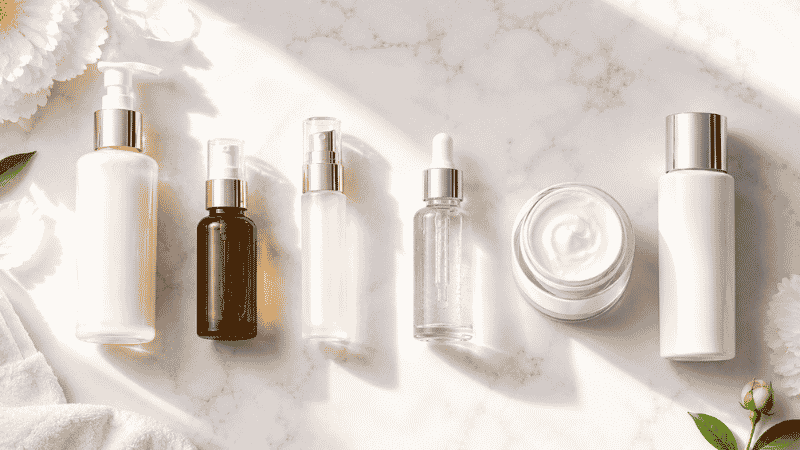
Step 1: Gentle cleanser — or water rinse on mornings after a complete evening routine. The goal is a clean surface without stripping. Fragrance-free, sulphate-free.
Step 2: Vitamin C serum — applied to clean, dry skin. L-ascorbic acid at 10–15% in an airless, opaque packaging. Allow 60–90 seconds to absorb before the next step. This is one of two non-negotiable morning steps for 30s skin: it provides real-time antioxidant protection against UV-induced free radical damage, supports collagen synthesis as an enzymatic cofactor, and contributes to more even skin tone through tyrosinase inhibition. For the complete Vitamin C sequencing guide, see our article on how to use vitamin c serum [→ /how-to-use-vitamin-c-serum/].
Step 3: Peptide serum (optional addition in late 30s) — signal peptides applied after Vitamin C has absorbed provide collagen-stimulating signalling through a pathway complementary to both Vitamin C and retinol. A morning peptide serum adds anti-aging depth to the morning routine without adding UV sensitivity or adjustment requirements.
Step 4: Hyaluronic acid serum — applied to slightly damp skin, sealed immediately with moisturiser. HA draws moisture to the surface; the moisturiser retains it.
Step 5: Ceramide moisturiser — the sealing step. A ceramide-containing SPF-free moisturiser (or in simplified routines, an SPF with built-in ceramide content) provides the barrier lipid support that becomes increasingly important as sebum production declines through the 30s.
Step 6: Broad-spectrum SPF 30+ (mineral preferred) — the final non-negotiable morning step. Applied generously, to the face, neck, and décolletage.
Total morning time: 7–10 minutes. This is the routine that prevents the ongoing UV-induced collagen breakdown that counteracts everything the evening routine achieves.
The Luxury Evening Routine for Your 30s — Step by Step
Step 1: Double cleanse (when SPF and/or makeup were worn). Oil-based cleanser first; gentle water-based cleanser second.
Step 2: Allow skin to fully dry. 20–30 seconds is sufficient. Retinol applied to damp skin penetrates more aggressively, increasing irritation without proportional efficacy benefit.
Step 3: Retinol — the evening’s primary active. Pea-sized amount for the full face. Start at 0.025%, build as tolerance develops. In the early 30s, every third evening. In the late 30s, nightly use at 0.05–0.1% after full adaptation.
Step 4: Ceramide moisturiser — the barrier support layer. Applied after retinol has absorbed (60–90 seconds), this step is essential during the retinol adjustment period and remains important throughout — providing the lipid environment for overnight barrier regeneration.
Step 5: Facial oil (optional, increasingly relevant in late 30s) — squalane or marula as a final occlusive seal, particularly in dry climates or winter months. As sebum production declines in the 30s, the evening oil step adds a layer of lipid support that the skin is producing progressively less of.
On glycolic acid evenings (2× per week, alternating with retinol): After cleansing, apply glycolic acid toner at 5–8% and allow 5–10 minutes before applying hyaluronic acid serum and ceramide moisturiser. Do not use retinol on the same evening.
Where to Invest in Luxury Skincare in Your 30s
The question of where luxury skincare is functionally justified — versus where it is primarily experiential — is particularly relevant in the 30s, when anti-aging investment is beginning but budget management still matters.
Invest here first:
Vitamin C serum. Stability technology and packaging determine whether the L-ascorbic acid in your serum is functional when it reaches your skin. Airless, opaque, nitrogen-purged packaging that keeps VC active throughout the product’s shelf life is a genuine functional advantage. This is the category where a $120 luxury investment may deliver meaningfully more active benefit than a $25 equivalent in clear glass packaging.
Retinol formulation. In the 30s, when the skin is being introduced to retinoids and building tolerance, encapsulation technology — time-release microspheres that deliver retinol gradually rather than all at once — significantly reduces adjustment-phase irritation while maintaining efficacy. This makes the introduction sustainable for sensitive or barrier-conscious skin. The luxury premium here reflects genuine formulation technology, not brand name alone.
SPF. Not because the UV protection is better — zinc oxide and titanium dioxide protect equally regardless of price — but because a luxury texture makes you more likely to apply it generously, consistently, and willingly. A $15 SPF applied begrudgingly in a thin layer provides less protection than a $45 SPF applied generously because you enjoy the texture. Compliance drives outcomes here.
Where the premium is less critical:
Cleanser. Thirty seconds of contact before rinsing. Gentle, pH-appropriate, fragrance-free. The luxury differential is primarily sensory.
Basic hyaluronic acid. Pure HA at appropriate concentration performs equivalently across price points. The luxury case for HA is in multi-weight formulations with supporting actives, not in HA alone.
Ceramide moisturiser. CeraVe’s multi-ceramide formula at a modest price point is a genuinely credible option. The luxury upgrade earns its place when the formulation combines ceramides with additional actives (peptides, niacinamide, encapsulated Vitamin C) — not when it simply charges more for the same ceramide combination.
The Skincare Mistakes Worth Avoiding in Your 30s
Over-complicating the routine. The most effective 30s routine is not the one with the most products — it is the one executed consistently. Five well-chosen products used daily outperform fifteen products used sporadically. Complexity is the enemy of compliance, and compliance is what produces results.
Using the wrong actives for your actual skin state. A 32-year-old with combination skin does not need the same retinol concentration or the same ceramide-heavy moisturiser as a 38-year-old with dry, early-reactive skin. Matching the product to the current skin state rather than the aspirational skin outcome is more effective.
Skipping SPF on “low sun” days. UV radiation in diffuse daylight — through windows, during overcast weather, during brief outdoor time — accumulates. The car commute, the office window, the ten minutes of outdoor lunch — these add to the lifetime UV dose that determines how your skin looks at 45. SPF is most useful when worn on the days you think you don’t need it.
Abandoning retinol during the adjustment phase. The dryness and sensitivity of weeks two to four of retinol introduction is temporary and predictable. Most women who abandon retinol do so during this exact window, concluding that it “doesn’t suit” their skin. The adjustment phase is not a contraindication — it is the expected biological response to accelerated cellular turnover. Managing it with adequate barrier support (ceramide moisturiser) and maintained patience produces the other side: adapted, tolerant skin with compounding anti-aging benefit.
Neglecting the neck and hands. The neck, décolletage, and backs of hands receive the same UV exposure as the face and are consistently excluded from SPF and active product application. The visible age disparity between a well-cared-for face and a neglected neck, visible by the mid-40s, is entirely preventable in the 30s.
FAQ
When should I start anti-aging skincare in my 30s? The optimal window for introducing core anti-aging actives (retinol, Vitamin C, consistent SPF) is 28–35 — before visible structural loss has accumulated significantly. Starting in the early 30s allows the routine to work during the decade when collagen is still relatively intact, producing a cumulative structural advantage that is more efficient than later intervention. That said, starting at 38 is meaningfully better than not starting at all — the skin responds to retinoids at every age.
When to start using retinol exactly? The evidence-based answer: begin retinol in the early-to-mid 30s — specifically when you are ready to commit to a proper introduction protocol (starting at 0.025%, every third evening, building gradually over 3–6 months). Starting earlier produces more preventive benefit; starting well into the late 30s or 40s means working against a larger established deficit. If you are 35 and have not yet started, start now — at a low concentration, with adequate barrier support.
What changes in skin in your 30s that makes new products necessary? Three main changes. First, the collagen matrix is approximately 7–15% thinner than it was at its peak — meaning the structural support that makes skin look firm and plump is beginning to accumulate a deficit. Second, cellular turnover is beginning to slow from the approximately 25-day cycle of your 20s toward the 35–45 day cycle of your 40s, contributing to early surface dullness. Third, sebum production begins declining in the 30s for most women, meaning the barrier that relied partly on natural oil production needs increasing deliberate support.
Do I need an eye cream in my 30s? The periorbital skin (around the eye) is significantly thinner than facial skin and shows early aging signs earlier. A peptide-containing eye cream — rather than your regular facial moisturiser — applied twice daily is appropriate by the mid-30s, particularly for crow’s feet and early under-eye crepiness. The key actives for the eye area at this stage are peptides (better tolerated than retinoids in this sensitive zone) and caffeine (for temporary puffiness reduction and microcirculation support).
Skincare in your 30s on a budget — what to prioritise? In strict priority order: daily SPF (this is where the highest return on any investment occurs — no other product compensates for inconsistent sun protection), a low-concentration retinol (The Ordinary’s options provide functional retinol at an accessible price point), and a basic ceramide moisturiser (CeraVe Moisturising Cream contains the three physiological ceramides at a fraction of luxury pricing). Vitamin C comes fourth — the stability requirements mean that budget options risk providing little functional active, but a mid-range option in appropriate packaging (Paula’s Choice C15) is more accessible than luxury.
Is skincare in your late 30s different from early 30s? Yes — meaningfully. Early 30s (30–34): establish the foundation — consistent SPF, introduce retinol at low concentration, Vitamin C morning routine. Late 30s (35–39): progress retinol concentration as tolerance builds, add chemical exfoliation (glycolic acid 2× per week), consider peptide serum, upgrade moisturiser to a richer ceramide formula, begin extending all products to neck and décolletage.
The Decade That Determines the Next One
The investments made skincare in your 30s are not about looking younger now — the changes are subtle enough that the results of a well-executed routine may not be dramatically visible for years. They are about determining the condition of your skin at 45, 50, and beyond.
The collagen you preserve through consistent SPF cannot be rebuilt later — it can only be progressively lost faster without photoprotection. The retinoid use you begin at 33, building to nightly use at appropriate concentration by 36, accumulates structural benefit that outperforms the same routine started at 43. The habits of barrier support and consistent hydration established in the 30s make the 40s transition — when the biological changes become more significant — less of an intervention and more of an evolution.
For the complete continuation of this guide into the 40s and beyond, see our comprehensive guide to skincare for women over 40 — which covers the specific adjustments that this decade’s foundation makes possible [→ /skincare-for-women-over-40/].
For the collagen science that explains why the timing of your routine matters, our guide to how to stimulate collagen production covers the biological mechanisms in detail [→ /how-to-stimulate-collagen-production/].
References
- Varani, J., et al. (2006). Decreased collagen production in chronologically aged skin. American Journal of Pathology, 168(6), 1861–1868.
- Hughes, M.C.B., et al. (2013). Sunscreen and prevention of skin aging: A randomized trial. Annals of Internal Medicine, 158(11), 781–790.
- Mukherjee, S., et al. (2006). Retinoids in the treatment of skin aging. Clinical Interventions in Aging, 1(4), 327–348.
- Draelos, Z.D. (2000). The latest cosmeceutical approaches for antiaging. Journal of the American Academy of Dermatology, 42(1 Pt 2), S8–13.
- Ganceviciene, R., et al. (2012). Skin anti-aging strategies. Dermato-Endocrinology, 4(3), 308–319.
- Farris, P.K. (2005). Topical vitamin C: A useful agent for treating photoaging and other dermatologic conditions. Dermatologic Surgery, 31(7 Pt 2), 814–818.