
There is a particular pattern that repeats itself with brightening serums. She buys one — a Vitamin C, probably, because that is what everyone recommends — uses it consistently for three weeks, notices perhaps a slight improvement in skin luminosity, and then loses confidence when the dark spot she was targeting hasn’t visibly faded. She stops using it. Six months later, she buys a different one. The cycle continues.
The problem is rarely the product. It is the mismatch between what a brightening serum can do, what it takes to see the specific result being sought, and whether the particular active chosen actually targets the particular type of pigmentation being addressed. A Vitamin C serum is extraordinary for antioxidant protection and general luminosity. It is less efficient than azelaic acid for post-inflammatory marks, and slower than alpha arbutin for existing solar lentigines. Knowing the difference changes what you buy — and more importantly, whether you stay the course long enough to see it work.
This guide is for women over 35 who have moved past the “just buy a brightening serum” stage and want to understand what they are actually choosing between — ingredient by ingredient, mechanism by mechanism, and skin concern by skin concern.
Key Takeaways
- A brightening serum is not a single category — it is any serum containing actives that address one or more of three distinct brightening mechanisms: tyrosinase inhibition (reducing melanin production), melanosome transfer inhibition (preventing melanin from reaching the skin surface), or cellular renewal acceleration (clearing pigmented cells faster).
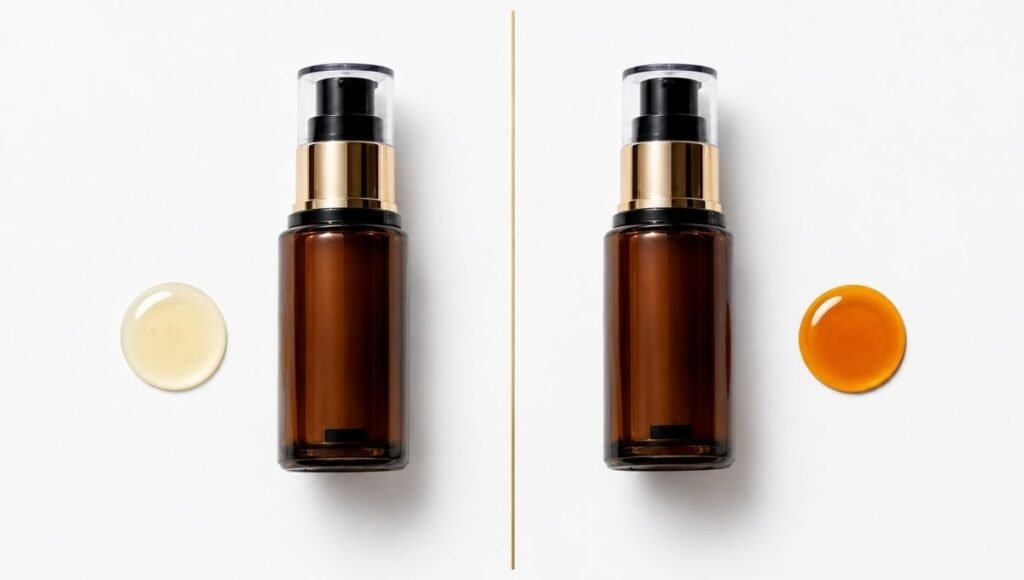
- The most commonly purchased brightening active — Vitamin C (L-ascorbic acid) — is also the most stability-sensitive. A Vitamin C serum that has shifted from pale gold to amber or orange has oxidised and is providing minimal brightening benefit. This single quality issue accounts for a significant proportion of “brightening serum didn’t work” experiences.
- A 2017 comprehensive review published in European Journal of Medicinal Chemistry confirmed that azelaic acid, alpha arbutin, and Vitamin C all inhibit tyrosinase through distinct mechanisms — meaning they are additive rather than competitive when used together. A serum containing two or more of these provides more comprehensive pigmentation inhibition than any single active alone.
- SPF is the most important step in any brightening routine. Brightening actives inhibit melanin production; UV exposure simultaneously triggers new melanin production. Without daily SPF, brightening serums are working against a constantly renewed stimulus. The visible improvement timeline is twice as long without consistent photoprotection.
- For mature skin specifically: the extended cellular turnover cycle (45–60 days versus 28 days in younger skin) means dark spots accumulate at the surface for significantly longer. The minimum evaluation timeline for any brightening serum in mature skin is 10–12 weeks — not the 4–6 weeks that most product descriptions suggest.
How to Brighten Dull Skin — Why Mature Skin Needs a Different Approach
Before selecting a brightening serum, it helps to understand that mature skin presents a different brightening challenge than younger skin — not because it is harder to improve, but because the biology driving the dullness and pigmentation has shifted.
In younger skin, dullness is primarily a surface phenomenon — accumulated dead cells that a single exfoliation addresses readily, and pigmentation that resolves with the natural cellular turnover cycle. The skin is renewing itself efficiently; it just needs occasional assistance.
In mature skin after 40, dullness has additional structural contributors:
The cellular turnover cycle has extended from approximately 28 days to 45–60 days, meaning dull and pigmented surface cells persist significantly longer. The collagen and elastin network that makes skin scatter light evenly has thinned, reducing the underlying structural luminosity that young skin has regardless of surface condition. Oestrogen’s declining regulatory influence on melanocyte activity allows more variable, patchy melanin production in response to UV exposure. And decades of cumulative UV damage have created zones of melanocyte hyperplasia — the concentrated dark spots that respond slowly to even the most evidence-supported actives.
The brightening serum approach for mature skin therefore needs to address multiple simultaneous mechanisms — not just inhibit tyrosinase, but also accelerate cellular renewal, support the structural collagen quality that produces intrinsic luminosity, and provide consistent photoprotection that prevents ongoing UV-triggered melanogenesis.
For the complete biology of mature skin darkening and the three-origin framework that guides active selection, see our article on how to brighten skin [→ /how-to-brighten-skin/].
Skin Radiance After 40 — What Dullness Actually Is
“Dull skin” is a catch-all description for several different visual phenomena — and identifying which you are experiencing changes which brightening serum active is most relevant.
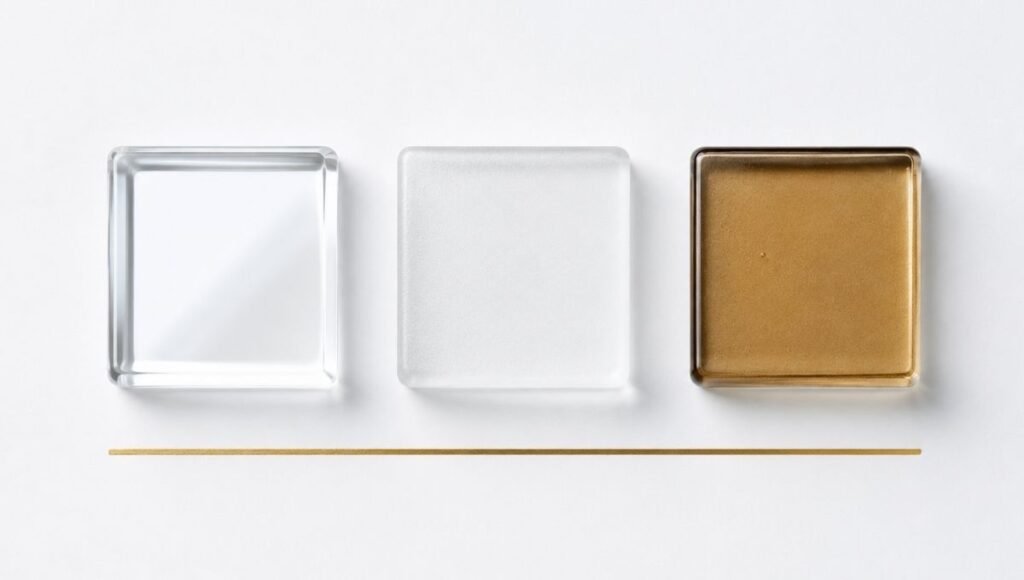
Optical dullness from surface cell accumulation. When older, dehydrated surface cells pile up on a 45–60 day cycle, the skin surface loses its ability to reflect light evenly. This presents as a general flatness or matte quality in all lighting conditions. Foundation sits unevenly. The skin looks tired even when the woman does not. This origin responds quickly to chemical exfoliation — within 2–4 weeks.
Uneven tone from concentrated melanin deposits. Specific dark areas — age spots, sun damage patches, post-spot marks — create contrast against surrounding skin that reads as uneven and less luminous. This responds to tyrosinase inhibitors over 8–12 weeks and cellular renewal accelerators over 12–16 weeks.
Structural dullness from dermal thinning. As collagen density decreases, the dermis loses the light-diffusing quality that made younger skin look luminous from within. No brightening serum addresses this directly — it requires collagen stimulation (retinoids, peptides) over 16–24 weeks. However, a well-hydrated, barrier-supported skin surface reflects light more evenly and creates a significant improvement in perceived luminosity even without dermal structural change.
Skin radiance is the result of all three operating simultaneously — clean surface, even melanin distribution, and healthy dermal architecture. A brightening serum contributes to the first two; a complete routine addresses all three.
Brightening Serum Ingredients — The Evidence-Ranked List
L-Ascorbic Acid (Vitamin C) — Tier 1
Mechanism: competitive tyrosinase inhibition + direct reduction of dopaquinone (interrupting melanin synthesis at two steps) + antioxidant neutralisation of UV-triggered melanogenesis signals.
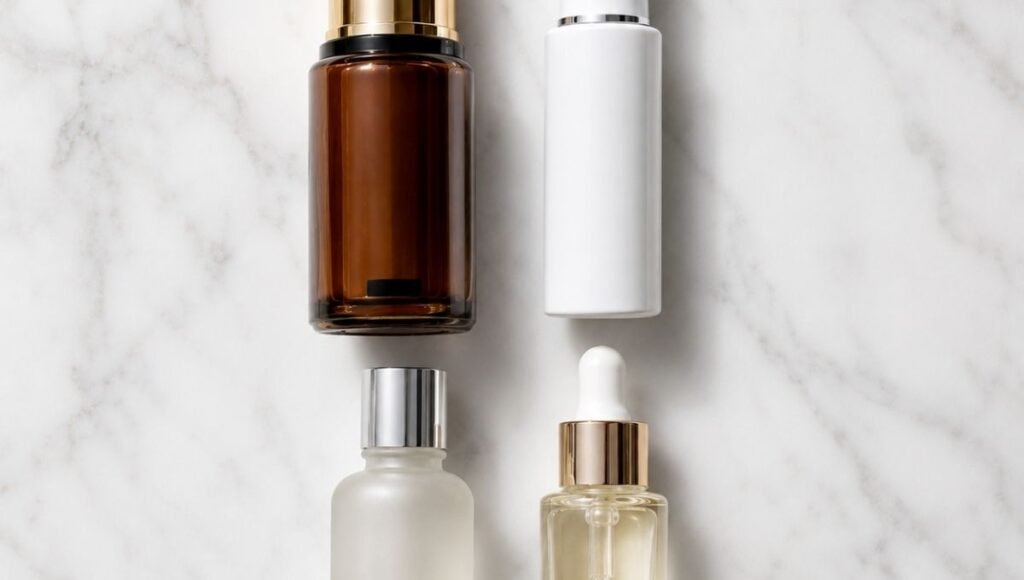
The gold standard brightening active with the most comprehensive evidence base. For mature skin, the single most important formulation criterion is stability: L-ascorbic acid in a low-pH aqueous formulation oxidises rapidly. The product must be in airless, opaque packaging — ideally nitrogen-purged — to remain functional. A Vitamin C serum that has yellowed beyond pale straw gold is providing antioxidant benefit but minimal tyrosinase inhibition.
Application timing: morning only, under SPF. The antioxidant and tyrosinase-inhibiting functions are most needed during UV exposure hours.
Niacinamide (4–5%) — Tier 1
Mechanism: inhibition of melanosome transfer from melanocytes to keratinocytes — a downstream step in the pigmentation pathway that is separate from tyrosinase inhibition. Simultaneously stimulates ceramide synthesis (barrier repair) and reduces pro-inflammatory signalling that activates melanocytes.
For mature skin, niacinamide is uniquely valuable because it addresses brightening through a complementary pathway to Vitamin C while simultaneously providing barrier support that makes every other active in the routine more tolerable. It is also the most universally well-tolerated brightening active — appropriate for sensitive, reactive, and post-menopausal skin that finds high-concentration L-ascorbic acid or AHAs difficult to maintain.
Application timing: morning and evening. Not photosensitising. Combines well with Vitamin C (apply VC first, allow 60–90 seconds, then niacinamide).
For the complete niacinamide mechanism including the clinical evidence for melanosome transfer inhibition, see our dedicated guide to niacinamide skincare [→ /niacinamide-skincare/].
Azelaic Acid (10–20%) — Tier 1
Mechanism: selective tyrosinase inhibition with preferential activity against hyperactive melanocytes in dark spots (leaving normally functioning melanocytes in surrounding skin relatively unaffected) + anti-inflammatory activity that reduces the inflammatory signalling that triggers melanocyte overactivation.
For mature skin with post-inflammatory hyperpigmentation (marks left by blemishes) or uneven tone from mixed causes, azelaic acid is the most precisely targeted brightening active available. Its selectivity means it fades dark spots without creating an overall bleached or uneven lightening effect. It is also anti-inflammatory — directly addressing one of the triggers for pigmentation that other brightening actives do not target.
Application timing: morning or evening, or both. Not photosensitising. Usable under SPF in the morning, alongside ceramide moisturiser in the evening.
Alpha Arbutin (1–2%) — Tier 2
Mechanism: competitive tyrosinase inhibitor derived from bearberry. More stable and significantly better tolerated than hydroquinone, with a comparable mechanism. Effective for both solar lentigines and post-inflammatory pigmentation.
For sensitive mature skin that finds high-concentration L-ascorbic acid irritating, alpha arbutin provides tyrosinase inhibition at a more comfortable pH and without the stability requirements of Vitamin C. Often combined with niacinamide in a single serum for dual-pathway brightening without the formulation complexity of a Vitamin C product.
Tranexamic Acid (2–5%) — Tier 2
Mechanism: blocks plasminogen activator from keratinocytes, reducing the signal that triggers melanocyte-stimulating hormone production. Particularly effective for melasma and UV-induced pigmentation — the type where the melanocyte activation trigger (rather than the melanin synthesis step itself) is the primary driver.
For mature skin with melasma or sun damage as the primary pigmentation concern, tranexamic acid addresses the upstream signal rather than the tyrosinase step — making it complementary to rather than redundant with VC and azelaic acid.
Glycolic Acid (7–10%) — Tier 2 (in brightening serum context)
Mechanism: accelerates the shedding of pigmented surface cells, reducing the residence time of dark spots at the skin surface. Mild secondary tyrosinase-inhibiting activity. Produces the fastest visible brightening improvement of any approach (2–4 weeks) through surface renewal.
For mature skin: used as a separate toner product rather than in a combined brightening serum, to allow pH-appropriate application and separation from niacinamide and retinoids. For the complete glycolic acid guide, see our article on glycolic acid toner [→ /glycolic-acid-toner/].
Glow Serum vs Brightening Serum — What the Labels Mean
The skincare market uses “glow serum” and “brightening serum” interchangeably, but they describe subtly different formulation priorities — a distinction worth understanding before purchasing.
Brightening serum typically implies a primary focus on pigmentation management: reducing dark spots, evening skin tone, and inhibiting melanin overproduction. The active content centres on tyrosinase inhibitors and cellular renewal accelerators. The brightening is structural — it changes the distribution and amount of melanin in the skin over time.
Glow serum typically implies a primary focus on surface luminosity: hydration, light-reflection, and optical skin quality. The active content may include hyaluronic acid, glycerin, Vitamin C (for antioxidant radiance rather than pigmentation treatment), and light-reflecting particles. The “glow” is often more immediate and more surface-level — the skin looks luminous because it is well-hydrated and evenly textured, not because pigmentation has been reduced.
For mature skin with dark spots and uneven tone as primary concerns: a brightening serum with documented tyrosinase-inhibiting actives (VC, azelaic acid, alpha arbutin) is the priority. A glow serum is a complementary step — often layered under or over the brightening serum to support surface hydration and luminosity while the brightening actives do their slower structural work.
Editor’s note: Many of the most beautifully photographed serums marketed as “glow” products contain primarily humectants and light-diffusing mica particles with minimal brightening active content. They make skin look beautiful immediately — which is genuinely valuable — but should not be expected to fade dark spots over a 12-week course. Identifying which you are buying changes your expectations, and appropriate expectations change whether you persist long enough to see results.
How to Fix Dull Skin — The Brightening Serum Failure Diagnosis
This section addresses the question that almost no brightening serum content answers: why is it not working?
Failure mode 1: Oxidised Vitamin C. The most common single cause of brightening serum disappointment. L-ascorbic acid begins oxidising from the moment the product is opened. A serum that has turned from pale yellow-gold to amber, orange, or brown has significantly reduced tyrosinase-inhibiting capacity — the oxidised ascorbic acid is providing some antioxidant benefit but minimal pigmentation treatment. Replace the product if colour has shifted beyond pale gold, regardless of how much remains.
Failure mode 2: Assessment at 4–6 weeks. Surface luminosity improvement from Vitamin C begins at 2–4 weeks. Dark spot fading — the result of tyrosinase inhibition reducing the production of new melanin while cellular turnover clears existing pigmented cells — requires 8–12 weeks minimum in mature skin with its extended cellular cycle. Stopping at 6 weeks because “the dark spots haven’t faded” is stopping before the mechanism has had time to operate.
Failure mode 3: Active without SPF. The brightening serum inhibits tyrosinase. Each UV exposure simultaneously activates keratinocyte-melanocyte signalling that triggers new melanin production. The two processes cancel each other out partially or fully without daily SPF. This is the most common structural failure of brightening routines — the active is working, but the UV input is sustaining the problem at the same rate.
Failure mode 4: Wrong active for the pigmentation type. Melasma (hormonally-influenced, diffuse, symmetrical) responds differently to brightening actives than solar lentigines (sun-induced, well-defined, isolated). VC and AHAs produce faster results on solar lentigines; tranexamic acid and azelaic acid are typically more effective for melasma because they address the upstream hormonal and inflammatory triggers rather than the tyrosinase step alone.
Failure mode 5: Barrier disruption counteracting the actives. If the brightening routine includes multiple actives — high-concentration AHA, Vitamin C, retinol — without adequate barrier support, the resulting irritation and barrier disruption triggers an inflammatory response that activates melanocytes, potentially worsening rather than improving pigmentation. Add ceramide moisturiser to every active step and reduce frequency if persistent irritation occurs.
Brightening Moisturizer — When to Use One Alongside or Instead of a Serum
A brightening moisturiser is not a substitute for a brightening serum in most mature skin routines — but it is a meaningful addition in two specific scenarios.
Scenario 1: Very dry or barrier-compromised mature skin. When the barrier cannot comfortably support a separate brightening serum layer without sensitivity, a brightening moisturiser combining niacinamide (4–5%) with ceramides and humectants achieves both barrier repair and melanosome transfer inhibition in a single step. This is a simplification rather than an upgrade — it trades some brightening potency for better tolerability and routine adherence.
Scenario 2: Maintenance phase after active brightening. Once a primary brightening concern (dark spots, uneven tone) has been substantially addressed through 16+ weeks of active serum use, transitioning to a brightening moisturiser that maintains the result while simplifying the routine is a reasonable strategy — particularly for skin that has achieved its brightening goals and needs maintenance rather than active treatment.
What a brightening moisturiser should contain to be functionally meaningful: niacinamide at 4–5% (the concentration with documented melanosome transfer inhibition), ceramides for barrier support, and ideally a stable Vitamin C derivative or alpha arbutin at effective concentration. Products labelled “brightening moisturiser” with only light-diffusing mica and fragrance do not provide functional pigmentation benefit.
How to Get Glowing Skin — The Complete Routine Architecture
Morning (protection and inhibition): Gentle cleanse → Vitamin C serum (L-ascorbic acid 10–15%, allow 60–90 seconds) → Niacinamide serum (if using separately) → Ceramide moisturiser → SPF 30+ mineral
This morning sequence provides: antioxidant defence against UV-generated free radicals (VC), tyrosinase inhibition throughout UV exposure hours (VC), melanosome transfer inhibition (niacinamide), barrier support (ceramide), and photoprotection (SPF). All five brightening mechanisms operating simultaneously during the peak UV hours.
Evening — AHA nights (2–3 per week): Double cleanse → Glycolic acid toner (7–10%, 5 minutes) → Azelaic acid treatment (if targeting specific dark spots) → Ceramide moisturiser
Evening — retinoid nights (2–3 per week, alternating): Double cleanse → Allow skin to dry → Retinol (accelerates pigmented cell clearance) → Ceramide moisturiser → Squalane if needed
The simplified 5-minute version: Vitamin C serum + SPF (morning) Niacinamide moisturiser (evening)
This paired-down version captures approximately 60% of the routine’s brightening benefit — appropriate for establishing the habit before building the complete protocol. The non-negotiable element in both versions: SPF every morning without exception.
Brightening Skincare — What to Layer and What Not to Mix
Compatible combinations for mature skin:
Vitamin C + niacinamide: Once considered incompatible (an early formulation concern that has been substantially disproved), these two are now understood to be complementary — VC provides tyrosinase inhibition and antioxidant protection, niacinamide provides melanosome transfer inhibition and barrier support. Apply VC first (60–90 seconds), then niacinamide.
Azelaic acid + niacinamide: Highly compatible. Both address pigmentation through different mechanisms and both have anti-inflammatory properties. Can be applied in sequence in the same routine (morning or evening) without concerns.
Alpha arbutin + Vitamin C: Complementary tyrosinase inhibition through different mechanisms. Frequently combined in single-serum formulations for this reason.
Combinations that require care:
Vitamin C + AHA (glycolic acid) in the same session: Possible, but the combined low-pH environment can be irritating for mature skin with a more reactive barrier. Better to use Vitamin C in the morning and glycolic acid in the evening.
High-concentration AHA + retinol on the same evening: The compounded exfoliant load exceeds most mature barriers’ tolerance and counteracts barrier repair. Alternate evenings strictly.
Vitamin C + retinol in the same session: Both are active; morning/evening split is the correct approach — VC morning, retinol evening.
The Luxury Brightening Serum — Where the Premium Is Earned
For brightening serums specifically, the luxury premium translates to functionally meaningful advantages in three specific ways — and one area where it does not.
Where luxury is justified:
Vitamin C stability technology. Airless, nitrogen-purged, opaque packaging that maintains L-ascorbic acid in its reduced (active) form for the full product shelf life. This is the most significant functional difference between a $120 luxury Vitamin C serum and a $25 equivalent in clear glass. The luxury version delivers functional active throughout its lifespan; the budget version may be delivering oxidised, minimally effective ascorbic acid by week three.
Multi-active brightening formulations at clinical concentrations. Luxury brightening serums more consistently combine VC + niacinamide + alpha arbutin at the documented effective concentrations in a single product. Budget alternatives frequently list these ingredients at concentrations below their clinically validated thresholds — present on the label, absent in meaningful quantity.
Fragrance-free formulation for sensitive mature skin. Luxury clinical-positioning brands (SkinCeuticals, Medik8, Paula’s Choice) formulate brightening products without fragrance — removing one of the most common triggers for the inflammatory melanocyte activation that brightening actives are trying to reduce.
Where the premium is less critical:
Niacinamide-only serums. Pure niacinamide at 4–5% in a simple base performs equivalently across price points. This is not a stability-sensitive or formulation-complex ingredient — it does not require luxury packaging to remain effective. Mid-range options from The Ordinary (niacinamide 10% + zinc 1%) provide functional content at a fraction of luxury pricing.
For the complete guide to every brightening active discussed in this article and how they fit into the complete mature skin routine, see our comprehensive guide to skincare ingredients for mature skin [→ /skincare-ingredients-for-mature-skin/].
FAQ
How long does a brightening serum take to work? Surface luminosity improvement — more even light reflection, reduced dullness — becomes visible at 2–4 weeks of consistent use. Dark spot fading requires 8–12 weeks minimum in mature skin, where the extended cellular turnover cycle means pigmented surface cells take longer to be replaced. Structural skin quality improvement from retinoid support (which enhances the brightening serum’s results) accumulates over 16–24 weeks. The most common cause of brightening serum “failure” is assessment at 4–6 weeks before the melanin-inhibiting mechanisms have had adequate time to produce visible change.
What is the best brightening serum for dark spots in mature skin? No single formula is universally best — it depends on the type of dark spot. For solar lentigines (sun spots): Vitamin C serum in stable packaging is the most directly targeted. For post-inflammatory hyperpigmentation (marks from spots): azelaic acid’s anti-inflammatory selectivity makes it particularly effective. For melasma: tranexamic acid addresses the upstream hormonal trigger more directly than tyrosinase inhibitors alone. For general uneven tone with multiple contributors: a serum combining niacinamide + alpha arbutin + stable VC addresses three pathways simultaneously.
Can I use a brightening serum every day? Most brightening serums — those based on niacinamide, alpha arbutin, azelaic acid, or stable Vitamin C derivatives — are appropriate for daily use morning and evening from the outset. High-concentration L-ascorbic acid serums (15–20%) may be better introduced at three mornings per week initially and built to daily as tolerance confirms. AHA-based brightening products (glycolic acid) should be used two to three evenings per week rather than daily in mature skin to avoid compounded barrier disruption.
Is vitamin C or niacinamide better for brightening mature skin? They address different steps in the pigmentation pathway and are most effective used together. Vitamin C is stronger for antioxidant protection and direct tyrosinase inhibition — producing faster visible brightening and radiance. Niacinamide is better tolerated, provides barrier support alongside brightening, and addresses melanosome transfer (a separate mechanism VC does not target). For mature skin where tolerability matters as much as potency, niacinamide is the easier daily foundation; Vitamin C adds the more aggressive tyrosinase inhibition for dark spot targeting.
Why is my brightening serum not working? The five most common reasons: the Vitamin C has oxidised (check colour — should be pale gold, not amber); the assessment timeline is too short (8–12 weeks minimum for dark spot fading in mature skin); SPF is inconsistent or absent (UV exposure counteracts tyrosinase inhibition daily); the active doesn’t match the pigmentation type (VC for solar lentigines, tranexamic acid for melasma); or barrier disruption from too many simultaneous actives is triggering inflammatory melanocyte activation. Addressing these five in sequence before switching products usually resolves most brightening serum underperformance.
The Serum That Matches the Problem
A brightening serum is not a single product category with a single mechanism. It is a formulation vehicle for whichever combination of tyrosinase inhibitors, melanosome transfer inhibitors, and cellular renewal actives best matches the specific pigmentation biology of the person using it.
For mature skin over 40, the combination that addresses the most simultaneous contributors — Vitamin C in stable packaging (morning), niacinamide twice daily, azelaic acid for targeted post-inflammatory marks, and glycolic acid two evenings per week — covers all three origins of mature skin dullness and hyperpigmentation more completely than any single brightening serum at any price point.
The SPF is not a step in the brightening routine. It is the foundation on which every other brightening investment rests.
For the complete guide to how brightening skin works at the biological level — including the three-origin framework and the realistic timelines for each — see our comprehensive article [→ /how-to-brighten-skin/].
For the complete skincare routine that places these brightening actives in their correct morning and evening positions alongside anti-aging, barrier support, and collagen-stimulating ingredients, see our guide to skincare for women over 40 [→ /skincare-for-women-over-40/].
References
- Pillaiyar, T., et al. (2017). An overview of melanogenesis and its multifaceted approach of skin-whitening/brightening agents. European Journal of Medicinal Chemistry, 135, 737–765.
- Marques, C., et al. (2024). Mechanistic insights into the multiple functions of niacinamide. Antioxidants (Basel), 13(4), 425.
- Hughes, M.C.B., et al. (2013). Sunscreen and prevention of skin aging: A randomized trial. Annals of Internal Medicine, 158(11), 781–790.
- Farris, P.K. (2005). Topical vitamin C: A useful agent for treating photoaging and other dermatologic conditions. Dermatologic Surgery, 31(7 Pt 2), 814–818.
- Draelos, Z.D. (2007). Skin lightening preparations and the hydroquinone controversy. Dermatologic Therapy, 20(5), 308–313.
- Ganceviciene, R., et al. (2012). Skin anti-aging strategies. Dermato-Endocrinology, 4(3), 308–319.