
There is a specific morning that most women remember, even if they can’t name the exact date. You’re looking in the mirror, face relaxed, no expression — and you notice that the lines across your forehead are still there. Not faint impressions that fade as you wake up, but actual lines, present and visible, in a face at rest. Until that morning, they were dynamic — they appeared when you raised your eyebrows, then disappeared. Now they don’t fully disappear.
That shift, from dynamic to static, from movement to permanence, is when the conversation about how to reduce forehead wrinkles becomes genuinely urgent. It’s not vanity. It’s the recognition that something structural has changed in the skin, and that the general moisturiser you’ve been using — however expensive and well-formulated — was never designed for what you’re now dealing with.
This guide gives you the precise biological explanation, the skincare ingredients with actual clinical evidence, and an honest account of what topical products can and cannot achieve for wrinkles that have crossed the line from dynamic to static.
Key Takeaways
- Forehead wrinkles begin as dynamic lines — caused by repeated frontalis muscle contraction during facial expression — and become static lines when cumulative collagen loss means the dermis can no longer fully “rebound” between expressions. The two stages require different skincare strategies.
- Retinoids remain the most extensively evidence-backed topical active for addressing static wrinkles: a 48-week study published in the Archives of Dermatology demonstrated measurable improvements in wrinkle depth and epidermal thickness with consistent tretinoin application.
- Glycolic acid, an alpha hydroxy acid, reduces the appearance of fine lines through two mechanisms: surface exfoliation (immediate visible effect) and dermis-level glycosaminoglycan stimulation (longer-term structural improvement). It is one of the few OTC actives with evidence for deeper-than-surface action.
- Topical anti-wrinkle creams cannot eliminate static wrinkles — no topical product can. They can meaningfully improve their appearance, slow their deepening, and in some cases produce visible softening over 12–24 weeks. Managing these expectations is what allows the right products to be appreciated for what they genuinely do.
- For forehead lines specifically — which arise from the frontalis muscle — neurotransmitter-inhibiting peptides such as Argireline (acetyl hexapeptide-3) address a dimension of wrinkle formation that other actives cannot: the dynamic component that feeds static deepening over time.
Fine Lines vs Wrinkles — The Biological Difference That Changes Your Strategy
Before choosing any product or ingredient, it helps to understand that “fine lines” and “wrinkles” are not the same thing — and that the distinction has direct implications for which interventions are likely to help.
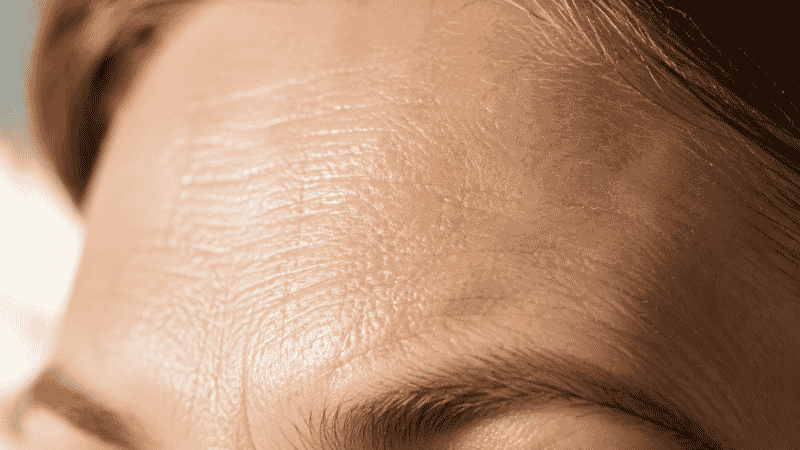
Fine lines are surface-level changes, typically in the range of 1–2mm depth, that result from two main causes: dehydration (the stratum corneum contracting as moisture levels drop) and the very early stages of collagen loss, where the upper dermal layers begin to thin but the deeper dermis remains largely intact. Fine lines respond well to hydration, humectants, and barrier support. They are the most addressable category of visible skin aging, and they can show meaningful improvement quickly — sometimes within days of consistent use of the right moisturiser.
Wrinkles are deeper structural changes — typically 2mm or more — that reflect genuine dermis-level collagen and elastin loss. Unlike fine lines, they are not primarily a surface or hydration issue. Wrinkles require actives that work at the dermal level: retinoids, signal peptides, and acids that penetrate beyond the stratum corneum. They take longer to respond — 12–24 weeks minimum for measurable change — and they cannot be fully reversed by any topical product, regardless of price.
The practical implication: if you’ve been applying an excellent hydrating serum for three months and expecting your forehead lines to disappear, the mismatch is between the product’s mechanism and the problem’s depth — not between your skin and the ingredient.
What Causes Forehead Wrinkles — Dynamic Origins, Static Consequences
Forehead wrinkles have a specific anatomical origin that distinguishes them from wrinkles in other areas of the face. They arise primarily from the frontalis muscle — the broad, flat muscle that runs across the forehead and is responsible for the eyebrow-raising expression. Every time you raise your brows — in surprise, concentration, conversation, or reaction — the frontalis contracts, creating the characteristic horizontal creases across the forehead.
In younger skin with adequate collagen and elastin density, these creases form and then fully resolve when the muscle relaxes. In skin with progressive collagen loss, the dermis loses its ability to fully rebound between contractions. The creases become shallower but visible at rest — dynamic wrinkles. With continued collagen decline and decades of accumulated muscle movement, they deepen into static lines that remain whether or not the muscle is contracting.
This is why forehead wrinkles have two components that need to be addressed separately:
The structural component — the thinning and disorganisation of the collagen matrix that prevents full rebound — is what retinoids, peptides, and acids address.
The dynamic component — the ongoing muscle movement that deepens static lines over time — is what neurotransmitter-inhibiting peptides (and professionally, Botox) address. No amount of collagen stimulation fully compensates for continued daily frontalis activation. Managing both components is more effective than addressing only one.
UV exposure compounds both: it activates MMPs that break down collagen, and it reduces skin’s resilience to the mechanical stress of repeated muscle movement. This is why the forehead — an area with significant sun exposure and high expression activity — tends to show earlier and deeper wrinkle formation than similarly exposed but less expressive areas.
Skincare Ingredients for Wrinkles — Ranked by Clinical Evidence
This is where most anti-wrinkle content provides an undifferentiated list. Beaudore’s approach is different: every ingredient below is ranked by the quality and consistency of its clinical evidence, with specific notes on what it can and cannot achieve for forehead wrinkles.
Retinoids — Structural Repair at the Dermal Level
The evidence base for retinoids in wrinkle reduction is the most robust of any topical skincare ingredient. Retinoids — encompassing prescription tretinoin, retinaldehyde, and OTC retinol — stimulate collagen synthesis through fibroblast activation, accelerate cellular turnover to remove the oldest, most wrinkled surface cells, and partially inhibit MMP activity to slow ongoing collagen breakdown.
A study published in the Archives of Dermatology demonstrated that 48 weeks of consistent tretinoin application produced statistically significant improvements in wrinkle depth, skin thickness, and surface texture. OTC retinol produces comparable results on a longer timeline — typically 16–24 weeks for measurable change.
For forehead wrinkles specifically, retinoids address the structural collagen deficit that converts dynamic lines to static ones. They do not address the frontalis muscle activity that continues to deepen those lines — which is why the combination of a retinoid and a neurotransmitter-inhibiting peptide is more effective than either alone for this specific area.
Start at 0.025–0.05% retinol every third night. For a detailed protocol on tolerance-building and timeline expectations, see our complete guide [→ /how-long-does-retinol-take-to-work/].
Glycolic Acid for Wrinkles — Chemical Exfoliation That Reaches Deeper
Glycolic acid — the smallest-molecule alpha hydroxy acid, derived from sugarcane — reduces wrinkle appearance through two distinct mechanisms that most content conflates into one.
The first is surface exfoliation: by loosening the bonds between dead corneocytes, glycolic acid accelerates their removal, revealing the fresher, smoother cells beneath. This produces immediate visible improvement in fine line appearance and skin luminosity. At concentrations of 5–10% (typical in OTC serums and toners), this is the predominant effect.
The second mechanism is less commonly explained but more significant for deeper wrinkles: glycolic acid at higher concentrations penetrates the epidermis to stimulate glycosaminoglycan production in the dermis — the structural molecules (including hyaluronic acid) that form the matrix supporting collagen fibres. Published research in the Journal of Dermatological Treatment has documented dermis-level changes from consistent glycolic acid use, not just surface improvements.
For forehead wrinkles, glycolic acid at 8–12% (OTC range) used two to three times per week in the evening provides meaningful exfoliation and surface improvement. For deeper structural benefit, a professional glycolic peel at higher concentrations (20–70%, applied by a skincare professional) can produce more significant dermis-level change. The OTC and professional versions are different interventions — not different concentrations of the same thing.
Layering note: Glycolic acid and retinol should not be used on the same evening — the combination creates compounded exfoliant load that most mature skin cannot tolerate without inflammation. Alternate: glycolic acid two to three evenings per week, retinol on the remaining evenings.
Antioxidants for Skin Aging — Prevention That Functions as Treatment
Antioxidants — particularly Vitamin C (L-ascorbic acid), Vitamin E (tocopherol), and resveratrol — address wrinkle formation through the oxidative stress pathway rather than the structural repair pathway. They neutralise the free radicals generated by UV exposure and environmental pollution that activate MMPs and trigger collagen breakdown.
This makes them prevention actives that function as treatment: by reducing the ongoing oxidative damage that accelerates wrinkle deepening, they allow the structural repair actives (retinoids, peptides) to work against a lower rate of ongoing degradation. Used in combination, the effect is genuinely additive rather than redundant.
For forehead wrinkles specifically, consistent morning Vitamin C application — at 10–20% L-ascorbic acid in a stable formulation — provides daily antioxidant protection against the UV-induced MMP activation that continues to deepen existing lines. It also supports collagen synthesis as a cofactor in the enzymatic process that creates new collagen fibres.
The formulation caveat that matters for forehead wrinkle treatment: L-ascorbic acid in clear packaging oxidises rapidly. An oxidised Vitamin C serum provides no antioxidant protection — it is essentially coloured water. The investment in a luxury Vitamin C formula with airless, opaque packaging is not aesthetic; it is functional.
Bakuchiol for Wrinkles — The Gentler Alternative With Growing Evidence
Bakuchiol — a plant-derived compound from the Psoralea corylifolia plant — has emerged as the most credible retinol alternative for those who cannot tolerate retinoids, and its evidence for wrinkle reduction is more robust than for most OTC alternatives.
A randomised, double-blind clinical trial published in the British Journal of Dermatology (2019) found that 0.5% bakuchiol applied twice daily produced comparable improvements in fine lines, skin firmness, and pigmentation to 0.5% retinol, with significantly less dryness, scaling, and stinging. It activates many of the same gene expression pathways as retinoids — including collagen synthesis genes — without sharing retinol’s chemical structure or its photosensitivity, making it suitable for morning use.
For forehead wrinkles in mature skin that has found retinol too irritating — particularly post-menopausal skin or skin with a compromised barrier — bakuchiol provides a meaningful collagen-stimulating alternative. At 0.5% concentration (the level used in clinical studies), twice-daily application over 12 weeks represents a realistic timeline for visible improvement.
Do Anti-Wrinkle Creams Work — Honest Expectations vs Marketing Claims
This is the question that sits beneath most searches on this topic, and it deserves a direct, unambiguous answer.
Topical anti-wrinkle products can:
- Meaningfully improve the appearance of fine lines through hydration and surface cell renewal
- Slow the deepening of existing static wrinkles through collagen stimulation and MMP inhibition
- Produce measurable improvements in skin texture, firmness, and wrinkle depth over 12–24 weeks of consistent use with the right actives
- Prevent new wrinkle formation by reducing ongoing UV-induced and oxidative collagen breakdown
Topical anti-wrinkle products cannot:
- Eliminate deep, established static wrinkles — these require collagen that was lost over years and cannot be fully replaced topically
- Replicate the immediate smoothing effect of neurotoxin injections — topical neurotransmitter-inhibiting peptides (Argireline) produce subtle, cumulative change, not the dramatic muscle-relaxing result of professional treatment
- Reverse decades of photodamage in weeks — the timeline is biological, and it is measured in months, not days
Editor’s note: The anti-wrinkle cream category is the most marketing-inflated segment in skincare. Products that claim visible results in seven days are measuring surface hydration, not structural change. Products that claim to “eliminate” wrinkles are describing neither what the product does nor what any topical product can do. Beaudore’s position is consistent across all content: honest expectations, supported by evidence, for products that genuinely earn their place.
How to Reduce Eye Wrinkles — A Different Problem, A Different Approach
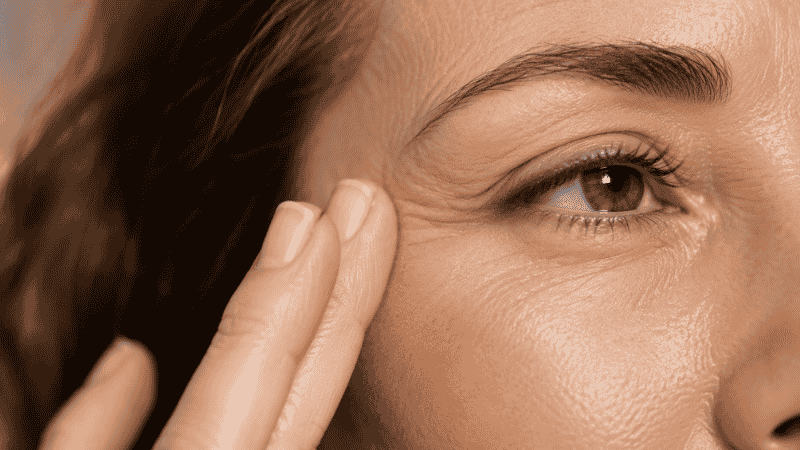
Eye wrinkles — the fine lines at the outer corners (crow’s feet) and under the eyes — share some causes with forehead wrinkles but have important distinctions that make them a separate strategic problem.
The skin around the eye is significantly thinner than forehead skin — approximately 0.5mm compared to approximately 2mm on the forehead. This means it ages more quickly, shows collagen loss earlier, and is more reactive to active ingredients. The muscle responsible for crow’s feet (orbicularis oculi) moves differently from the frontalis — it contracts in a circular pattern around the entire eye, which is why crow’s feet radiate outward from the outer corner rather than running horizontally.
What works for eye wrinkles:
Caffeine — well-documented for reducing puffiness and temporarily improving microcirculation under the eye. This is a cosmetic effect (temporary improvement in appearance), not structural treatment, but it is a genuine and reproducible one.
Peptides — particularly copper peptides (GHK-Cu) and signal peptides in the eye area. The thin periorbital skin responds to peptide-mediated collagen stimulation, and peptides are significantly better tolerated in this sensitive zone than retinoids.
Low-concentration retinol — applied carefully to the orbital bone area (not the eyelid itself), using a rice-grain amount rather than a pea-sized amount. Allow the retinol to absorb before applying any further product. Eye-specific retinol formulations at 0.025–0.03% are available and appropriate for this area.
SPF around the eye area — UV exposure around the eyes is significant (the periorbital area receives as much sun as the rest of the face), but most people either skip SPF here or squint when applying it. Oversized sunglasses reduce UV exposure to the eye area meaningfully — both protecting the delicate skin and reducing the squinting that contributes to crow’s feet.
What to avoid around the eye: Heavy occlusives and rich creams in this area can cause milia — small white cysts that form when trapped keratin has nowhere to go under the skin. If you develop persistent milia around the eyes, this is the most common culprit.
For a complete breakdown of how peptides support the eye area specifically, our guide to what peptides do for skin covers the copper peptide and signal peptide evidence in detail [→ /what-do-peptides-do-for-skin/].
How to Reduce Forehead Wrinkles Specifically — Dynamic Lines First
Given that forehead wrinkles arise from frontalis muscle activity compounding collagen loss, the most effective topical approach addresses both simultaneously.
The evening protocol targeting forehead wrinkles:
After full-face retinol application has absorbed, consider applying a separate neurotransmitter-inhibiting peptide serum or eye cream (containing Argireline at meaningful concentration — 5–10%) specifically to the forehead. Allow this to absorb before applying moisturiser over it. The rationale: Argireline reduces the amplitude of frontalis muscle contraction, which reduces the mechanical stress that deepens existing lines between sessions of collagen-stimulating actives.
This targeted approach — structural repair (retinoid) + dynamic line management (Argireline) — addresses forehead wrinkles more comprehensively than any single active could. It is also why many of the most sophisticated luxury anti-aging serums for this area combine both peptide types in a single formulation.
Facial positioning during sleep: Consistent side-sleeping creates compression against the pillow on the same areas, contributing to facial crease development over years. Sleeping on your back — or using a silk pillowcase that reduces friction and compression — is a genuinely evidence-supported habit for reducing mechanical wrinkle formation during the 7–9 hours of nightly contact.
How to Get Rid of Fine Lines When Your Routine Isn’t Working
Before concluding that the products aren’t working, audit these variables:
Is the timeline realistic? Surface fine lines improve within 4–8 weeks of consistent use of appropriate actives. Deeper static wrinkles require 12–16 weeks minimum for retinoids to show meaningful change, and 24 weeks for the fuller effect. If you assessed at six weeks, you assessed too early.
Is the retinoid concentration sufficient? OTC retinol at 0.025% every third night is a starting dose, not a maintenance dose. After three to four months of consistent use without irritation, increasing to 0.05–0.1% produces more significant structural change. Many women plateau at their initial concentration and conclude retinol isn’t working when the issue is simply that the dose needs to progress.
Is UV protection consistent? Retinoids stimulate collagen synthesis; UV exposure activates the MMPs that break it down. These two processes run simultaneously. If your morning SPF application is inconsistent or inadequate, you may be neutralising a significant portion of the structural repair your evening routine is attempting. Daily SPF is not optional alongside active anti-aging treatment.
Are you over-exfoliating? Glycolic acid, retinol, and certain Vitamin C formulations are all exfoliant-adjacent in their mechanisms. Using all three aggressively and simultaneously frequently results in a compromised barrier that looks worse rather than better — reactive, tight, and prone to sensitivity. If this is your situation, strip back to retinol alone for four to six weeks, allow the barrier to recover, and reintroduce glycolic acid at lower frequency.
How to Reduce Wrinkles Naturally — The Lifestyle Factors That Multiply Results
No topical routine operates in isolation. The following lifestyle factors directly and measurably affect the rate of wrinkle formation and the skin’s capacity to respond to active ingredients.
Daily SPF — the single most impactful intervention. UV exposure is responsible for the majority of visible facial aging, including the ongoing deepening of forehead wrinkles. A randomised trial in Annals of Internal Medicine documented that consistent daily sunscreen use produced measurably less photoaging progression over four and a half years. No topical active can compensate for ongoing UV-induced MMP activation. SPF is not the last step in a luxury routine — it is the step that makes every other step more effective.
Sleep duration and quality. Growth hormone release — which supports cellular regeneration and collagen synthesis — peaks during deep sleep. Consistently poor sleep does not merely make you look tired; it measurably impairs the skin’s repair capacity, reducing the efficacy of the retinoids and peptides you apply in the evening. Aiming for 7–9 hours in a dark, cool environment is not wellness advice — it is skincare pharmacology.
Dietary protein adequacy. Collagen is a protein. Its synthesis requires adequate amino acid substrate — glycine, proline, and hydroxyproline in particular. A diet consistently low in protein limits collagen synthesis regardless of how effectively topical actives are stimulating fibroblasts. This is not about supplements; it is about consistent dietary adequacy.
Hydration. Chronically dehydrated skin has measurably reduced elasticity and turgor, making fine lines more visible and reducing the skin’s capacity to rebound from daily mechanical stress. The relationship between systemic hydration and skin appearance is modest but real.
When Topical Skincare Has Reached Its Limit
A well-constructed topical routine — retinoid, Vitamin C, glycolic acid, SPF, neurotransmitter-inhibiting peptide — produces genuine, measurable improvements in the appearance of forehead wrinkles over 12–24 months. It cannot produce what professional treatments can.
Consider a dermatologist or aesthetic medicine consultation if:
Botulinum toxin for dynamic lines. If forehead wrinkles are predominantly dynamic — most visible during expression, substantially less visible at rest — neurotoxin treatment addresses the root mechanism (frontalis contraction) in a way no topical product can. It does not prevent wrinkles from forming as skin ages; it prevents the daily mechanical deepening of existing lines during expression. For many women in their 40s and 50s, this is the most effective single intervention for forehead wrinkle appearance.
Dermal fillers. For deep static lines that represent genuine volume loss in the dermis, injectable hyaluronic acid filler addresses the structural deficit directly. Unlike topical products, which work at the cellular level over months, fillers produce immediate volumetric correction.
Laser resurfacing or RF microneedling. For significant textural irregularity alongside deep wrinkles, energy-based treatments that induce collagen remodelling from within can produce structural improvements beyond what topical actives achieve. These require recovery time and professional assessment.
The decision to pursue professional treatment alongside (not instead of) a well-designed topical routine represents the most comprehensive approach to forehead wrinkles for those whose primary concern has moved beyond what skincare alone can address.
FAQ
At what age do forehead wrinkles typically start? Faint dynamic forehead lines — visible only during expression — can begin in the late 20s, particularly with high expression activity or significant sun exposure. They typically become visible at rest (transitioning from dynamic to static) in the mid-to-late 30s, with the rate varying considerably based on genetics, UV history, and skincare habits. Women who have maintained consistent daily SPF from their 20s often show significantly later onset of static forehead lines compared to those who have not.
Can you reverse forehead wrinkles with skincare, or only prevent them from getting worse? Both, to different degrees. Consistent retinoid use over 12–24 months produces genuine structural improvement — increased collagen density, improved dermal organisation — that represents real reversal, not merely surface-level improvement. The magnitude of reversal is more modest than the magnitude of prevention, which is the consistent finding across dermatological research. Lines that are six months old respond better than lines that are six years old. Starting a targeted routine as soon as lines become visible produces better outcomes than waiting until they are deeply established.
How does glycolic acid for wrinkles compare to retinol? They work through different mechanisms and are most effective in combination. Retinol addresses structural collagen synthesis and cellular renewal from the dermal level; glycolic acid addresses surface cell turnover and has some dermis-level glycosaminoglycan effects. Glycolic acid produces more immediate visible improvement (surface smoothing appears in days to weeks); retinol produces more significant structural change over months. Using them alternately — glycolic acid two to three evenings per week, retinol on the remaining evenings — captures both mechanisms without compounding irritation risk.
Do antioxidants for skin aging actually help with wrinkles, or just prevent them? Both. Antioxidants reduce the ongoing oxidative damage that accelerates wrinkle deepening — this is a treatment function, not just prevention. By reducing daily MMP activation through free radical neutralisation, a consistent morning Vitamin C serum allows the structural repair work of evening retinoids to operate against a lower rate of ongoing degradation. The combination of antioxidant (morning) and retinoid (evening) is more effective than either alone, which is why it appears in virtually every evidence-based anti-aging routine recommendation.
Is bakuchiol for wrinkles as effective as retinol? The 2019 British Journal of Dermatology trial showed comparable improvement in fine lines and firmness at equivalent concentrations over 12 weeks, with significantly less irritation. The caveat: this is a single trial (retinol has decades of research), and the concentrations used (0.5% of both) are meaningful — many bakuchiol products on the market contain significantly less than 0.5%. If you’re choosing bakuchiol because of retinol intolerance, confirm the product contains at least 0.5% bakuchiol and apply twice daily for the protocol used in the clinical study.
How to reduce eye wrinkles when retinol is too irritating for that area? Begin with a dedicated peptide eye cream containing copper peptides (GHK-Cu) and a signal peptide such as Matrixyl — applied twice daily, consistently, over 12 weeks. These address collagen stimulation through a mechanism that is significantly better tolerated around the eyes than retinoids. Once the skin has adapted, you can consider introducing a very low-concentration retinol eye formulation (0.025–0.03%) every third night. The key is beginning with peptides rather than reaching immediately for retinol in an area that frequently cannot tolerate it at typical facial concentrations.
The Wrinkle in the Strategy
Every element of this guide eventually returns to the same foundational principle: addressing how to reduce forehead wrinkles effectively requires understanding that they have both a structural origin (collagen loss that converts dynamic lines to static ones) and a dynamic origin (ongoing frontalis muscle activity that continues to deepen existing lines). A routine that addresses only one of these two drivers is a partial solution.
The structural side — retinoids, glycolic acid, signal peptides, antioxidants, SPF — forms the core of any evidence-based anti-aging routine, and is covered comprehensively in our guide to the full skincare routine for aging skin [→ /skincare-routine-for-aging-skin/].
The collagen science that explains why wrinkle depth is primarily a dermal structure issue, and how topical actives address it at the biological level, is in our guide to how to stimulate collagen production [→ /how-to-stimulate-collagen-production/].
The specific retinoid protocol — concentration, frequency, tolerance-building, and timeline expectations — that makes structural wrinkle improvement achievable is in our guide on how long retinol takes to work [→ /how-long-does-retinol-take-to-work/].
Forehead wrinkles are not a failure of the skin. They are the accumulated record of expression, exposure, and time. What skincare can do — with the right actives, at the right concentrations, applied consistently over a realistic timeline — is change what happens next.
References
- Kafi, R., et al. (2007). Improvement of naturally aged skin with vitamin A (retinol). Archives of Dermatology, 143(5), 606–612.
- Chaudhuri, R.K., & Bojanowski, K. (2014). Bakuchiol: a retinol-like functional compound. British Journal of Dermatology, 180(2), 289–296.
- Mukherjee, S., et al. (2006). Retinoids in the treatment of skin aging. Clinical Interventions in Aging, 1(4), 327–348.
- Bernstein, E.F., et al. (2001). Glycolic acid treatment increases type I collagen mRNA and hyaluronic acid content of human skin. Dermatologic Surgery, 27(5), 429–433.
- Hughes, M.C.B., et al. (2013). Sunscreen and prevention of skin aging: A randomized trial. Annals of Internal Medicine, 158(11), 781–790.
- Ganceviciene, R., et al. (2012). Skin anti-aging strategies. Dermato-Endocrinology, 4(3), 308–319.
- Wang, Y., et al. (2013). The anti-wrinkle efficacy of argireline. American Journal of Clinical Dermatology, 14(2), 147–153.