
It is usually not one dark spot that prompts the search. It is a collection of small changes that accumulate quietly — a patch that appeared after a holiday, a mark that lingered long after a spot healed, a general unevenness in skin tone that wasn’t there in your 30s. None of them dramatic on their own. Together, they produce a skin that looks less luminous, less uniform, less like the skin you remember having.
The market responds to this concern with enthusiasm and frequency — brightening serum, radiance booster, luminosity complex, glow activator. The packaging is beautiful. The claims are spectacular. And the results, for many women, are modest and slow at best, absent at worst.
The reason most brightening routines underperform is not the quality of the products. It is the absence of a clear understanding of which type of skin darkening is being addressed, which active targets which mechanism, and what a realistic timeline looks like for each. How to brighten skin after 40 is a solvable problem — but it requires understanding the biology before it responds to the solution.
Key Takeaways
- Mature skin darkening operates through three distinct mechanisms that require different interventions: surface cell accumulation (addressed by chemical exfoliation), active melanin overproduction (addressed by tyrosinase inhibitors), and post-inflammatory pigmentation that resolves more slowly in older skin due to extended cellular turnover. Most routines address only one of these.
- SPF is the most important step in any brightening routine — not because it brightens directly, but because UV exposure is the primary trigger for melanin synthesis. Every unprotected UV exposure partially undoes the melanin inhibition that brightening actives are trying to achieve.
- A 2017 comprehensive review of tyrosinase inhibitors published in European Journal of Medicinal Chemistry confirmed that Vitamin C (L-ascorbic acid), azelaic acid, and kojic acid all inhibit tyrosinase through direct copper chelation or competitive inhibition — the enzyme mechanism responsible for melanin production. These are not cosmetic claims; they are documented biochemical interactions.
- The timeline for brightening in mature skin is longer than in younger skin. Surface brightening (improved luminosity from exfoliation) is visible within 2–4 weeks. Meaningful dark spot fading requires 8–12 weeks of consistent tyrosinase inhibitor use. Structural skin quality improvement (improved light scattering) from retinoids accumulates over 16–24 weeks.
- Azelaic acid is the most underrated brightening active for mature skin — it inhibits tyrosinase, reduces post-inflammatory hyperpigmentation, addresses the low-grade inflammation that drives melanocyte overactivity in aged skin, and is one of the best-tolerated brightening ingredients available. Its absence from most brightening discussions represents a genuine content gap.
Why Skin Becomes Darker and More Uneven After 40 — The Biology
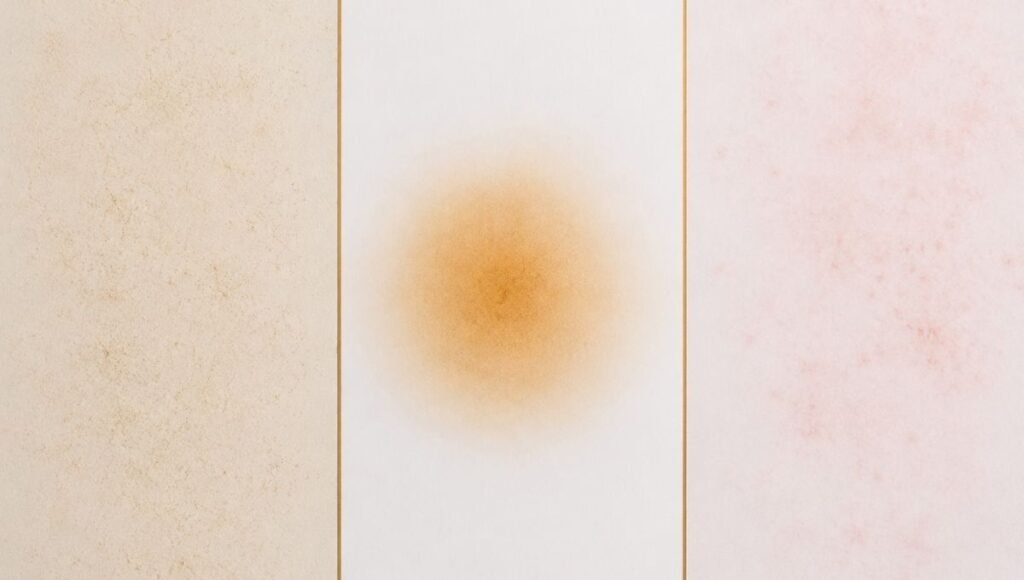
Understanding what is actually happening in mature skin changes everything about what products to prioritise and what timeline to expect.
Origin 1: Surface cell accumulation and optical dullness
As cellular turnover extends from 28 days in the 20s to 45–60 days by the mid-40s, older, more dehydrated surface cells accumulate at the skin’s surface for longer. These cells scatter light less uniformly than freshly generated cells — producing the flat, matte quality that reads as dullness rather than any specific pigmentation change. This origin responds most quickly to intervention: consistent AHA exfoliation produces visible improvement within 2–4 weeks.
Origin 2: Active melanin overproduction
Melanocytes — the cells responsible for melanin production — become more active and less uniformly distributed with cumulative UV exposure and hormonal changes. Each UV exposure event triggers a signal cascade in keratinocytes (surface skin cells) that activates melanocyte-stimulating hormone, which in turn activates tyrosinase — the enzyme that catalyses the production of melanin. Over decades, this cumulative activation creates areas of higher melanocyte density (age spots, sun spots) and generalised uneven melanin distribution.
After menopause, declining oestrogen removes a regulatory influence over melanocyte activity — which is why hyperpigmentation often accelerates in the early post-menopausal years. Oestrogen normally modulates melanocyte-stimulating hormone activity; its absence allows more variable melanocyte response to UV stimulation.
Origin 3: Post-inflammatory pigmentation that resolves slowly
Every minor skin event — a spot, a redness, a minor wound — triggers an inflammatory response that activates melanocytes as part of the skin’s protective mechanism. In younger skin, this post-inflammatory hyperpigmentation (PIH) resolves relatively quickly as the cellular turnover cycle replaces the pigmented cells with unpigmented ones. In mature skin, with a 45–60 day cellular cycle, these marks persist significantly longer — producing the “my spots leave marks that last for months” experience that many women over 40 describe.
Editor’s note: Understanding these three origins changes product selection completely. If your primary concern is dullness (Origin 1), AHA exfoliation is the highest-return investment. If your primary concern is specific dark spots or sun damage (Origin 2), tyrosinase inhibitors (Vitamin C, azelaic acid, alpha arbutin) are the priority. If your primary concern is marks that linger after spots resolve (Origin 3), the combination of accelerating cellular turnover (retinoids, AHAs) and inhibiting the inflammatory melanocyte activation (niacinamide, azelaic acid) is the targeted approach.
Dark Spot Serum — What the Ingredients Actually Do
The dark spot serum category is enormous and highly variable in terms of actual functional content. A meaningful evaluation requires understanding what each active does mechanically, not just what the label claims.
The tyrosinase inhibition pathway is the most important biochemical mechanism in dark spot treatment — and most consumers have never heard it explained. Tyrosinase is the copper-containing enzyme that catalyses the first and rate-limiting step in melanin synthesis: the conversion of L-tyrosine to L-DOPA, and subsequently to dopaquinone, which polymerises into melanin. Ingredients that inhibit tyrosinase — either by competing with its substrate (competitive inhibitors) or by chelating its copper cofactor (copper chelators) — reduce the rate of melanin production at the source.
A 2017 comprehensive review published in the European Journal of Medicinal Chemistry identified the most evidence-supported tyrosinase inhibitors in cosmetic formulation:
Vitamin C (L-ascorbic acid) — competitive tyrosinase inhibition plus direct reduction of dopaquinone back to DOPA (preventing melanin polymerisation). This dual mechanism makes it one of the most functionally comprehensive brightening actives. Its antioxidant properties also reduce the UV-induced oxidative stress that triggers melanocyte-stimulating hormone activity.
Azelaic acid (10–20%) — direct tyrosinase inhibition with selectivity for hyperactive melanocytes, meaning it preferentially targets the overactive melanocytes in dark spots rather than uniformly reducing pigmentation in normal skin. This selectivity makes it the most appropriate brightening active for mature skin where some pigmentation normalisation is wanted without an overall bleaching effect.
Alpha arbutin (1–2%) — competitive tyrosinase inhibition derived from bearberry, with a better stability and tolerability profile than hydroquinone and appropriate for long-term daily use.
Kojic acid (1–4%) — copper chelation mechanism that reduces tyrosinase’s catalytic activity by removing its metal cofactor. Effective but can cause sensitisation in some skin types with extended use.
What a functional dark spot serum does not need: Whitening claims, brightening complexes without named actives, or high concentrations of fragrance that trigger the inflammatory response that activates melanocytes.
Vitamin C for Hyperpigmentation — The Morning Non-Negotiable
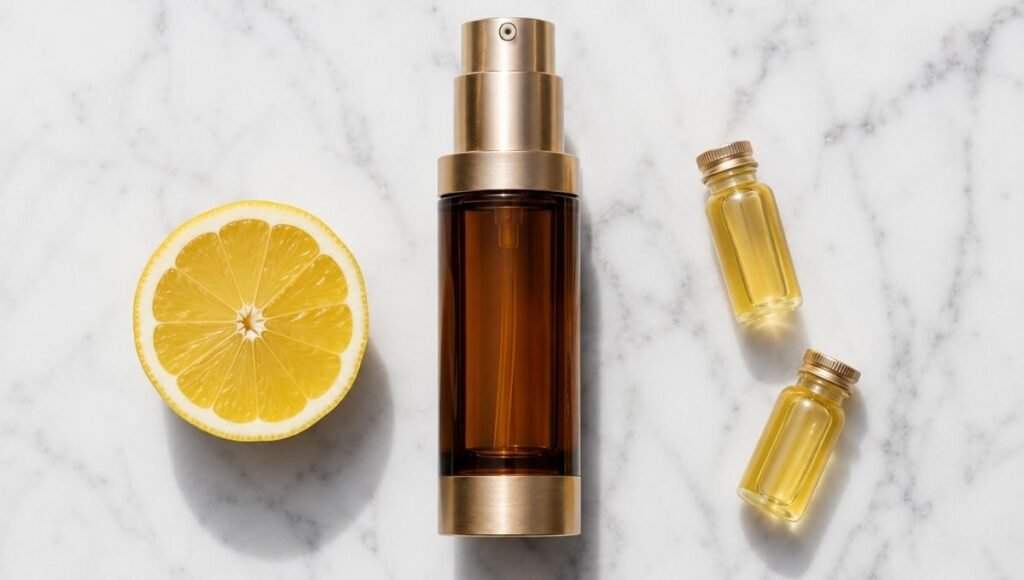
Vitamin C’s role in brightening is often discussed but rarely explained with the precision that makes the application logic clear. There are three distinct mechanisms at work:
Tyrosinase inhibition — as described above, L-ascorbic acid directly competes with L-tyrosine for tyrosinase binding and reduces dopaquinone back to DOPA, interrupting the melanin synthesis pathway at two points simultaneously.
UV-induced melanogenesis prevention — UV exposure triggers keratinocytes to release melanocyte-stimulating hormone, which activates melanocytes. Vitamin C’s antioxidant neutralisation of UV-generated free radicals reduces this upstream signal, meaning less melanocyte activation even when UV exposure occurs. This is why morning application under SPF is the correct timing: the Vitamin C and SPF together prevent the UV signal that would otherwise trigger melanin production throughout the day.
Existing melanin reduction — L-ascorbic acid can partially reduce existing melanin (oxidised quinones back to their precursors), contributing to the gradual lightening of existing dark spots over 8–12 weeks of consistent use.
The formulation requirement: L-ascorbic acid must be in a stable, low-pH formulation (approximately pH 2.5–3.5) in airless, opaque packaging to remain functional at the point of application. A Vitamin C serum that has yellowed or turned orange beyond pale gold has oxidised and is providing minimal brightening benefit.
For the complete Vitamin C application protocol — including how to layer it with other morning actives and which derivative to choose for sensitive skin — see our dedicated guide to how to use vitamin c serum [→ /how-to-use-vitamin-c-serum/].
Retinol for Dark Spots — The Cellular Renewal Approach
Retinol addresses hyperpigmentation through a mechanism completely different from tyrosinase inhibitors — and the two approaches are additive rather than redundant when used in the same routine.
Retinoids accelerate cellular turnover, which means that the pigmented keratinocytes in a dark spot are shed and replaced more quickly than natural turnover would achieve. This is particularly valuable in mature skin, where the extended 45–60 day turnover cycle means dark spots persist at the surface for significantly longer than they would in younger skin.
The practical effect: consistent retinoid use at an effective concentration reduces the residence time of pigmented surface cells — making existing dark spots fade faster and preventing newly formed pigmentation from establishing itself at the surface.
Retinoids also partially inhibit the inflammatory pathway that activates melanocytes — addressing the post-inflammatory hyperpigmentation component of mature skin darkening. Research by Fisher et al. documented that tretinoin reduces UV-induced pigmentation by inhibiting the molecular signals that translate UV damage into melanocyte activation.
The timeline for retinol’s brightening effect is longer than its texture improvement effect: surface texture improvement begins at 4–6 weeks, while meaningful dark spot fading from retinoid-accelerated turnover requires 12–16 weeks of consistent use.
For the complete retinol protocol including introduction schedule for mature skin, concentration progression, and what to expect at each stage, see our guide to how long retinol takes to work [→ /how-long-does-retinol-take-to-work/].
Azelaic Acid for Hyperpigmentation — The Underrated Multi-Tasker
Azelaic acid deserves considerably more attention in brightening discussions than it typically receives — particularly for mature skin where several of its secondary functions are especially relevant.
At 10% (available over the counter in some markets) and 20% (prescription strength), azelaic acid provides the following in a single ingredient:
Selective tyrosinase inhibition. Unlike most brightening actives that reduce melanin production uniformly, azelaic acid preferentially inhibits abnormally active melanocytes — the overactive cells in existing dark spots — while having less effect on normally functioning melanocytes in surrounding skin. This selectivity produces dark spot fading without the overall skin lightening that concerns some women.
Anti-inflammatory activity. Azelaic acid inhibits free radical production and reduces the inflammatory signalling (including reactive oxygen species) that triggers melanocyte activation. For post-inflammatory hyperpigmentation — the marks left by spots, redness, or minor skin events — this anti-inflammatory component directly addresses the cause rather than just the melanin already produced.
Mild exfoliation. Azelaic acid has mild keratolytic properties that support the surface cell renewal already provided by AHAs, without the pH requirements or potential irritation of high-concentration AHA use.
Excellent tolerability. Azelaic acid is one of the best-tolerated brightening actives for mature and sensitive skin — significantly less irritating than high-concentration glycolic acid or retinoids, and usable morning and evening without photosensitivity concerns.
For mature skin managing simultaneous dullness, dark spots, and post-spot marks, azelaic acid addresses all three components in a single well-tolerated ingredient.
Glycolic Acid for Dark Spots — Surface Renewal and Pigment Clearance
Glycolic acid contributes to brightening through two mechanisms that operate at different levels of the skin:
Surface exfoliation and cellular renewal acceleration. By dissolving the protein bonds between accumulated surface cells, glycolic acid accelerates the removal of the dull, pigmented cells at the stratum corneum surface — producing the fastest visible improvement of any brightening approach (2–4 weeks). This is particularly valuable in mature skin where the extended turnover cycle accumulates pigmented surface cells for significantly longer than in younger skin.
Mild tyrosinase inhibition. Research has documented that alpha-hydroxy acids, including glycolic acid, have some direct tyrosinase-inhibiting activity beyond their surface exfoliation function. This secondary mechanism provides a mild brightening contribution at the cellular level that complements the primary exfoliating function.
Practical protocol for brightening: Glycolic acid at 7–10% used two to three evenings per week produces meaningful surface brightening and cellular renewal. For a higher-concentration weekly treatment (10–15%), used as a time-limited application once per week, the brightening acceleration is more significant. The key requirement: consistent SPF the morning after any glycolic acid use, as freshly exfoliated skin is more susceptible to UV-induced pigmentation.
For the complete glycolic acid guide including concentration recommendations, pH requirements, and layering logic with other brightening actives, see our dedicated guide to glycolic acid toner [→ /glycolic-acid-toner/].
Age Spots Treatment — Sun Damage vs Hormonal Spots
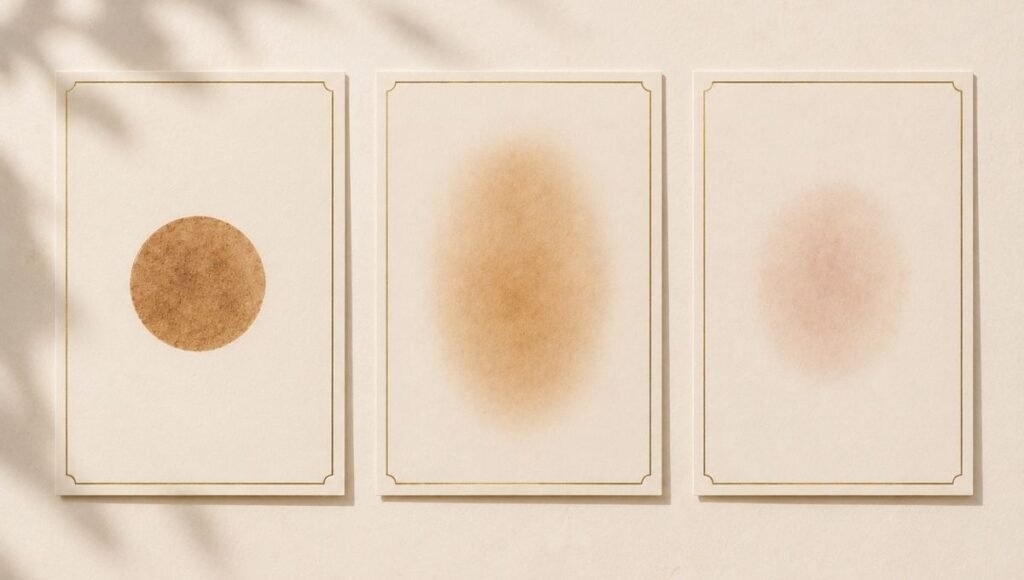
Not all dark spots in mature skin have the same origin — and the distinction matters for treatment priority.
Solar lentigines (age spots / sun spots): Flat, well-defined, uniformly tan-to-brown spots that appear on chronically sun-exposed areas — the face, hands, décolletage, and shoulders. They are caused by localised melanocyte hyperplasia triggered by cumulative UV exposure. They are permanent without active treatment, and they respond well to consistent tyrosinase inhibitors (Vitamin C, azelaic acid) over 12–16 weeks, with additional improvement from retinoids and AHAs over 24 weeks.
Melasma: Diffuse, symmetrical patches of brown or grey-brown pigmentation, most commonly on the cheeks, forehead, and upper lip. Strongly influenced by hormonal factors — oestrogen and progesterone — and typically triggered or worsened by UV exposure, hormonal contraceptives, and pregnancy. Post-menopausal melasma is less common but does occur; when oestrogen-containing HRT is used, melasma risk increases. Melasma responds to the same topical actives as solar lentigines but is typically more treatment-resistant and more likely to recur with UV exposure.
Post-inflammatory hyperpigmentation (PIH): The dark marks left by spots, redness, or minor skin events. More persistent in mature skin due to the extended cellular turnover cycle. Responds to a combination of accelerated turnover (retinoids, AHAs) and inflammatory pathway inhibition (niacinamide, azelaic acid).
The practical distinction: If your dark spots are well-defined, appear on sun-exposed areas, and have accumulated gradually over years — solar lentigines. If they are diffuse, symmetrical, and worse in summer — melasma. If they appear where spots or inflammation previously occurred — PIH. The treatment actives overlap significantly, but the intensity and timeline differ.
How to Even Skin Tone — The Complete Multi-Active Protocol
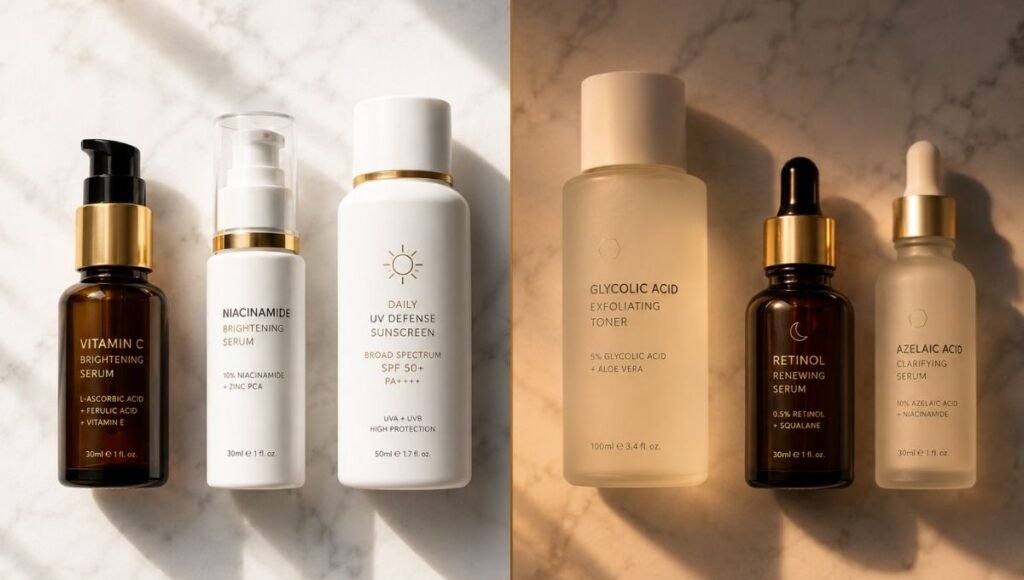
The most effective approach to skin tone evening in mature skin combines multiple mechanisms operating simultaneously — not because any single active is insufficient, but because the three origins of mature skin darkening each respond to different interventions.
Morning routine for skin brightening: Gentle cleanse → Vitamin C serum (L-ascorbic acid 10–15%, allow 60–90 seconds) → Niacinamide serum (4–5%, inhibits melanosome transfer, second mechanism of pigmentation interruption) → Moisturiser with SPF 30+ (the most important brightening step)
Evening routine — AHA nights (2–3 per week): Double cleanse → Glycolic acid toner (7–10%, 5–10 minute window) → Azelaic acid treatment (if using) → Ceramide moisturiser
Evening routine — retinoid nights (2–3 per week, alternating): Double cleanse → Dry skin wait → Retinol (accelerates pigmented cell turnover) → Ceramide moisturiser → Squalane seal if needed
What this protocol achieves: Morning: UV-induced melanogenesis prevention (VC antioxidant) + tyrosinase inhibition (VC) + melanosome transfer inhibition (niacinamide) + UV protection (SPF) Evening AHA nights: Accelerated surface cell removal + mild tyrosinase inhibition + pore clarity Evening retinoid nights: Accelerated pigmented cell turnover + inflammatory pathway modulation
For the complete niacinamide science including its specific mechanism for interrupting the pigmentation pathway at the melanosome transfer step, see our dedicated guide to niacinamide skincare [→ /niacinamide-skincare/].
SPF — The Step That Makes Every Other Brightening Active Work
This section exists because leaving it out of a brightening guide would be the single most significant disservice to any reader who follows the routine.
Every UV exposure event triggers a signalling cascade in keratinocytes that activates melanocyte-stimulating hormone, which in turn activates tyrosinase in melanocytes, which produces more melanin. The Vitamin C serum inhibits tyrosinase. The SPF prevents the upstream UV signal that activates tyrosinase. Without the SPF, the tyrosinase inhibitor is working against a constantly renewed stimulus.
The analogy that captures it: using brightening actives without daily SPF is equivalent to mopping a floor while a tap is running. The mop is doing its job. The tap counteracts the work.
Daily broad-spectrum SPF 30+ — applied consistently, applied generously, applied to the full face, jaw, neck, and décolletage — is the single step with the most impact on the long-term outcome of any brightening routine. A 2013 randomised trial published in Annals of Internal Medicine documented that consistent daily sunscreen use measurably slowed the development of skin aging and pigmentation compared to discretionary use.
What Doesn’t Work for Mature Skin Brightening
Physical scrubs on dark spots. Mechanical exfoliation does not target the melanin production pathway — it only removes surface cells. The stimulation of physical scrubbing can also trigger low-grade inflammation that activates melanocytes, potentially worsening pigmentation over time in sensitive or reactive mature skin.
“Brightening” products without named actives. “Luminosity complex,” “radiance booster,” and “glow activator” on packaging indicate cosmetic marketing rather than functional chemistry. A brightening product should list a specific tyrosinase-inhibiting or exfoliating active at a stated concentration: L-ascorbic acid, niacinamide, azelaic acid, alpha arbutin, glycolic acid, kojic acid.
Inconsistency over four weeks. The most common failure mode in brightening routines is abandoning the approach at 4–6 weeks when surface luminosity has improved but dark spots have not visibly faded. Tyrosinase inhibition produces visible dark spot fading at 8–12 weeks minimum — the surface improvement is a signal that the routine is working, not the final outcome.
High-concentration brightening actives without SPF. As described above, brightening actives without daily SPF partially or fully counteract their own effect. A Vitamin C serum used without SPF is providing some antioxidant benefit but allowing the UV-triggered melanogenesis that the serum is trying to inhibit to continue with each day’s UV exposure.
When Dark Spots Need Professional Assessment
Most hyperpigmentation in mature skin responds to the topical protocol described in this guide within 12–16 weeks of consistent implementation. Several presentations warrant dermatological evaluation:
Any dark spot that changes in size, shape, colour, or border irregularity. Solar lentigines are stable — they do not change rapidly. A pigmented lesion that is growing, has an irregular border, multiple colours, or has changed noticeably within weeks warrants prompt dermatological evaluation to rule out melanocytic lesions.
Melasma that does not respond to 16 weeks of consistent topical treatment. Prescription-strength azelaic acid (20%), topical retinoids, or triple combination cream (tretinoin + hydroquinone + corticosteroid) may be appropriate under dermatological supervision.
Rapidly developing or widespread new pigmentation. Sudden onset of significant hyperpigmentation can occasionally reflect internal conditions (including certain medications, Addison’s disease) that warrant medical assessment alongside dermatological evaluation.
FAQ
How long does it take to brighten skin and fade dark spots? Surface brightening — improved luminosity and more even skin tone from AHA exfoliation — becomes visible within 2–4 weeks of consistent use. Dark spot fading from tyrosinase inhibitors (Vitamin C, azelaic acid, alpha arbutin) requires 8–12 weeks minimum for visible improvement. Structural skin quality improvement from retinoids, which changes the light-scattering quality of the dermis, accumulates over 16–24 weeks. Most brightening routines are abandoned at 4–6 weeks, precisely when surface improvement has appeared but dark spot fading has not yet begun.
What is the best dark spot serum for mature skin? A functional dark spot serum for mature skin should contain one or more of: L-ascorbic acid at 10–15% in a stable, opaque, airless formulation; azelaic acid at 10%; alpha arbutin at 1–2%; or niacinamide at 4–5% (addresses the melanosome transfer step rather than tyrosinase directly, complementing other inhibitors). The luxury premium is justified for Vitamin C serums specifically — packaging technology and stabilisation directly determine whether the active is functional when it reaches the skin.
Can retinol help with dark spots and age spots? Yes — through cellular turnover acceleration rather than tyrosinase inhibition. Retinol speeds up the replacement of pigmented surface cells, reducing the residence time of dark spots at the skin surface. It also partially inhibits the inflammatory pathway that activates melanocytes. The brightening effect from retinoids is slower (12–16 weeks) than from tyrosinase inhibitors but addresses the underlying cellular renewal deficit of mature skin simultaneously — making it the most strategic single active for mature skin addressing both pigmentation and overall skin quality.
What causes dark spots on face after 40? The three primary causes: solar lentigines from cumulative UV-induced melanocyte hyperplasia (the most common — flat, tan spots on sun-exposed areas), post-inflammatory hyperpigmentation from skin events (spots, redness, minor wounds) that resolve slowly in mature skin due to extended cellular turnover, and hormonal pigmentation (melasma) that can worsen around perimenopause. All three respond to topical brightening actives, but their timelines and treatment intensity differ.
Is azelaic acid or vitamin C better for hyperpigmentation? They operate through the same tyrosinase-inhibition pathway but have different profiles that make them complementary rather than competitive. Vitamin C provides faster visible brightening, antioxidant UV protection, and collagen synthesis support — making it ideal for morning use. Azelaic acid provides more selective dark spot targeting, additional anti-inflammatory activity for PIH, and better tolerability for sensitive mature skin — making it ideal for evening use when Vitamin C is morning-applied. Using both addresses the pigmentation pathway more comprehensively than either alone.
How to even skin tone naturally without harsh chemicals? “Naturally” in the evidence-based sense: consistent daily SPF (the most powerful prevention of new pigmentation), Vitamin C from stable formulations (naturally derived and the most documented tyrosinase inhibitor), azelaic acid (derived from grains, gentler than hydroquinone or high-concentration AHAs), and niacinamide (a B vitamin derivative). These are not “harsh chemicals” — they are well-characterised compounds with documented safety and efficacy profiles. The timeline for “natural” approaches is longer than for more aggressive interventions, but the tolerability for sensitive mature skin is significantly better.
The Skin That Reflects What You Consistently Do
Brightening mature skin is a patience exercise as much as a chemistry exercise. The biology that produces dark spots — accumulated UV exposure, slower cellular turnover, declining hormonal modulation of melanocyte activity — does not reverse quickly. But it does respond, consistently and measurably, to the right combination of interventions.
How to brighten skin after 40 comes down to three simultaneous commitments: inhibiting melanin production at the tyrosinase level (Vitamin C, azelaic acid, niacinamide), accelerating the clearance of existing pigmented cells (glycolic acid, retinoids), and preventing the ongoing UV-triggered melanogenesis that counteracts both (daily SPF without exception). These three, maintained consistently for 12–16 weeks, produce the kind of visible skin tone improvement that no individual product delivers on its own.
For the complete mature skin routine that places these brightening actives alongside anti-aging and barrier support ingredients — and explains how they coexist without competing — see our comprehensive guide to skincare for women over 40 [→ /skincare-for-women-over-40/].
For the skin texture dimension of brightening — improving surface smoothness alongside evenness — see our guide to how to improve skin texture [→ /how-to-improve-skin-texture/].
References
- Pillaiyar, T., et al. (2017). An overview of melanogenesis and its multifaceted approach of skin-whitening/brightening agents. European Journal of Medicinal Chemistry, 135, 737–765.
- Hughes, M.C.B., et al. (2013). Sunscreen and prevention of skin aging: A randomized trial. Annals of Internal Medicine, 158(11), 781–790.
- Marques, C., et al. (2024). Mechanistic insights into the multiple functions of niacinamide. Antioxidants (Basel), 13(4), 425.
- Fisher, G.J., et al. (2002). Mechanisms of photoaging and chronological skin aging. Archives of Dermatology, 138(11), 1462–1470.
- Ganceviciene, R., et al. (2012). Skin anti-aging strategies. Dermato-Endocrinology, 4(3), 308–319.
- Draelos, Z.D. (2007). Skin lightening preparations and the hydroquinone controversy. Dermatologic Therapy, 20(5), 308–313.
- Farris, P.K. (2005). Topical vitamin C: A useful agent for treating photoaging and other dermatologic conditions. Dermatologic Surgery, 31(7 Pt 2), 814–818.